
KEEPING ON
Uneasy times like now present an opportunity to think hard about who I am—or, at least, what genealogy can tell me about who I am.
Ancestry.com, a company that enables people to trace their lineages, has revealed a pathway to track my ostensible attributes from slight to significant.
I use Ancestry.com for various purposes—family history and backdrops for my books. I’ve traced the yesterdays of my parents, grandparents and great grandparents. including where they came from, and when and how they escaped tyranny.
This history tells me meaningful basics about myself. Both ancestor-sets are from the former Russian Empire: one from Lithuania, the other from Ukraine. The earliest records I have are ship manifests from their late-nineteenth century migration to America. I haven’t tried to gather information from before that time, suspecting that any potential records were likely destroyed during the Second World War.
I always assumed that I was fully Ashkenazi (eastern European) Jew. But when I had my DNA tested a while back, the results showed I was 99 percent Ashkenazi. Hmm, what was the other one percent? Was there some mysterious, esoteric lineage?
It was fun to think about romantic unknowns. But about a year after that first DNA report, I received an ALERT. “Correction,” it read, “you are one hundred percent Ashkenazi!” Poof! That statement dashed my hopes of claiming any far-flung heritage.
Over the last six months or so, I’ve been getting notices about personal traits—most are pretty apparent but which I never thought about. However, being officially informed about characteristics that I already recognized, has elevated them in a peculiar way. Now I notice them when I look in the mirror, observe something about my body, or ponder what to have for dinner. There isn’t much of deep significance, but I did discover who I got them from.

My trait report lists 93 elements ranging from A (Alcohol Flush) to W (Wisdom Teeth.) I went through the entire inventory to see if there was something I should attend to. There were no indicators about my propensity to have certain health issues. No problem. I live with them each day.
What I have, Ancestry’s trait report told me, is mostly a bunch of qualities that are trifling in the scheme of life. Here are three:
First, I have short eyelashes. The only time this was an issue for me was when I was a teenager and wanted to look more alluring by using a curler and mascara to make my lashes like those of friends. After a few years trying to make enhancements, I gave up when I realized that the effort would never make an important impact on my being.
I inherited this peculiarity from my mother who, indeed, had very short, practically non-existent eyelashes. If I had known that she gave them to me, would I have blamed her in my teen angst? Who knows?
Second, I don’t have mid-finger hair. I was surprised by this revelation because I never realized that women could have hairy fingers. On investigation, I learned that, although less common in females, it can happen. Thanks, Mom.
Third, I prefer eating savory food. I didn’t need to be informed that I was likely to make that meal choice. Both parents gave me these taste buds.
Here are two factors the Ancestry testers got wrong:
My genes from both parents say I have an aversion to cilantro—totally false! I love cilantro. The only thing I don’t like is that I can never use up a bunch before it turns to slime in my refrigerator.
From my mother and father, I’m likely to have a unibrow. Wrong! I have two distinctly separate eyebrows.
And here’s one finding that falls in the “duh” category. I’m not a high jumper. The average height for female jumpers is six feet. I am barely five feet.
It’s time to focus back on today’s sober, unsettling echo from my ancestors’ pasts.
I consider one major Mom-trait that Ancestry picked: Determination! She was unconditionally determined. I must pay attention. Without wavering, I’ve got to bring that inherited part of me into the present. I need the grit to combat the cruelty, injustice, and oppression that I see all around us.
My forebears left their homelands because of oppression and abuse. One hundred and thirty years later, I can see it arising again. And I feel duty-bound to continue their dogged, but fraught, journeys in search of hope.
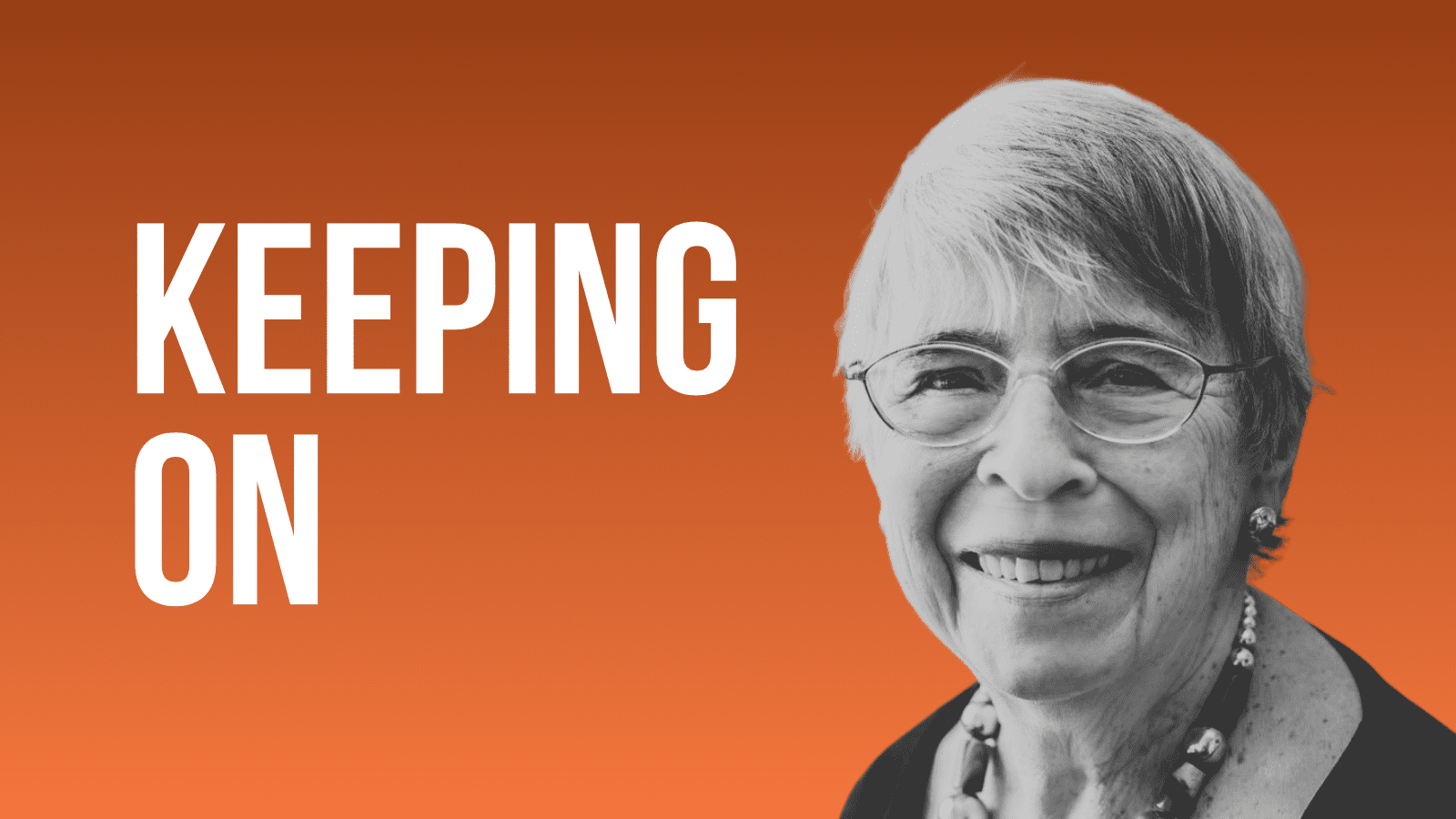
Marian Leah Knapp is a writer and book author who lives in Newton. She can be reached at knappml@comcast.net.
Share This Story On:
DONATE TO SUPPORT LOCAL NEWS
Your tax-deductible gift to the Newton Beacon keeps our community connected and its residents informed.
Get story alerts twice a week:
Related Posts

Upcoming Events