
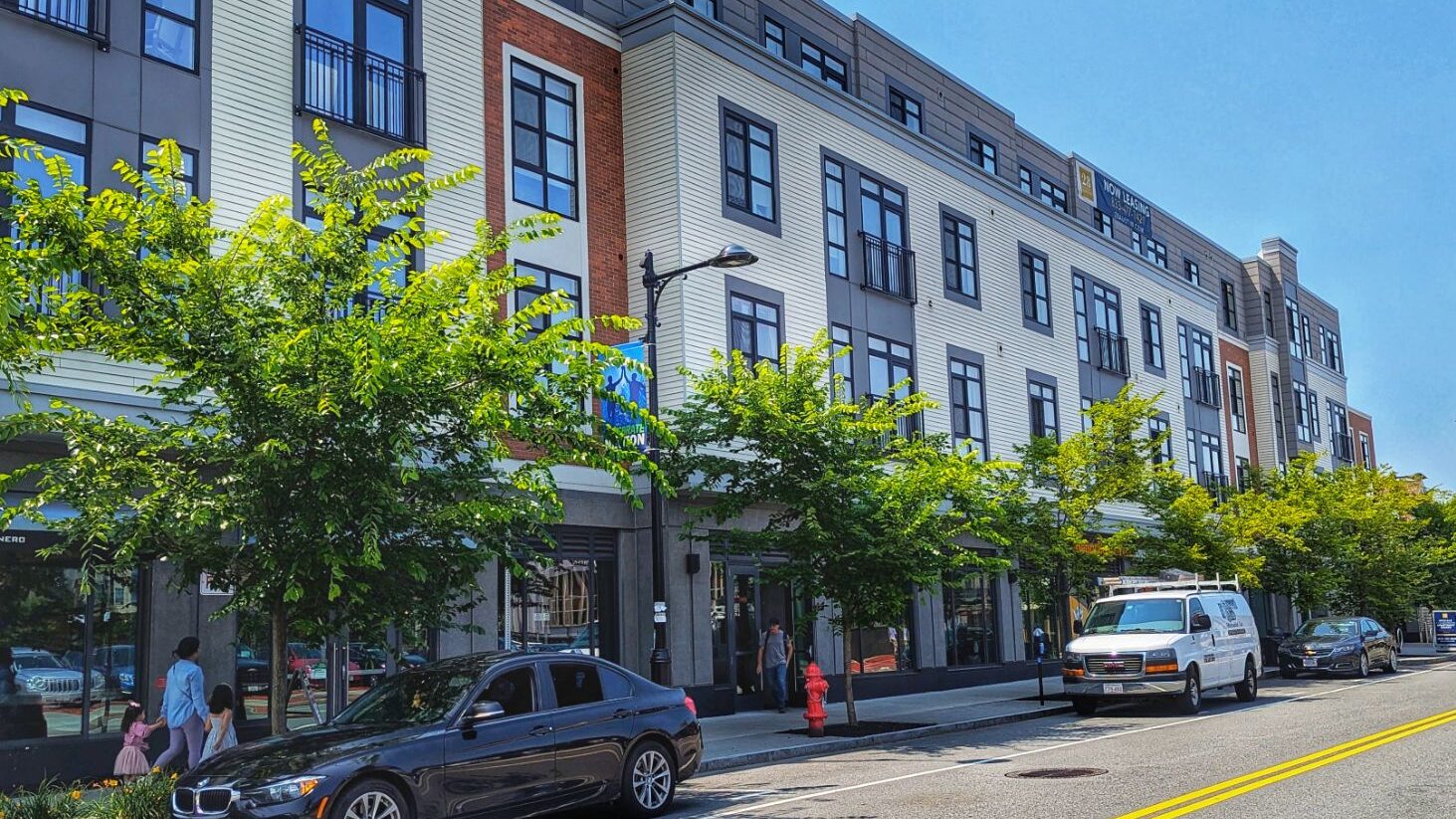
ZoningPic2
Austin Street, Newton. Photo by Bryan McGonigle
The City Council is looking at ways to collect energy use data from residents, including those with single-family homes.
On Wednesday, the Public Facilities Committee had a presentation on a proposed ordinance to do so.
The committee discussed the same kind of ordinance last fall, but the Law Department cautioned that there were legal concerns over requiring small residential properties and single-family homes to report energy use to the city.
“The state has been very consistent and clear that energy use that is identifiable for a single family, a single residence, is considered confidential,” Andrew Lee of the Law Department said Wednesday. “Only through statute are certain state departments privy to that information, and they may not disclose it. Utilities are allowed to have that information as well. The city itself, we do not have that authority.”
Lee added that the city can seek a home rule petition from the state for special legislation to allow it.
“So, there is an avenue for (this), but as things stand right now, the city doesn’t have the authority to require the type of mandatory disclosure from these residents of the city of Newton, that is being proposed here,” Lee said.
So, the plan is to look at rentals for now.
Philip Hanser, energy coach for the city, said the chief motivation for the rental reporting proposal is affordability.
“Two listings that have the same rent can have drastically different energy costs,” Hanser said. “And the net result is one can be relatively inexpensive to live in, and the other one can just drive you up the wall.”
“You can’t reduce what you can’t see,” Hanser said. “Unless you know what the level of energy use is and the associated emissions, you can’t know what’s going on. And so, the ordinance aims to provide that.”
Some interesting statistics Hanser laid out:
There are 32,112 housing units in Newton, according to the U.S. Census.
40 percent of Newton’s residential parcels are not owner-occupied.
More than 60 percent of affordable housing units are privately owned.
More than half of the city’s residential properties were built before 1939. And almost 3/4 of Newton’s residential properties were built before 1949.
“So we’re looking at buildings that were, for the most part, not built for any current energy standards,” Hanser said.
And rental properties have less incentive for upgrades than owner-occupied ones, since renters pay the cost of energy via rent increases, and not the landlord.
What would a proposed energy reporting ordinance for residential energy use report?
Rental property owners would report energy use from the previous year every March 1.
Software would then combine reported energy use with floor area data from the Assessor’s Office and fuel emissions factors from the state to calculate energy use intensity (EUI) and carbon dioxide emissions for each building.
The reporting is for entire buildings, not individual rental units, which avoids identifying individual renter energy use.
Owner-occupied homes would not be required to report energy use. They can if they want to, however.
The committee voted to hold the item for a future meeting, to get more input on the legal ramifications of the revised ordinance proposal.
You can watch the entire meeting here.
Share This Story On:
DONATE TO SUPPORT LOCAL NEWS
Your tax-deductible gift to the Newton Beacon keeps our community connected and its residents informed.
Get story alerts twice a week:
Related Posts







Upcoming Events