
tce3
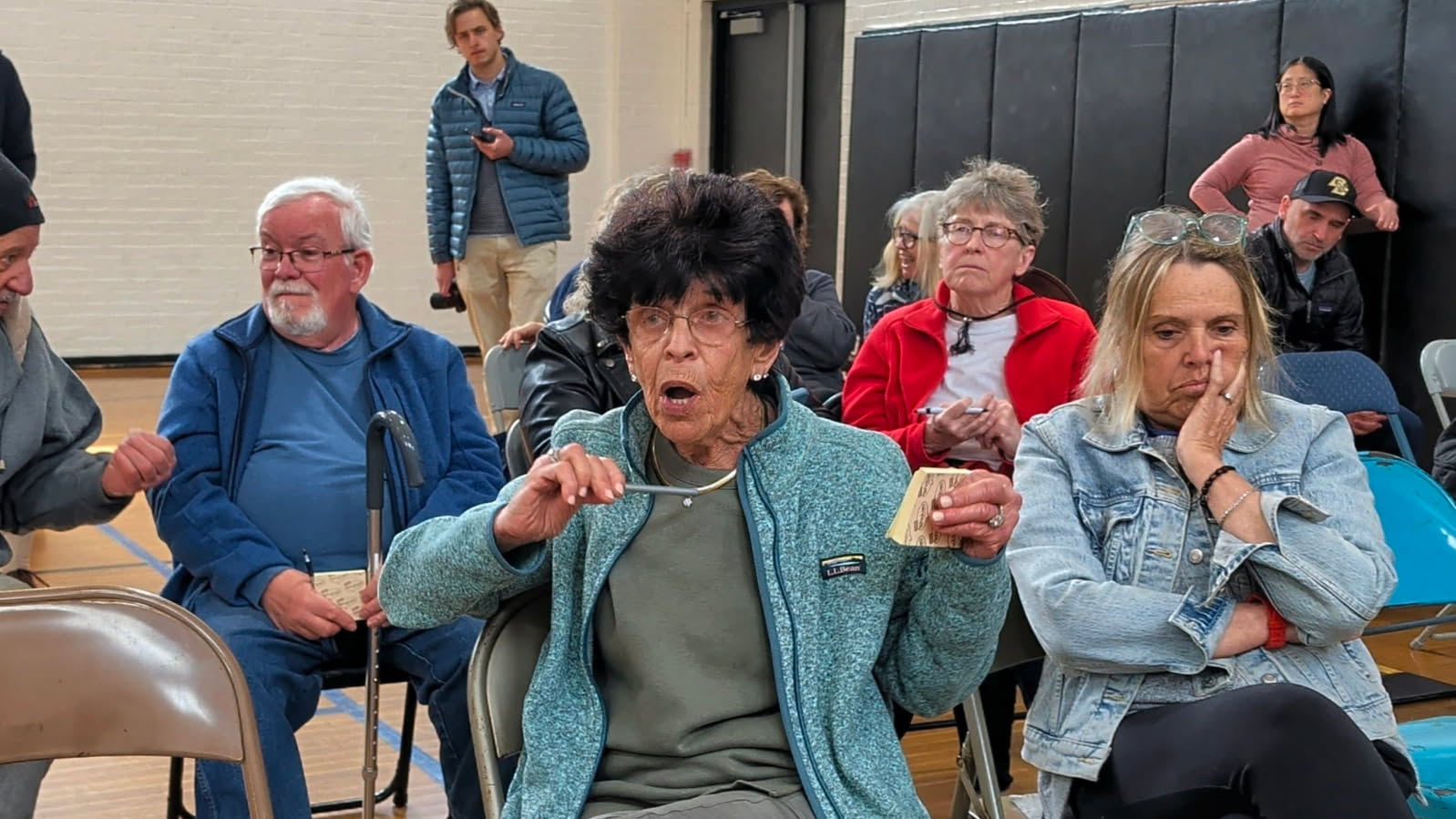
Nonantum resident Teresa Sauro speaks at a public meeting about TCE testing on her street. Photo by Bryan McGonigle
“We have lots of people here today. I see faces, I see concern,” Janet Connolly of the environmental consulting firm Arcadis said as she greeted a crowd inside the Pellegrini Park basketball gym Sunday afternoon.
Residents, business owners and a few elected officials met with Connolly to learn about trichloroethylene (TCE)—a colorless, odorless degreaser that’s been banned for more than two decades but is contaminating the air inside homes throughout a large swath of Nonantum—and what it means for their health and safety.
More than a century ago, Nonantum’s Silver Lake was sacrificed for manufacturing development to meet the booming demands of the Gilded Age.
And now, almost as much an issue as the poison that it brought is the fact that so few Nonantum residents even know about it or the fact that the ground beneath their homes may be marinating in it.

This archive photo from the New England Historical Society shows people skating on a lake that used to be in Nonantum. Courtesy photo
Left behind
In the 19th century, property owners in Nonantum began gradually filling in a large body of water named Silver Lake near the Watertown line.
Immigrants—largely from Italy—were pouring in and filling manufacturing jobs at such a rapid rate that more housing was needed and as quickly as possible, making Nonantum the densest village in Newton.
Part of alleviating that demand involved filling in parts of Silver Lake, which was not under state or federal protection. Eventually, they filled in the whole thing, building a manufacturing area where people once ice skated.
Families of Italian immigrants were later joined by Jewish immigrants, and together they built the current village of Nonantum, relegating “The Lake” to local cultural references and t-shirts.
In the early 20th century, factories began using trichloroethylene, a synthetic degreasing compound, to remove oils and other greasy residue from metal through a heating process that turned liquid TCE into vapor, which then coated the metal and removed the grease.
TCE was so effective it was used in brake cleaners, arts and craft spray-coatings and more.
But TCE has been classified as a carcinogen, with various cancers (including kidney cancer, liver cancer and non-Hodgkin Lymphoma) being linked to it. So in 2004, it was banned for most uses. And in 2024, it was banned for commercial use entirely.
The EPA and MassDEP both have a safety limit of 2 micrograms for TCE per cubic meter of air indoors. Anything more condensed than that can cause immediate and long-term health complications.
In 2014, the Massachusetts Department of Environmental Protection launched an investigation in Nonantum involving the lot where an auto parts and mechanic business once operated on West Street, because a high concentration of TCE was found in the groundwater there.
The state installed testing wells around the area to see how far the water contamination had spread and tested more than 160 buildings for unsafe levels of TCE in the air. Most tested negative. The 7 percent of buildings that tested high for TCE were equipped with sub-slab depressurization systems to redirect air from the ground to the outdoors.
Other lots in Nonantum were found with TCE, and currently there are two sources under investigation: the office park at 320 Nevada St. and the Chapel Bridge Office Park between Chapel and Bridge streets.
With more than 71,000 square feet of floor space, 320 Nevada St. mill was built in 1865. Manufacturing later left the region, and the building was converted into offices in the 1980s.
Chapel Bridge Park started as a one-building stocking and hosiery mill, erected at 57 Chapel St. by Thomas Dalby in the 1850s. Nonantum Worsted bought the property a few years later and turned it into a wool cloth factory, expanding the complex to 55 Chapel St. The Saxony Company purchased it in the 1890s and expanded its footprint even more.
In the late 1920s, with textile mills beginning to downsize and close, a new appliance company called Raytheon—which would grow to become one of the biggest defense contractors in the world during the Cold War—bought the manufacturing complex as a research and development facility.
Raytheon left Newton in 1941, and the Nonantum property was bought again and turned into an office park by Chapel Bridge Park Associates.
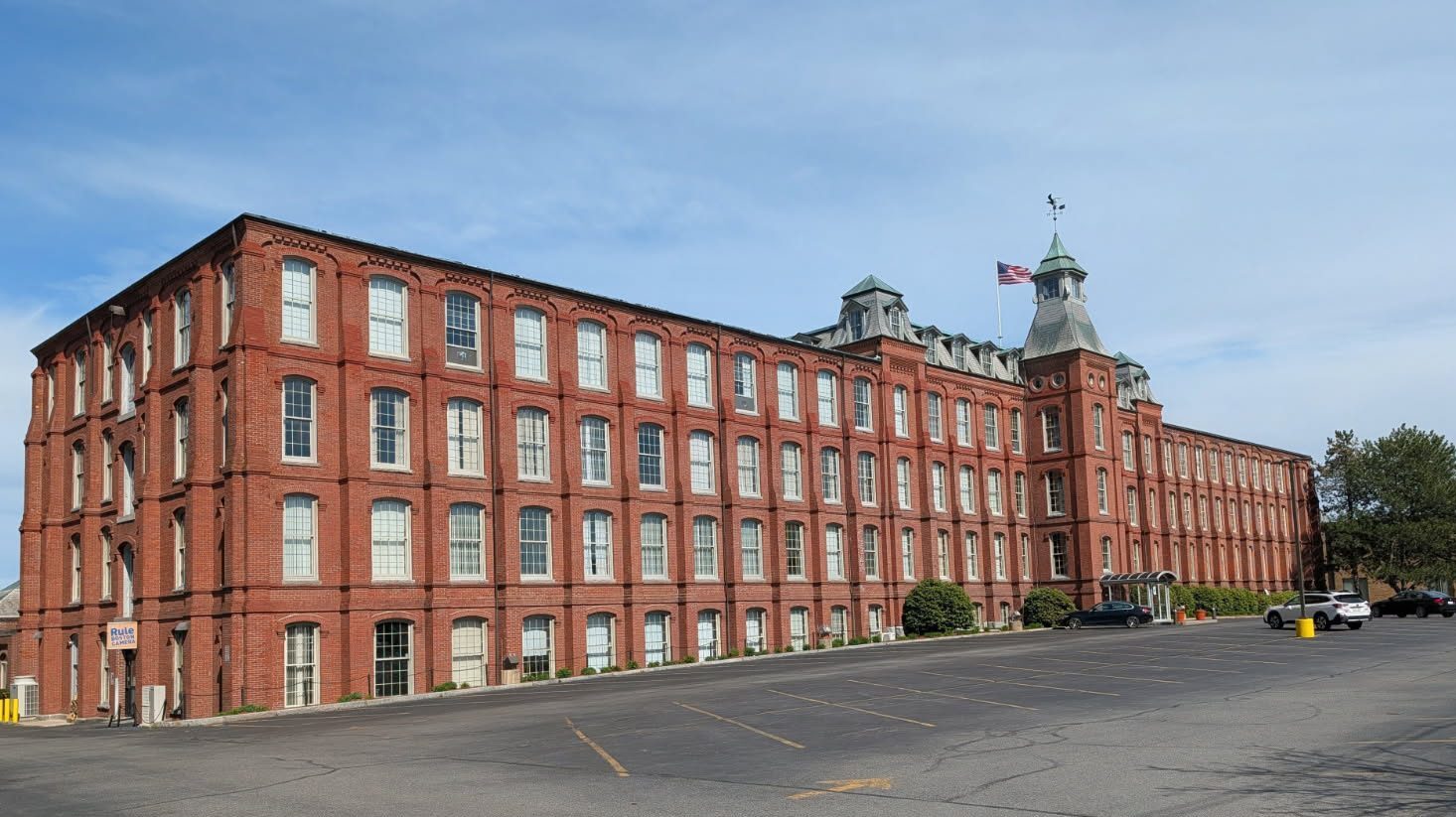
A mill building at 320 Nevada St., Nonantum. Photo by Bryan McGonigle
The long road to clean
Decades after Raytheon was there, nearly a century after hosiery and wool yarn were made there, a danger lingers, left behind in a world that has changed around it.
Testing over the past several years has identified about a dozen homes impacted by contamination from 320 Nevada St. and another 10 by Chapel Bridge Park.
“What we’re doing, the reason we drill is because we’re trying to understand better where that TCE is located, where it might be,” Connolly said. “Things change. This is a dynamic situation, Groundwater moves all the time.”
Large-scale construction, like that seen with many new housing and mixed-use developments in the past decade, can also alter the flow of water underground, making continued testing even more critical.
Each of the properties has its own environmental consultant. Connolly was there speaking with residents on behalf of Arcadis, which is mitigating the contamination for Northrop Grumman, owner of 320 Nevada St.
Northrop Grumman didn’t cause the contamination, Connolly noted, but they still have to mitigate the contamination as a condition set when they recently purchased the property.
Connolly said the entire TCE process consists of five phases, and Nonantum is currently in Phase 2, the testing phase. She couldn’t say how long it would take to get to Phase 5—the final cleanup/mitigation step, but she emphasized that homes found with contaminated air are dealt with immediately.
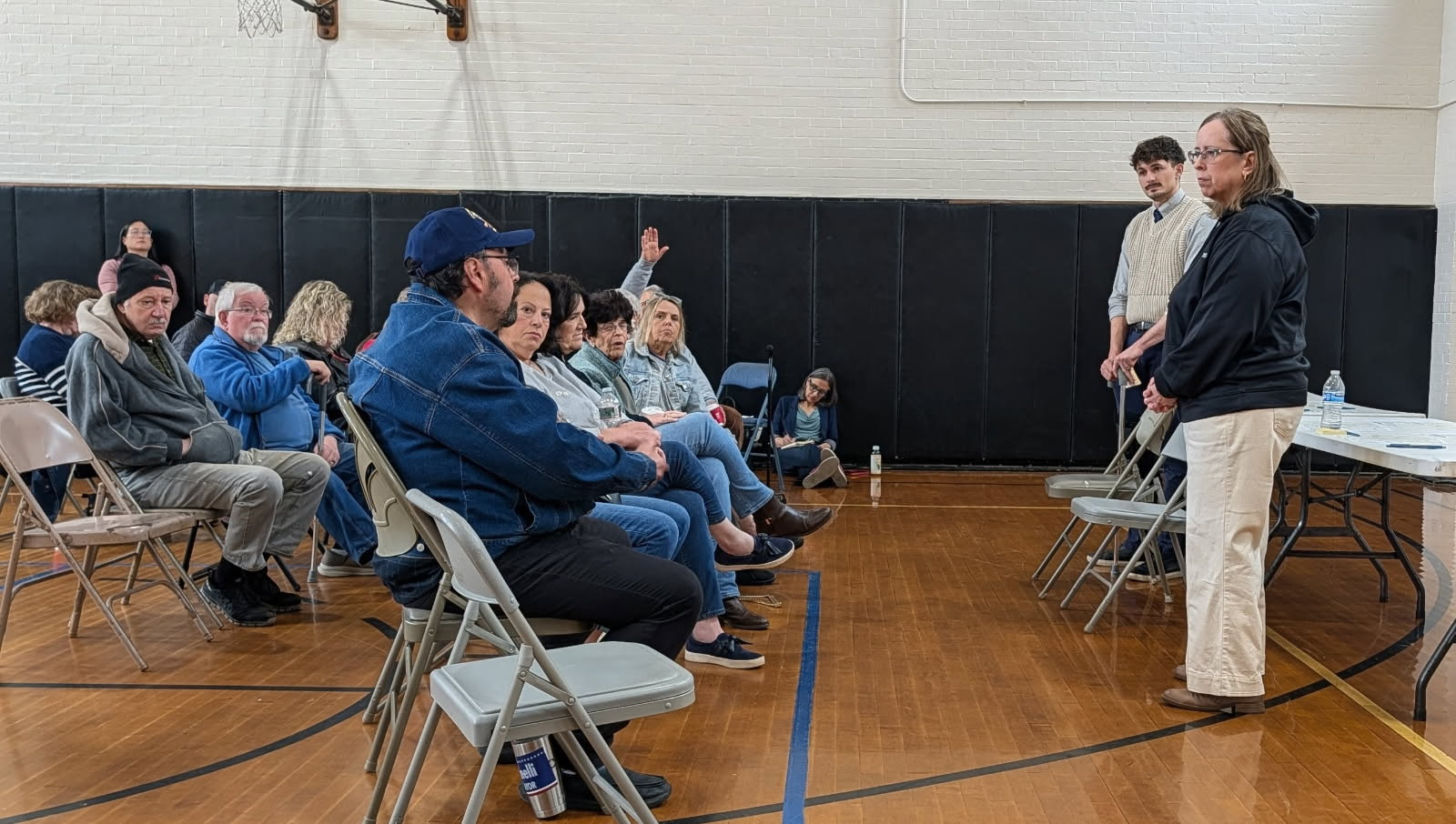
Janet Connolly of Arcadis talks with Nonantum residents about ongoing TCE testing in their neighborhood. Photo by Bryan McGonigle
Silence and fear
Sunday’s meeting was steeped in a sense of panic, not specifically about the possibility for TCE beneath former factories in the village, but about the lack of communication that had the whole situation seeming secretive, despite information regarding the testing being public.
In 2017, City Councilor Alison Leary petitioned to have 320 Nevada St. placed into a public improvement plan (PIP), which requires a formal plan for the site outlining how the public would be kept informed about testing and cleanup efforts. That plan was presented that fall.
But in recent years, residents say they’ve been left in the dark. State agencies have changed hands, state and city websites have been redesigned and relaunched, and email lists have lost names with database changeovers.
Al Cecchinelli, a Chapel Street resident and former mayoral candidate, said he saw an air quality testing device at the corner of Green and Chapel streets last year and almost took it down because someone at City Hall said they didn’t know why it was there.
“And I’m pissed that this has been going on all this time, and I don’t know about it,” he said.
This past summer, while campaigning for mayor, Cecchinelli had a brain tumor removed, and now he wonders if his tumor could have been caused or worsened by contamination he wasn’t told about for more than a decade.
“People need to know about this,” he said. “It seems like this is being covered up. You talk about the PIP or whatever. But how are we supposed to know this (expletive)?”
Connolly pushed back on the suggestion of a coverup, noting that Arcadis and its predecessor consultants for 320 Nevada St. had followed PIP guidance.
“The city knows that we’re doing the drilling, because we had to obtain a permit to do that,” Connolly said. “That was done in the way it needs to be done.”
Dana Hanson, Mayor Marc Laredo’s chief of staff, said the new administration intends to improve communication with the public throughout all phases of the TCE testing and mitigation.
“DPW does a lot of permit granting, and maybe we could have done better with the DPW and the mayor’s office, keeping track of all the permits,” Hanson said. “But, we’re going to do better moving forward. And you have my guarantee that when I know about public meetings, I will make sure they we’re getting that information out, and on a regular basis.”
Cook Street resident Teresa Sauro, a senior who’s lived in Nonantum her whole life, mentioned that her family has seen many cases of cancer.
“I think what you’re hearing is we’re all kind of anxious,” Sauro said. “Now we’re seeing it [TCE testing] come to Cook Street, and it’s upsetting.”
Connolly said Arcadis would hold similar meetings with Nonantum residents in the future while the TCE mitigation process unfolds, however long that takes. And she said her company would explore other means of getting information out to residents, including a possible online newsletter.
One suggestion raised at the meeting: Not everyone uses email or social media, so try regular mail.
Share This Story On:

DONATE TO SUPPORT LOCAL NEWS
Your tax-deductible gift to the Newton Beacon keeps our community connected and its residents informed.
Get story alerts twice a week:
Related Posts






Upcoming Events