
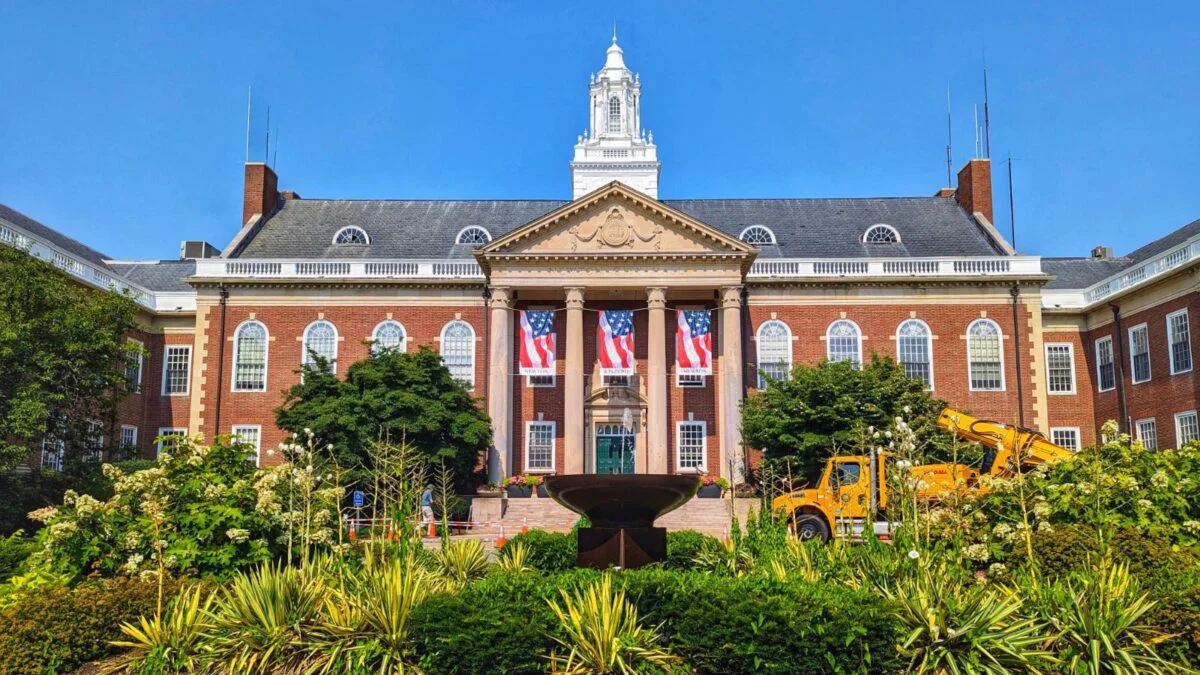
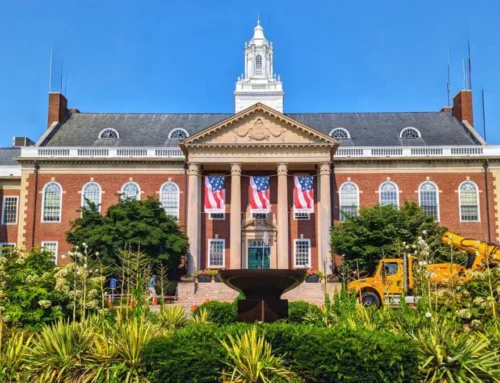
Newton City Hall, June 2023. Photo by Bryan McGonigle
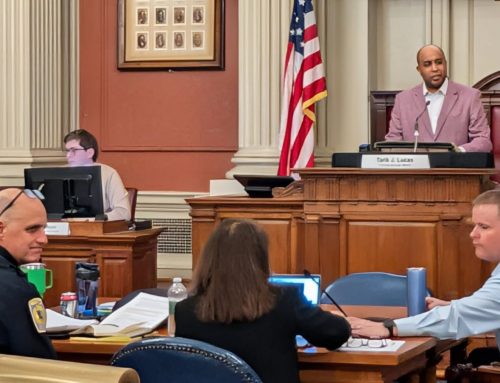
Newton’s Economic Development Committee met Tuesday to discuss ways to manage and increase public engagement in their work, citing a public committee newsletter and teen community spaces as ideas for boosting community involvement in the committee.
“A rising tide floats all boats,” said Lori Yarvis, a commissioner on the committee. “We’re supporting our businesses. We’re creating more tax revenue. We are helping the school budget and engaging in more projects like Cooper Center.”
According to the commissioners, engaging citizens would enable the committee to respond more effectively and appropriately to the needs of the Newton community.
“Our initial focus was going to be the business community … one of our main goals as an economic development commission is promoting businesses in the City,” Yarvis said. “We had recruited some Newton business owners, and we tried to be as representative as possible.”
Over the past year, there have been many setbacks to the committee’s ability to hold community engagement events. These challenges, including delayed necessary reports, have made it more difficult for the committee to interact with local businesses and residents, explained Chris Steele, committee secretary.
“On the distribution lists, all the elementary, middle, and high schools have a newsletter,” Steele said. “A lot of ad hoc Facebook groups have been found too complicated again.”
Commissioners expressed hope that having a newsletter, in which people could sign up to receive information about the committee, would engage people more in the committee’s work rather than simply asking for their ideas.
“There’s a lot of conversation about places for teens to be,” said Chuck Tanowitz, vice-chair of the committee. “Places for teens to feel comfortable, ways for teens to get out of their homes, because they can feel very isolated post-COVID, all those things.”
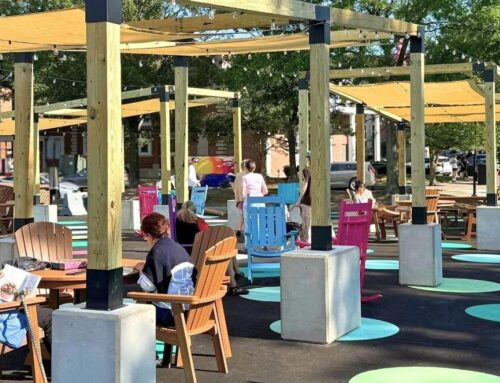
Tanowitz was speaking to another goal of the committee: creating public plaza and village center spaces where teens can feel comfortable gathering. The committee wants to collect data, such as usage patterns, times, and the impact on businesses, to design programming and amenities that better serve teenage audiences.
Tanowitz voiced concerns about the public perception of parking spaces that could be lost in spaces like these, citing the Newton Centre Pilot Plaza as an example.
“There’s a perception that these 22 spaces have destroyed parking availability in Newton Centre … We have the data from the revenue,” Tanowitz said.
Citizens have voiced concerns about the removal of those 22 spaces, explaining how it has led to a lack of parking in Newton Centre, negatively impacting businesses and, therefore, the City’s economic development.
But members of the committee noted that these lost parking spaces are not perpetually full, as some citizens may believe. They hope to use revenue data from businesses to illustrate that the community gathering spaces have not destroyed available parking spaces in Newton.
“If we can establish a common understanding of what we want to do, then we can actually start to knock down the barriers to try to get [projects done],” said Tanowitz.
Tanowitz’s sentiment reflects the broader goal of the committee to gain a better understanding of what locals really want and apply that knowledge to better approach their work.
****
This story is from The Heights, an independent, nonprofit newspaper run by Boston College students with which the Newton Beacon has a partnership.
Share This Story On:
DONATE TO SUPPORT LOCAL NEWS
Your tax-deductible gift to the Newton Beacon keeps our community connected and its residents informed.
Get story alerts
twice a week:
Related Posts




Upcoming Events