
CaliforniaStChart
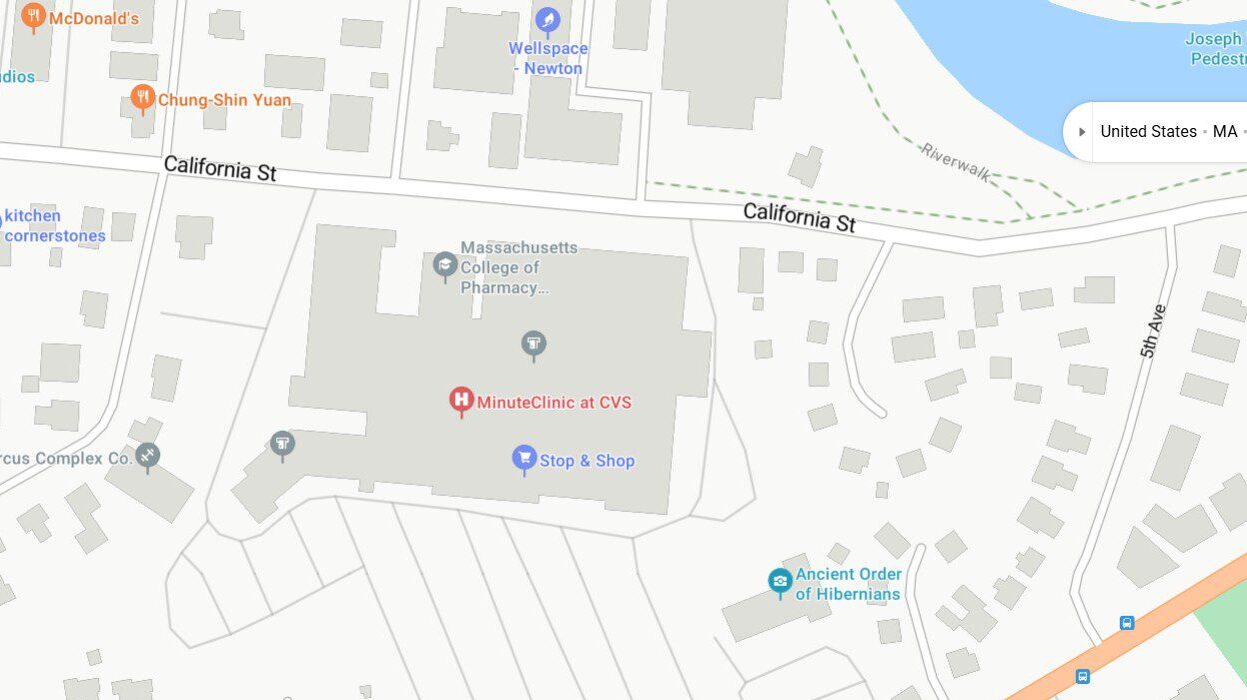
The large property at 148 California St. in Nonantum was the subject of much debate recently, as the property owner sought a zoning change from manufacturing to business. Google Maps image
The City Council voted Monday night to approve a zoning change for a large property near the Watertown line, from manufacturing to business, as well as remove a nearly 40-year-old restrictive covenant from the property.
A restrictive covenant is a legally binding contract between the city and the property that prohibits certain uses for a property and follows the property through ownership turnover.
A large portion of the property on California Street lies in Watertown, complicating things even more.
The ask
The owner of 148 California St. in Nonantum (the Stop and Shop plaza) requested a zoning change from manufacturing to BU-2 (retail business zoning), approved by the Land Use Committee 5 to 1 last month.
The owner also asked for a release from a restrictive covenant—enacted with a special permit in 1988—which Land Use Vice Chair Alison Leary said is now “just an additional piece of red tape that makes it difficult for the business owner to make changes without having to go through a special permit process.”
The property owner had proposed an alternative option, a special permit amendment that would reduce the parking requirement by a third, but that option was not brought forward by the committee.
The zoning and the covenant mean that when a new retailer goes into that plaza, there are extra hoops to jump through since it’s zoned for manufacturing. Leary emphasized that the zoning change does not indicate any construction or new projects.
“The current owners, who we met on site with, wanted to simply make it easier for them to make changes to the retail spaces, which do change somewhat frequently, because with the current manufacturing use, they have to go get a special permit for every single change of use, which is a barrier and it’s inconvenient,” Leary explained. “It makes it a little more difficult for them to attract tenants. So there’s no project here, and there’s no plans for a project. It’s simply for convenience, for ease, to be able to attract more tenants and get them in in quickly.”
The pushback
The issue saw about an hour of debate Monday night, as some councilors—including Ward 4 Councilor Randy Block—wanted more data and comprehensive studies done before the city starts rezoning manufacturing parcels.
Randy Block said the zoning change to BU-2 could create a clear pathway for the property owner to add housing in lieu of retail space, as has happened with multiple large development plans in recent years.
“I understand why the petitioner would want to change the zoning from manufacturing to BU-2. There is much more flexibility in what is allowed under the BU two zone, including residential uses,” Block said. “A zoning changed to a business use from manufacturing opens up the possibility, even the likelihood, of residential development instead of commercial development. It seems to me that this is the critical question before us. In short, what is in the city’s best interest?”
Block then read from a manufacturing district zoning study done in 2023, which recommends the city keep that part of the California Street area manufacturing district for commercial purposes only.
“Given that we have such a recent study on this part of Newton, and given our concern to protect our commercial tax base, I suggest that a zoning change to business use needs a much more thorough analysis by the Planning Department,” Block said.
Councilor Julia Malakie echoed Block’s concerns and suggested that the Planning Department further study various commercial uses for manufacturing lots rather than rezoning them.
“We can’t keep giving up guaranteed commercial space and losing that financial benefit,” Malakie said, suggesting the Council go for the alternative option of fewer parking requirements.
“But it would also, I think, be an opportune time to look at what kind of uses we allow in a manufacturing zone,” Malakie said. “And since there don’t appear to be any problems with, for example, restaurants in what’s now a manufacturing zone—they go through the special process—I think the planning department should also study what uses we would like to allow by right in manufacturing that would also be commercial but not be in conflict with manufacturing, essentially modernizing the type of uses we allow because we obviously don’t expect school bills or things like that.”
The city of ‘no?”
Others, like Ward 1 Councilor Maria Greenberg, agreed with Leary that granting the zoning change would help Newton’s struggling business community.
Greenberg cited a recent Charles River Chamber newsletter featuring a report on Watertown’s booming life science industry, which has added nearly $46 million in new growth to Watertown’s tax levy and is being used to fund two new elementary schools as well as improvements to parks in that city.
“Because of this new growth, Watertown has maintained the second lowest residential property tax burden in the metro area,” Greenberg said. “While it may be too late for Newton to fully compete for the life sciences sector, given how saturated that market has become, we should be asking ourselves: what’s the next opportunity? How can we position Newton to attract other growing industries and commercial enterprises and thus increase our own growth?”
Greenberg reminded the room that the City Council is always discussing ways to attract and keep businesses in Newton and said allowing zoning changes to adapt to new realities is part of that.
“Allowing the approval of these items sends a message that we are a city that supports our business sector and says yes to new growth,” she said. “I’m afraid that right now we have the appearance as a city of ‘no’ and, consequently, every budget season we struggle to adequately fund our school budget and overdue projects like the police headquarters.”
The rezoning request was approved with a vote of 19 to 5.
The “no” votes were cast by councilors Lisle Baker, Randy Block, Stephen Farrell, David Kalis and Julie Malakie.
The petition for release from the restrictive covenant was approved 17 to 7.
The “no” votes on that were cast by Baker, Block, Kalis, Malakie, Jacob Silber and John Oliver.
You can watch the entire meeting on NewTV’s YouTube channel.
Share This Story On:
DONATE TO SUPPORT LOCAL NEWS
Your tax-deductible gift to the Newton Beacon keeps our community connected and its residents informed.
Get story alerts twice a week:
Related Posts







Upcoming Events