

Garden City
The plants in my May garden, mostly New England natives, have emerged through the autumn leaves that still cover several of the beds. The buds are swelling on my Virginia rose, and my beach plum trees are in fragrant bloom. Native plant gardens are increasingly popular in urban and suburban yards, so it was fitting that a bipartisan U.S. Senate resolution designated April 2026 as “National Native Plant Month.”
Native plants are defined generally as plants found naturally in a particular region before European settlement. Having co-evolved with native wildlife, native plants support biodiversity by way of nectar, pollen and seeds. They are also uniquely able to provide food for native insects, including specialist bees, and other wildlife that depend on native plant species to survive.
Native plants underpin the food web of local ecosystems. The plants not only feed pollinators, but certain native trees, shrubs and perennials serve as hosts for insects. Keystone plants are especially important because they support the largest number of insects. The insects lay their eggs on the host plant’s leaves, and the insect larvae or caterpillars in turn feed on those same leaves. The larvae or caterpillars then become food for birds, which raise their chicks almost solely on insects and mostly on caterpillars.
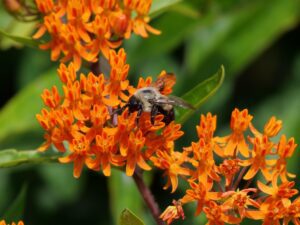
Native butterfly weed, asclepias tuberosa, is a magnet for bees and butterflies. It also thrives in hot, sunny conditions. Image by adszakacs from Pixabay.
To underscore the importance of host plants for bird populations, one clutch of chickadees requires up to 9,000 caterpillars to survive and fledge. The National Wildlife Federation lists keystone species for Massachusetts, which include white oak, black cherry, river birch, blueberries, switchgrass, woodland sunflower and goldenrod. The Native Plant Trust’s Garden Plant Finder is another excellent source of information about native plants appropriate for our region.
North America, like other parts of the world, has suffered a steep, decades-long decline in insects and birds. Part of this decline can be attributed to loss of habitat. While many of us may feel helpless in the face of environmental degradation and climate change, planting keystone native host plants alongside other native plants is a way each gardener can contribute meaningfully to conservation and restore food and habitat for wildlife. A garden without native plants is an ecological desert.
Native plants offer benefits beyond supporting wildlife. They’re low maintenance, require less water than non-native plants, prevent soil erosion, and filter pollutants to protect aquatic ecosystems.
Winter Rabbit Damage
Once the winter snow finally melted, many of us saw signs of rabbit damage to our trees and shrubs.
In my backyard, I had protected a young redbud tree from rabbits for the winter with a chicken wire fence. The rabbits left it alone until the snow piled up higher than the short fence; they then ate a foot-high section of the bark all the way around the trunk, girdling the tree.
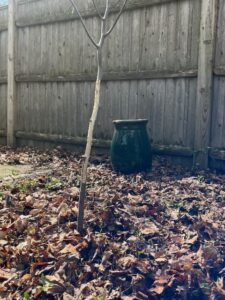
Rabbits damaged this redbud tree so badly that it had to be replaced. Photo by Lisa Gianelly.
By pulling off the bark, the rabbits disrupt the flow of water and nutrients between the tree roots and the leaves and otherwise leave the tree vulnerable to pests. Even if the redbud were to leaf out despite the damage, it would likely not survive in the long term. As it is, there are no buds apparent on the branches, and I plan to replace the tree. According to information from Weston Nurseries, had the rabbits not girdled the trunk, smaller sections of damaged bark might have healed over the course of two or three years.
Last year, rabbits chewed the bark off a multi-stemmed viburnum shrub in my yard, girdling many of the branches near the base of the shrub. Although there was a chance that the shrub could recover if I cut it back to just below where the bark had been stripped, I chose to remove it rather than wait what might have been at least a few years for substantial regrowth.
To prevent future rabbit damage, next fall I plan to protect my tree trunks with plastic sleeves or wrap them in burlap, which rabbits evidently don’t like, and continue to place wire fences around the trees and shrubs at a height of 3 feet. Liquid Fence and other repellents might offer additional protection, but they would need to be reapplied regularly.
For your own planning, Weston Nurseries reports that rabbits target favorite trees, including apple, crabapple, maple, serviceberry, willow, aspen, birch and mountain ash.
Protecting plants from rabbit damage is a continuing effort throughout the year. I include rabbit-resistant plants in my garden, particularly those from the mint family, and fence those plants that they would likely eat, such as asters. I occasionally alternate applications of Liquid Fence and Rabbit Scram where I notice damage. I also seed our lawn with Dutch clover each spring to provide a treat away from my garden beds.
The Tufts Pollinator Initiative website lists plants that are rabbit-resistant and offers tips on managing rabbits in the garden. One tip is to interplant rabbit-resistant plants with plants they prefer. While my effort to “circle the wagons” around vulnerable plants with a ring of catmint failed in the face of the determined rabbits that frequent our yard, such interplanting might succeed in a different garden.
Lisa Gianelly and Marian Prokop, who alternate columns, are Newton residents and certified master gardeners. They welcome your suggestions for column ideas and news to share of gardening-related events throughout the city. They can be reached at beacongardeners@gmail.com.
Share This Story On:
DONATE TO SUPPORT LOCAL NEWS
Your tax-deductible gift to the Newton Beacon keeps our community connected and its residents informed.
Get story alerts twice a week:
Related Posts










Upcoming Events