
ECONOMIC DEVELOPMENT
Washington Street in Newtonville is perfect for development. With a new accessible MBTA station on the horizon, the hope for regional rail, multiple bus routes, plenty of walkability, and good access to the Mass Pike, this is where more people can help the city thrive.
Of course, there’s a cost, and Sami Jbeil is going to need to pay it. Sami drives in from Norwood every morning, arriving at 7 a.m. to turn on the old-fashioned barber’s pole at Joe’s Barber Shop on Washington Street. He’s run the business since Joe Cottone, who cut hair for more than 30 years in the location now occupied by the TRIO apartment building, passed away in 2009. When Mark Development built TRIO, Sami, along with Joe’s son Rocco, moved the business a block away to his current location.
Now that space is getting redeveloped by Beacon Communities, so Sami and the 15 other retail businesses on the block need to move. All of these are small, independent operations with tight margins: a bike shop, an antique store, a bakery, and some small restaurants. They’re now all on the market looking for space.
Sami doesn’t need much, but the spaces he’s seen will end up costing him $4,600 per month, much more than the $2,750 he pays today. The developer is trying to help, offering to cover the difference in rent for up to two years. But there’s a limit, and Sami says the gap will be too much.
The economics here are relatively simple: the demand for retail in Newton is high, we have only 45 empty storefronts, and the margins for this kind of business are low. He could raise prices, but then there is competition from the rest of the market. He’s spent a lifetime building his customer base. How much can he raise prices before he starts losing customers? How far away will his customers follow him?
So here we have a business that’s been on the same block for nearly a half-century, looking to survive. What can the city do?
In short, it can do what it’s already doing. Most developers don’t offer moving assistance, so the fact that Beacon Communities is offering anything is a positive. The city could work with the developer to offer more, but in a hot market it could still be too little. The economic development team is also working with the retailers and with the other owners around the city to find a match, and the developer is offering assistance. Newton does have some new retail coming soon, but since it’s all new it will likely be more than these businesses can afford.
When you think about the last 50 years, Newton itself has changed around Joe’s Barber Shop, growing wealthier over time. That’s not just about the development of Newton apartment buildings, but about the city as a whole. As the region grew, so did Newton, and this gentrification has an impact on businesses.
One study looked at various cities around the U.S., including Boston, and found that the changes tend to be subtle. It’s just that older businesses get pushed out, and they’re not always replaced by chains, but as incomes grow, the needs of the population change too. People at the higher end of the income scale tend to value their time, and that shifts the retail mix away from unique, local, idiosyncratic businesses and more toward services like coffee shops, nail salons, and fast-casual restaurants.
Solutions exist, but they’re unlikely to be in place fast enough to help these businesses. The Cambridge Redevelopment Authority is working to buy retail space and help smaller, independent retailers remain part of the mix. In Boston, the city works to help local business owners invest in their own real estate so they have more control over their futures. We could also offer direct financial assistance to some businesses through some sort of community foundation or economic development corporation, but creating those takes time and money.
Ultimately, though, the city is doing the job it needs to do. The goal of economic development from the city’s perspective is to increase the tax base and take the pressure off homeowners. Doing that means finding opportunities for older buildings, like this one, to be redeveloped and generate additional revenue. These one- and two-story buildings are traditionally called taxpayers because their original purpose, starting in the 1930s, was to cover the tax payments on the property. Over time they became profitable, but they were never meant to be permanent solutions to our retail mix.
Today, these older properties are in dire need of updating, and our housing needs make them desirable targets for redevelopment. In other words, from a macro perspective, things are operating according to plan.
That doesn’t make it easy on people like Sami, or the people like me who have been customers for decades.
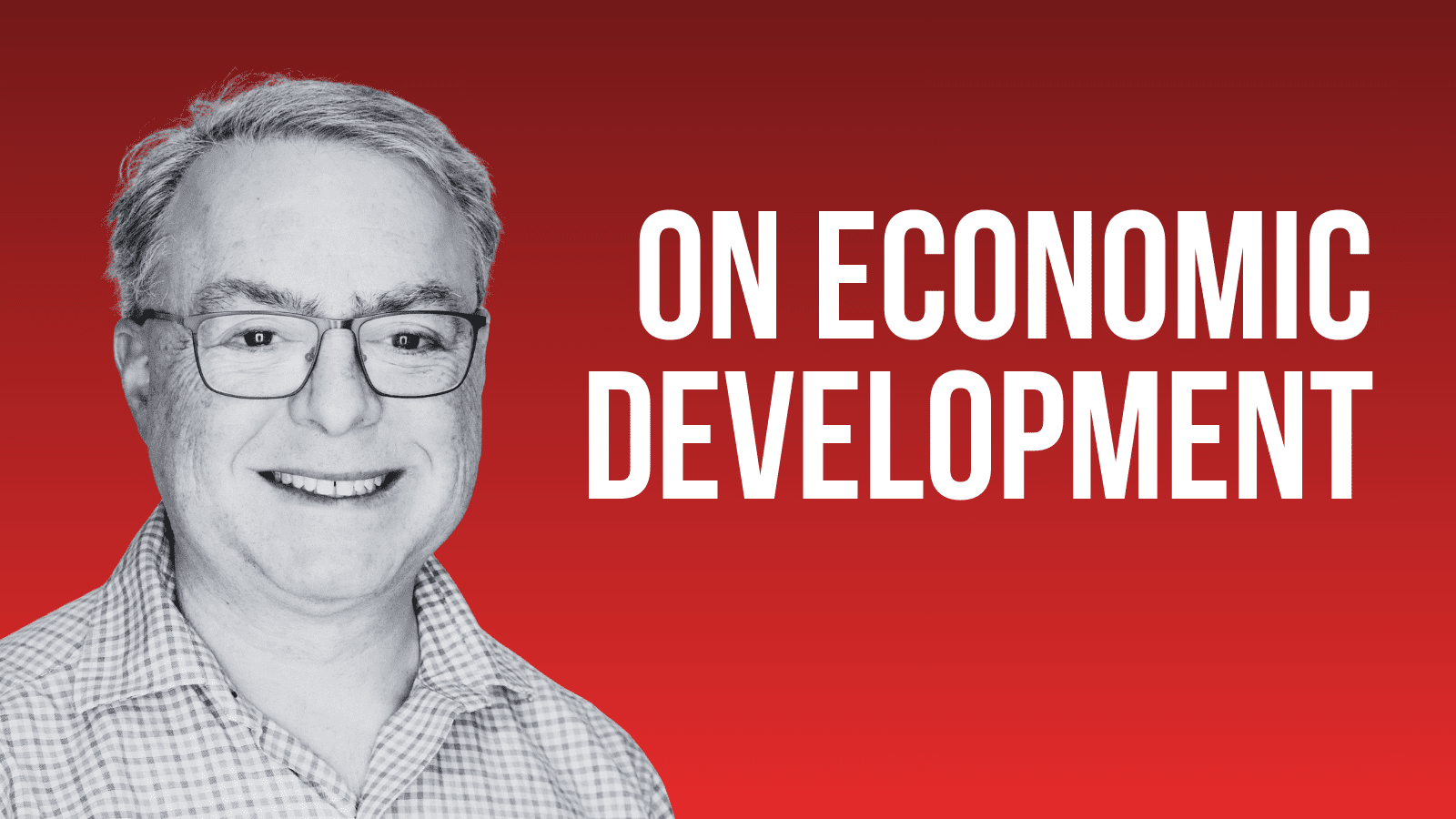
Chuck Tanowitz is a Newton resident who has been involved in local economic development for more than a decade. He can be reached at chucktanowitz@gmail.com.
Share This Story On:
DONATE TO SUPPORT LOCAL NEWS
Your tax-deductible gift to the Newton Beacon keeps our community connected and its residents informed.
Get story alerts twice a week:
Related Posts



Upcoming Events