
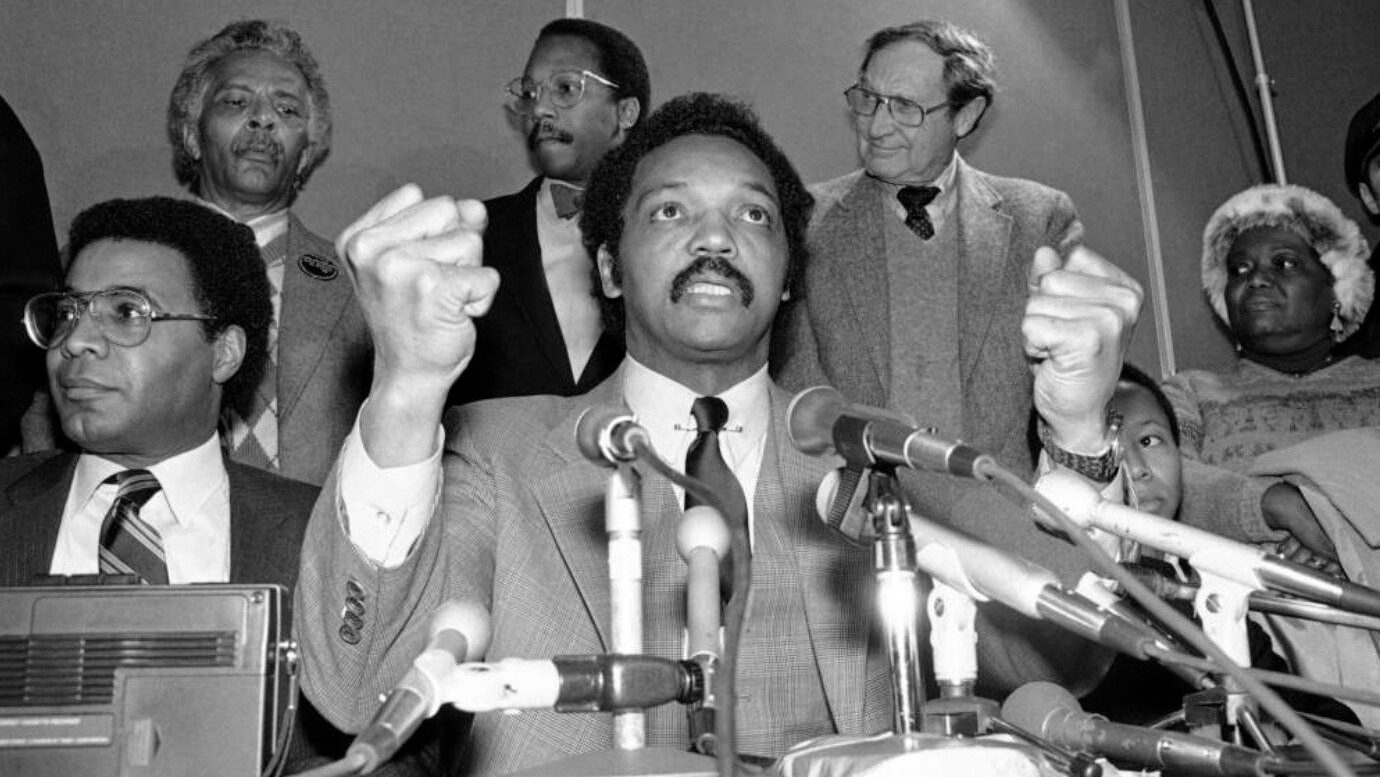
JesseJackson1
Jesse Jackson, civil rights leader and presidential candidate. Public domain photo
The Rev. Jesse Jackson, a longtime civil rights activist, Baptist minister, former shadow senator for the District of Columbia, and two-time presidential candidate, died on Feb. 17. He was 84 years old.
Jackson lived a full life of fighting for the rights of African-Americans through his activism, which was often manifested through giving speeches. He did this several times here in Newton.
Jackson was already an activist when he was an undergraduate student. In 1960, when he was home from college, he and seven other black people participated in a sit-in at the Greenville, S.C., public library. They were arrested, as the library was only for white people. As a result of this protest, the library system became integrated. So it is unsurprising that when he addressed Boston College students in April 1989, he told them:
“Whenever students are alive and alert, sober and sane, you drive America forward. But when students are selfish and hedonistic, when you turn inward and accept short-term pleasure, you slow down the machinery and slow down the quest for peace and justice.”
Jackson was highly concerned with the example being set for teens and young adults. In a keynote address he gave at the Boston College Law School in 1994, he said: “We offer them commercialized violence, easy access to guns and drugs, and mindless materialism as a value system.”
He did not like that youth sports were being prioritized over education. He noted that athletes were expected to commit to practicing without distractions, and parents encouraged this and respected the coach—in a way that was not true for academics. “If we spend three hours a night on reading and writing and counting without TV, we will slam-dunk school as we slam-dunk basketballs. It’s a matter of priorities and values,” he said.
But he was also frustrated by finger-pointing at struggling parents, who were buckling under low wages and the cost of living. “Can a father spend time with his son when he has to work two jobs just to make ends meet?” he asked in the same address. He didn’t want a better welfare system: he wanted the opportunities of the American dream available to everyone.
He was deeply concerned with economic justice. Jackson was the director of Operation Breadbasket, the organization set up by the Rev. Dr. Martin Luther King Jr. to help black people find jobs. But Jackson emphasized that economic justice was not needed only for racial minorities.
“Most poor people are not black or brown. Most poor people are white and female, and most poor people are not on welfare. They work every day. They cook. They clean. They raise other people’s children. They sweep streets, change beds in hotels, wipe down feverish patients in hospitals, empty bedpans. Yet when they get sick they cannot afford to lie in the very bed that they made. We must be a better nation than that,” he said during his 1989 BC visit. Jackson was a Baptist minister, and he remained committed to his faith throughout his career. It was not separate from his activism: rather, his theology informed his beliefs in equality.
“Racism suggests that God was imperfect in his creation. Racism and sexism are immoral and sick, and they must be healed,” he said at BC in 1989. Father William Neenan SJ, then academic vice president of Boston College, praised Jackson for his ‘prophetic vision’ in his introduction. Jackson was friends with another Jesuit priest, Father Raymond Helmick, who was a promoter of peace and a Boston College professor. The two visited various conflict sites around the world, such as Syria, Lebanon, and the former Yugoslavia. This friendship was what brought Jackson to Newton most recently in 2017, when he delivered an address at a memorial lecture for Helmick at Boston College. “The difference between peace makers and peace keepers is listening,” said Jackson.
Share This Story On:
DONATE TO SUPPORT LOCAL NEWS
Your tax-deductible gift to the Newton Beacon keeps our community connected and its residents informed.
Get story alerts twice a week:
Related Posts








Upcoming Events