
ParkingBan
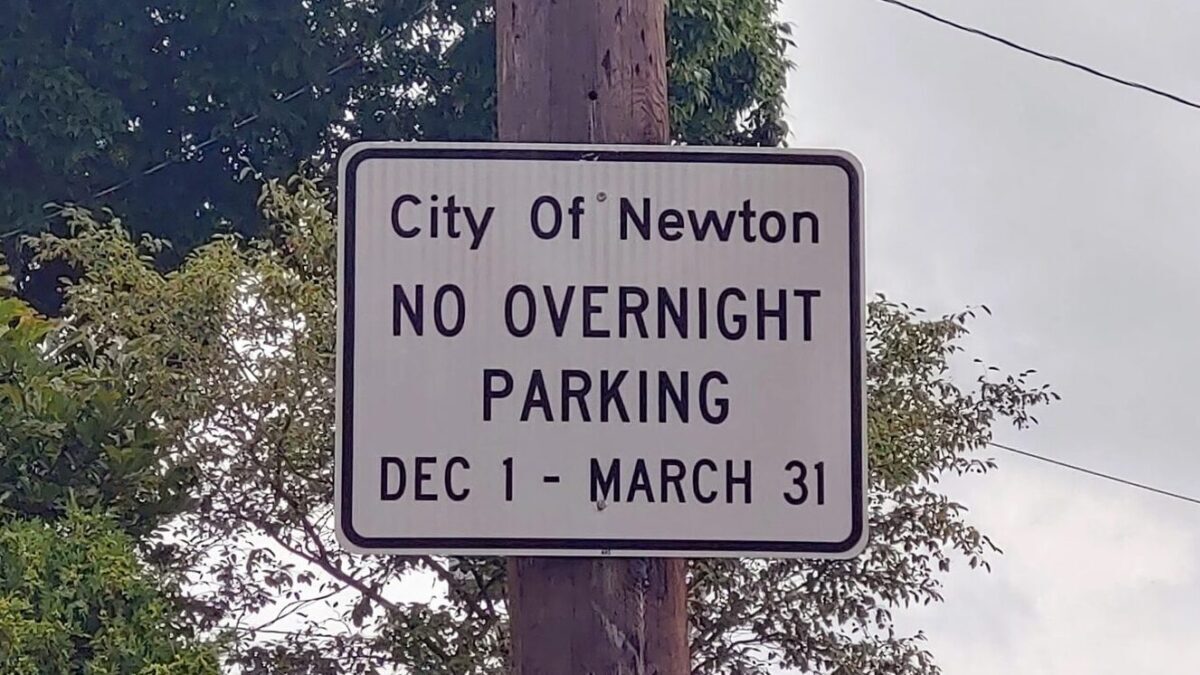
Newton currently has an overnight winter parking ban. Courtesy photo
Eight months after Newton voters narrowly rejected a repeal of the city’s overnight parking ban, a city-commissioned working group presented its recommendations for limited trials next winter that could lead to new policy.
“Our purpose here is not to rewrite the ban to overturn the ban, but really just say is there is there an opportunity to learn more about what would happen if we did release if we did release the restriction or ease the restriction,” said Chris Markiewicz, a former city councilor and member of the working group.
The seven-person group includes five current and former city officials, plus one local organizer from each side of the ballot question debate last fall—Peter Klapes from the “repeal” campaign and Howard Rosenof from the “keep” camp.
The working group is tasked with making recommendations to the city council on new traffic policy, and it presented them in the form of a 58-page report at Thursday’s Public Safety and Transportation (PST) meeting.
Within the report, there are seven recommendations upon which the group unanimously agreed:
● Establish clear guidance for exceptions to the winter overnight parking ban.
● Codify expanded exceptions for residents with disabilities.
● Develop a system to provide overnight parking options for home health care aides.
● Adopt streamlined and clear mechanisms for requesting temporary exceptions to the
ban.
● Implement changes as trials.
● Create policies that limit harm.
● Learn from other communities.
One of the biggest concerns among the group was over people with disabilities, who often need to have a home health aide park on their property, or who can’t easily walk to a nearby municipal lot, constricting their parking options. As it stands today, anyone who needs a disability exception to the parking ban has to be approved by a vote of the traffic council.
“Disabilities was a big focus for us in this in the work we did,” Markiewicz said. “It was talked about I think almost in every meeting.”
The group didn’t make a clear recommendation about what those exceptions would be, but proposed options to exempt all cars with disability placards or to allow the police department and ADA coordinator to manage exceptions, rather than going through the traffic council.
But whatever the committee decides, they should write it into law, according to Markiewicz.
“If you want to do this, you will need to actually create an ordinance, and the group was unanimous in saying you should take that formal step,” Markiewicz said.
The group also considered expanding access to public lots. By analyzing at all the residential properties in the city relative to all the municipal lots, they found that most homes are within walking distance to a lot.
The city could even open other kinds of city-owned property to parking, like lots at public schools or the Newton Education Center.
“If you really open it up, you can cover a significant part of the city. This would seem to be fairly easy,” Markiewicz said.
When trials potentially begin this winter, the group recommended the council look at areas like Oak Hill Park, Thompsonville and Chestnut Hill as areas where there aren’t many municipal lots within walking distance, making on-street parking access potentially more impactful. “There may not even be much need here, but it could be interesting just to try someplace and see what happens,” Markiewicz said.
And whatever PST chooses to adopt from the working group’s lengthy advice, Markiewicz advised that the city take baby steps before it takes the giant leap of a new ordinance.
“Whatever you do, we recommend you put expiration dates on it, and that you're measuring it from the start and pulsing along the way,” Markiewicz said.
Share This Story On:
DONATE TO SUPPORT LOCAL NEWS
Your tax-deductible gift to the Newton Beacon keeps our community connected and its residents informed.
Get story alerts twice a week:
Related Posts


Upcoming Events