
PANTRY5
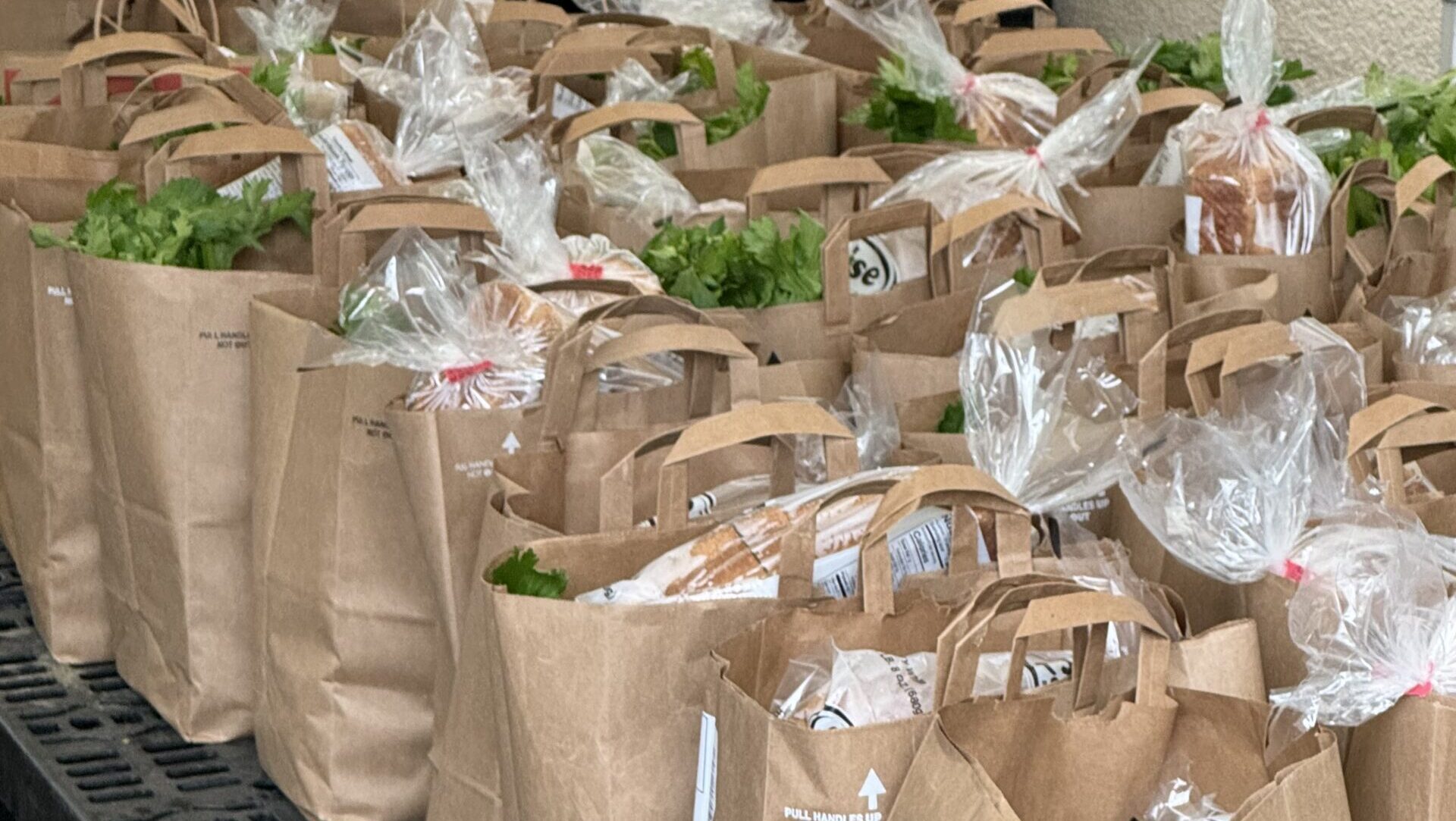
A food pantry in Newton prepares bags for delivery. Photo by Barry Wanger
Anticipating a lapse in funding for the nation’s largest anti-hunger program, Newton’s food pantries are bracing for a surge in residents seeking help.
SNAP, the Supplemental Nutrition Assistance Program formerly known as food stamps, provides monthly food benefits to low-income individuals and families across the U.S. The Trump administration said it would not replenish SNAP benefits for November if the federal government shutdown, which began Oct. 1, didn’t end before Saturday.
“The well has run dry,” reads a message on the U.S. Department of Agriculture’s website.
While the shutdown continues, two federal judges ruled Friday that the Trump administration must keep SNAP funds flowing. Trump posted on social media later Friday that he needs clarity from the courts on how to do that and indicated that there would nevertheless be delays in providing benefits. The Trump administration has not said whether it will appeal Friday’s ruling.
Given the uncertainty, it is unclear whether and when benefits will be cut off and when November’s SNAP funding might come.
Meanwhile, Gov. Maura Healey announced Thursday that Massachusetts will double the aid it provides to local food pantries and food banks, bringing that funding to $8 million.
In Newton, Centre Street Food Pantry is preparing for a 35% surge in household visits to the pantry in November, whether that’s registered households visiting more often or new ones signing up.
“Without SNAP as their lifeline, they are going to need more food,” said Rose Saia, executive director of Centre Street Food Pantry.
More than 40 million low-income people in the U.S. rely on SNAP, according to the USDA. One million of them reside in Massachusetts.
Leran Minc, director of public policy at Project Bread, a Massachusetts food security organization, said he’s concerned that smaller local organizations will be “overrun” if SNAP benefits lapse.
“If the pantry is experiencing higher than usual demand, they’re going to have to either turn people away and say, ‘We don’t have any food,’ or ‘We’re going to have to give everybody a lot less food,’” Minc said.

Newton Food Pantry Director Jeff Lemberg, left, and Board President Sindy Wayne, right, give construction updates at the organization’s soon-to-be home, a 5,000-square-foot facility on Rumford Avenue, set to open next May. Photo by Bryan McGonigle
In Newton, about 4,200 residents rely on SNAP, said Jeff Lemberg, executive director of Newton Food Pantry, an independent, nonprofit food bank based in Newton Centre.
“That is a lot of people who are going to need additional assistance to put healthy food on their tables,” he said.
Through walk-ins, appointments and deliveries, Newton Food Pantry serves more than 2,500 people across 1,000 households in Newton. It supplied 85,500 bags of groceries to them last year.
“We’re seeing more and more people coming to us for help,” he said. “Now, given the end of SNAP benefits for the month of November at least, we need to step up, and we are stepping up to help as many people as we can.”
Newton Food Pantry, established in 1983, has seen a “sizable number” of residents registering for assistance this year, Lemberg said. Over the past couple of weeks, about two dozen new people signed up.
The pantry purchases all the food it stocks, so Lemberg said it will have to ramp up November spending to address SNAP’s absence. They’re dipping into savings and seeking financial and food donations to make that possible.
Meanwhile, Centre Street Food Pantry has a monthly food budget of about $20,000, with which it serves 4,400 people across 1,100 households in Brookline, Needham, Newton, Waltham, Watertown and Wellesley, Saia said. Centre Street is adapting to meet the anticipated increase in demand for its services.
Centre Street will extend its Tuesday and Saturday hours for the month of November. It is also reaching out to community groups, such as Family Access of Newton and Boys & Girls Clubs, to develop distribution partnerships to get more food to the community, Saia said.
With Thanksgiving approaching, the need for well-stocked, functioning food pantries is especially great.
Lemberg and Saia said their food pantries are busier in November due to the holiday. The holiday season combined with the loss of SNAP benefits means the pantries will require a larger food stock and more volunteers.
“Everybody wants to be sure, both those who give to us and those who come to us, that everybody has a good Thanksgiving meal,” Saia said.
Centre Street will purchase whole turkeys to give to large families with five or more people this year. Saia said it is also sourcing chickens, pies and cranberry sauce, and encouraging the community to hold food drives for traditional Thanksgiving foods.
“We’re going to try and send everybody home with something extra for the holidays,” Saia said.
For food pantries, absorbing the impact of political and economic circumstances isn’t new.
Because of previous U.S. Department of Agriculture funding cuts, Saia said, Centre Street lost much of the free proteins and dairy it used to receive. Without USDA supplies, Centre Street shifted to rely more on its own budget, free items from the Greater Boston Food Bank, wholesale and donation relationships, and the Massachusetts Emergency Food Assistance Program.
“That’s what we do. We fill the gap,” Saia said. “And now there’s a new gap.”
But food banks and anti-hunger organizations can only do so much to fill the gap in the plan to address hunger. For every one meal that the anti-hunger nonprofit Feeding America provides, SNAP provides nine.
“SNAP was a big part of that plan,” Saia said. “And it’s going to be gone, and that’s going to leave a crater in its place.”
*****
This story is part of a partnership between the Newton Beacon and the Boston University Department of Journalism.
Share This Story On:
DONATE TO SUPPORT LOCAL NEWS
Your tax-deductible gift to the Newton Beacon keeps our community connected and its residents informed.
Get story alerts twice a week:
Related Posts





Upcoming Events