

ECONOMIC DEVELOPMENT
We’ve all seen those empty storefronts smack in the middle of our village centers.
Some, like the one-time pet store in Newtonville, have been vacant for years. Others, like the former Walgreens in Newton Centre, pull the life away from the street, but show signs of a hopeful future. Name your village, and there’s a place where you wonder, “Why can’t the owner find a tenant? Do they not even care?”
In truth, owners want tenants, and they’re usually scouting for them. But what casual observers can’t see is the decisions going on behind the scenes that make filling the space difficult.
The main challenge with storefronts is not just that they’re empty, but that they’re clearly visible empty spaces that make an area feel less desirable. You could walk by an office building and never know that offices have sat empty for years. But an empty storefront is like a pimple right on the edge of the village’s nose. Everyone sees it.
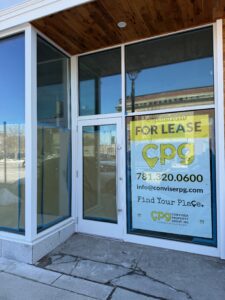
A vacant storefront in Newtonville. Photo: Robert Weisman
If empty storefronts were primarily driven by overdevelopment or inflated rents, we’d expect to see vacancies mostly in new buildings, vacancies that would decline once rents fall. Instead, we see long-term vacancies across building ages, ownership types and rent levels, suggesting larger retail and leasing challenges not specific to local developments.
The trend is so much of a concern here in Massachusetts that the state is now offering help. The Massachusetts Vacant Storefronts Program enables municipalities to access up to $50,000 in annual tax credits, which can be distributed to businesses that commit to occupying vacant storefronts for up to six months.
To qualify, a space must be vacant for at least six months, and the city itself must submit a list of eligible spaces. Newton is on path for this, as the city recently used Harvard interns to create a database of vacant spaces. The inventory database could also help identify patterns that could inform more targeted incentive programs.
For comparison, Cambridge has a detailed map of vacant storefronts, at least 17 of which have been unoccupied for more than five years. Maintaining this kind of dataset is remarkably expensive and time-intensive, and Cambridge has a large staff that handles this kind of work. It’s also impossible to be completely up to date (this one was last updated in October). But it’s great for helping the city tell potential retailers what’s available, where and who owns it.
The question of why spaces remain vacant isn’t simple. In a wonderful article, city planner Seth Zeren lays out 8 key reasons why storefronts may sit vacant: retail being an afterthought; poor design; bad marketing; high costs; lease timelines; the value of waiting; old, deteriorating spaces; or, owners who just don’t need additional income.
Here in our village centers we have multiple issues at once. Most landlords want tenants to take on long-term leases, often around a decade, which helps amortize the cost of expensive buildouts. Think about a restaurant that needs to spend lavishly up front to meet its needs. Often, a landlord will factor the buildout into the rent, so if the restaurant closes after a year, the landlord is left with a custom space they often can’t reuse as-is.
An owner also could be looking for a specific type of tenant to complement other parts of the building. If, for example, the building has a bakery, that bakery could include a clause in its lease prohibiting related businesses, such as a coffee shop or a grab-and-go restaurant. It could be that a building is generating revenue from upper-floor tenants, and an owner wants a business that will attract or keep the upstairs tenants happy.

Another unoccupied Newtonville store. Photo: Robert Weisman
Another challenge is that zoning and permitting issues for any particular building make it impossible to attract the type of tenant they want. Not too long ago, Newton updated its zoning use tables to allow for dog grooming locations in village centers. Before that change, attracting a pet-focused tenant to some buildings was simply impossible.
Experienced developers take the retail landscape into account as they’re building their projects. If you sat through various city meetings, you’ve heard discussions with retail consultants who look at both the square footage of retail being proposed as well as the sizes and specific locations of various storefronts. Once in place, landlords try to curate their offerings so they get the right foot traffic, but building the right blend of store sizes and types is more art than science.
There are also companies like Newton-based UpNext that are driving new retail uses and often take over empty storefronts temporarily to give retailers a chance to try new markets.
Many of us have watched these spaces sit empty longer than we’d like, and frustration is understandable. Unfortunately, retail decisions often move slower than neighborhood life.
Ultimately, it’s up to us, as a community, to be both wary and patient. While city officials and staffers can help, they cannot make decisions for the landlord. We can only create the right environment where businesses want to move.
Chuck Tanowitz is a Newton resident who has been involved in local economic development for more than a decade. He can be reached at chucktanowitz@gmail.com.
Share This Story On:
DONATE TO SUPPORT LOCAL NEWS
Your tax-deductible gift to the Newton Beacon keeps our community connected and its residents informed.
Get story alerts
twice a week:
Related Posts








Upcoming Events