
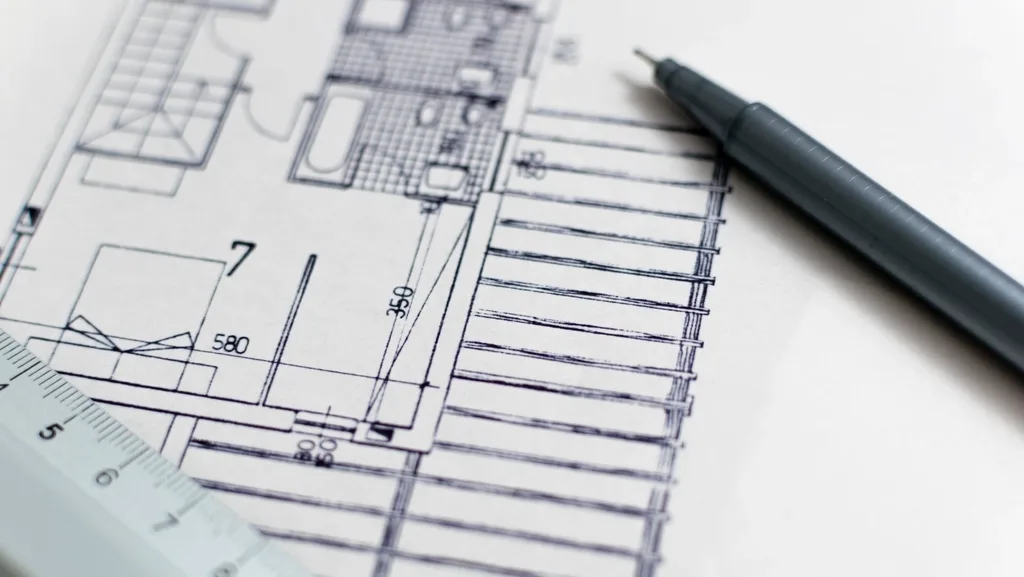
ADUdesign
Architectural design. Google Commons photo
In an effort to encourage accessory dwelling unit (ADU) construction in Newton, the city’s planning and development department will soon be accepting submissions for a new ADU design contest known as Backyard Blueprints.
An ADU is a small, self-contained residential unit located within a larger residence. They are commonly referred to as in-law apartments and can be built inside of the primary home or in a separate structure on the same land.
Earlier this summer, the city received an AARP Community Challenge Grant to support the launch of the competition. Designers, architects, builders and students will be invited to submit their ADU plans in mid-August. The city will first review submissions for zoning compliance and then the public will vote on a few winning designs that builders can use as a template and residents can choose from when deciding to build an ADU.
Voting will take place later this fall. The AARP grant funding will last until December 31.
Nora Colello, Newton’s chief of long-range planning, told the Newton Beacon that the planning department has been working for some time to increase resident interest in ADU construction and to make the permitting process smoother.
“The goal of the competition is to both create a competition that leads to exciting, high-quality designs, and create tools that make it easier for Newton residents to navigate the permitting process when it comes to ADUs,” she said.
Colello said between 10 to 20 ADUs have been permitted in Newton each year for the last several years, with a spike seen during the COVID-19 pandemic. She said Newton’s aging population makes ADUs a popular idea for people hoping to age in place and make space for younger family members to move into the same household.
“We’re really just trying to demystify the process and give homeowners the information that they need to confidently move from idea to construction,” she said. “There’s a group of residents that really are looking to downsize, and we want to make sure that they can age and stay in the community, and ADUs are a great way for them to do that.”
Last month, Gov. Maura Healey’s administration launched a statewide program to help homeowners figure out the feasibility of building an ADU on their property. The state also held an ADU Design Challenge this year and posted approved winning designs online.
When building an ADU, residents and contractors have to take into account Newton’s building and zoning codes, stormwater drainage, tree removal permits and more. In 2024, the state passed the Affordable Homes Act, making ADU construction by-right, meaning that as long as the construction is compliant with all requirements, residents do not need to receive additional discretionary approval from the city or state to build an ADU.
Newton already allowed by-right ADUs, but in April 2025 the city council passed an ordinance further loosening restrictions on ADU construction. Only 122 units had been built between when Newton first allowed ADU construction in 1987 to when the ordinance was passed in 2025. The city saw a slight uptick in ADU permits following the ordinance.
Colello said the current process can become a back-and-forth between residents, builders and the city, and can be especially confusing for contractors and designers who are not familiar with Newton’s building and zoning laws. The complicated process can also result in higher costs for residents who are paying builders for their time.
Amanda Wolfe, senior planner in the long-range planning department, said there is still work to be done in terms of making the permitting process easier to navigate and more affordable.
“The state law changes and the subsequent local changes did a lot to reduce barriers for ADUs, but the reality is construction and design are still often a huge barrier for people actually to build an ADU,” she said. “There’s people who are interested, but it’s just not an option. So the hope is that we can at least reduce some of that cost through this effort.”
For any questions on the ADU permitting and construction process, Colello recommends residents visit the Inspectional Services Department (ISD) on the second floor of City Hall. She added that the design competition is a unique opportunity for residents to take part in determining the future of ADUs in Newton, and is one that the planning department hopes will continue.
“We’ll see how successful it is in terms of accomplishing the goals of improving and smoothing permitting hurdles, reducing costs and then also raising awareness and excitement around the benefits of ADUs,” she said. “I think we’re hopeful that this is something that has a life far into the future beyond December 31, when this particular grant is finished.”
Share This Story On:

DONATE TO SUPPORT LOCAL NEWS
Your tax-deductible gift to the Newton Beacon keeps our community connected and its residents informed.
Get story alerts twice a week:
Related Posts



Upcoming Events