
PANTRY5
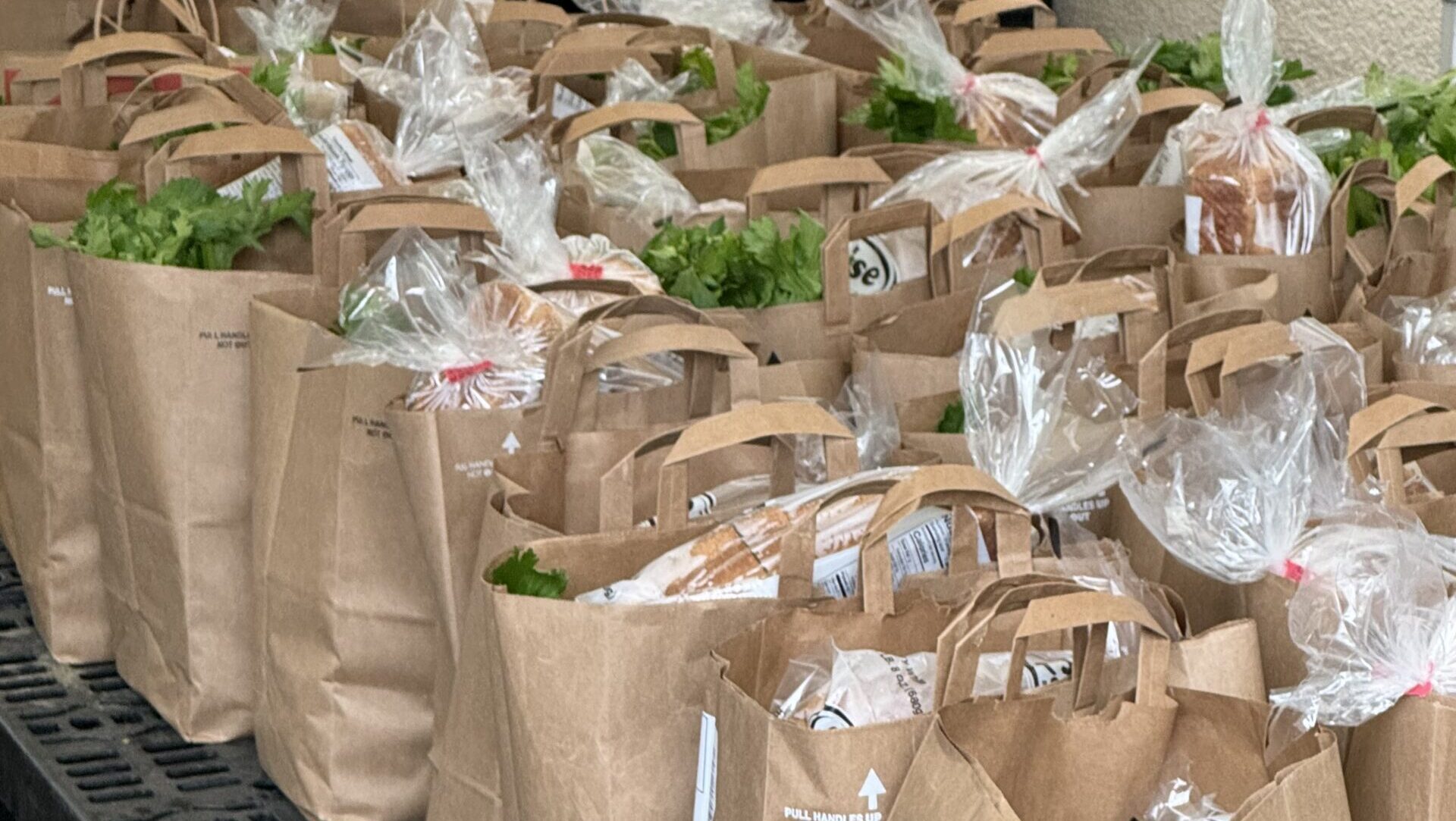
A food pantry in Newton prepares bags for delivery. Photo by Barry Wanger
The cost of food has risen dramatically in the past few years due to a combination of factors, from government tariffs to bird flu, at the same time as other household expenses have also gone up. For some families in Newton, this has put a large strain on their budgets. Church of the Redeemer in Chestnut Hill aims to help reduce that struggle through their FUEL program, which provides bags of food to children in Newton Public Schools for them to eat over the weekend.
“There’s been a real uptick in need,” said the Rev. Michael Dangelo, the rector of the parish. The program started several years ago with the assistance of one of his parishioners, Velura Perry.
Dangelo was familiar with a food backpack program in Dallas, where hungry children would be given food for the weekend. But in Newton, he realized that it was the entire family who needed food, not just the child.
“We’re there to help supplement the families,” he said.
They began reaching out to school nurses and social workers, and now distribute food to all 19 of Newton’s public schools; about a couple hundred bags per week, with about 5 to 8 pounds of food per family. It’s all done anonymously. “We’re not proselytizing, and we don’t put anything in the bags about who we are. If a kid is hungry, we want to make sure they get to eat,” said Dangelo. “I don’t want to see a single child go to bed hungry in the city of Newton,” he added.
But he does see this as part of the mission of the church. “We need to think about our neighbors,” he said. The Newton Beacon previously wrote about Church of the Redeemer’s Habitat for Humanity project. To Dangelo, this is a key way to express their faith through caring for those in need.
The parish is generous in support of the program, which spends about $45,000 to $50,000 per year on buying food at cost.
“We started small, but we’ve been able to build,” he said. He is appreciative of the warm response he has received from Newton school staff. The barrier to increased food distribution is not money, but labor. “I wouldn’t ask for more without more volunteers,” said Dangelo. Food is purchased on Monday, packed on Tuesday and Wednesday, and delivered to schools on Thursday. They try to respond to broader family needs, like choosing rice over pasta, or adding shelf-stable milk. Unlike a traditional food pantry, they also have to keep in mind that each bag needs to be something a child can carry. To this end, they generally prefer cash donations over food, because donated bulk food can often be too heavy.
Of course, he hopes that he doesn’t need to increase distribution.
“Nobody wants there to be greater need to be met,” he said. But when there is greater need, like when federal food aid was cut off last fall, they were able to respond quickly to the 20% increase in requests.
Share This Story On:
DONATE TO SUPPORT LOCAL NEWS
Your tax-deductible gift to the Newton Beacon keeps our community connected and its residents informed.
Get story alerts
twice a week:
Related Posts




Upcoming Events