
learycover
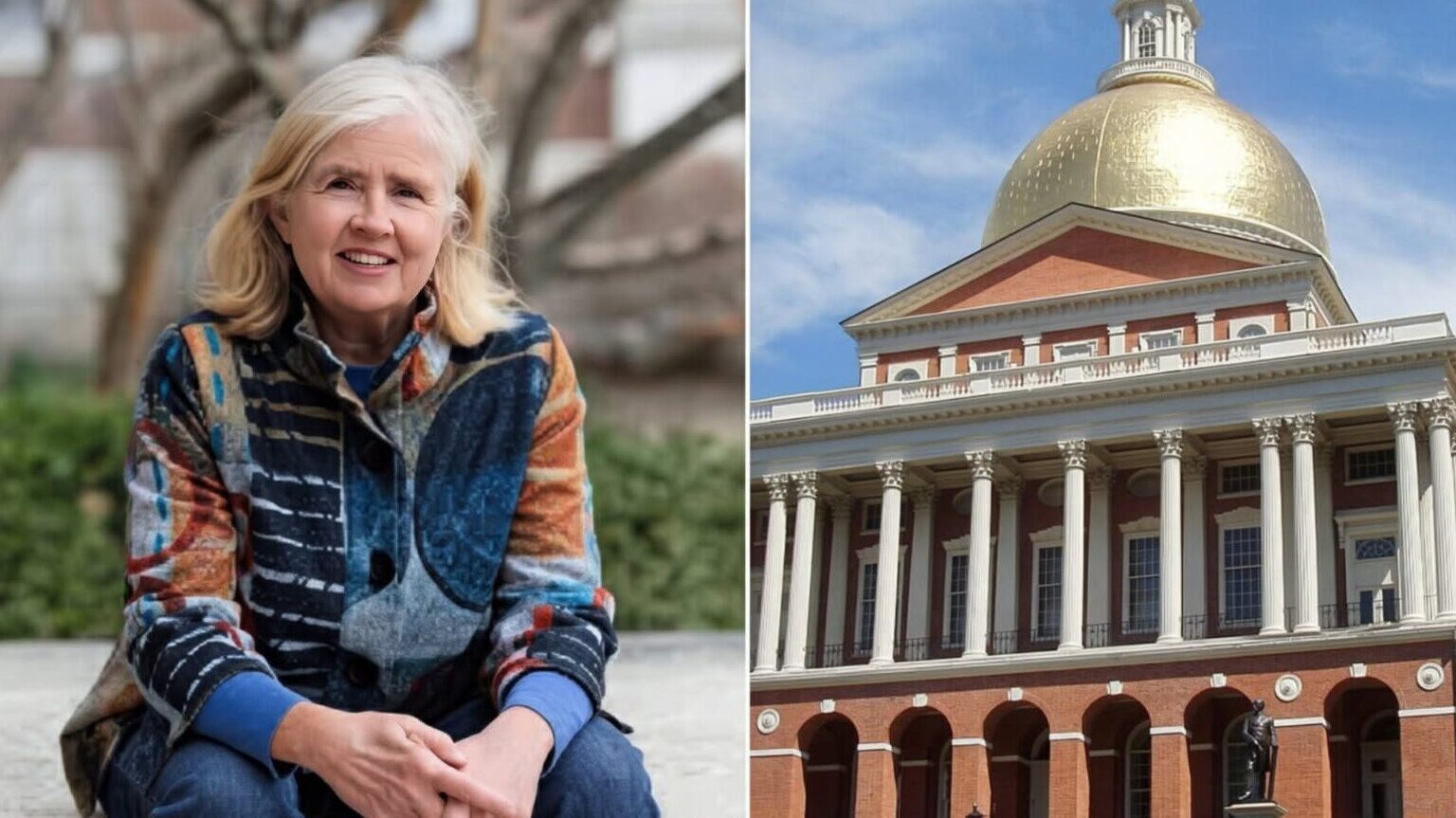
Newton City Councilor Alison Leary is running for the 10th Middlesex state representative seat. Courtesy photo
Newton City Councilor Alison Leary is known for climate activism and housing advocacy.
She’s not, however, known for political subtlety.
“As far as I’m concerned, he’s bought and paid for,” Leary said of State Rep. John Lawn as she sat down outside Caffè Nero in Newtonville to talk about why she’s running against Lawn for the 10th Middlesex seat. “And you can quote me on that.”
Challenging work
After At-Large City Councilor Carleton Merrill died in 2013 and Ward 1 Councilor Scott Lennon ran for Merrill’s at-large seat, Leary decided to run for the ward seat. She faced three other candidates and won, and she was seated that November.
Leary, a Democrat, ran that year on a mission to make the city more proactive with environmental hazards and climate change.
“Climate change is what kept me up at night, and one of the prime movers when I originally ran, when I had two young kids, and I didn’t see a lot of action to address it,” Leary said. “And I knew that new cities had a lot of power, and as you know, we have done a lot since 2013, really a lot, and I’m proud to have been a part of that.”
Leary has a lengthy career in nonprofit leadership. She was a program manager for Heading Home—an organization that housed families dealing with recovery from substance abuse and addiction.
“That was a difficult job,” she said. “It was challenging, but I learned a lot about the housing situation and the lack of it and the barriers people have to housing.”
She later ran a group home for adults with cognitive disabilities in Oak Hill for Pathway to Possible.
Part of that work involved working with the Community Preservation Committee and lobbying on Beacon Hill for more funding for housing and other needs.
Her dual motivations for climate action and housing intertwined in her advocacy as a city councilor, and she supported the controversial Village Center Overlay District plan in 2023, which brought the city into compliance with the MBTA Communities Act but likely led to the ouster of multiple city councilors in that year’s local election.
Advocacy in the face of opposition is nothing new to Leary, and now she has her eyes on the State House.
This is Leary’s second run for the seat. She ran in the Democratic primary for the seat in 2020 and came within six points of Lawn, but the COVID-19 pandemic hobbled campaigning that year.
Lawn outspent Leary that year and she still won Newton’s portion of the district as well as Waltham’s. And she believes the inability to go out and connect with voters in person cost her that race.
A push for MassCare
Leary is making up for that this time, saying she’s knocked on thousands of doors across the district this year.
Her focus this time has shifted from climate and housing to health care. Leary wants the state to implement a single-payer health care system.
Especially as health care costs devastate state and local budgets nationwide, Leary said, “I’ve become a big advocate for Medicare for All,” referring to legislation drafted by U.S. Sen. Bernie Sanders, I-VT, and supported by many progressives in Congress.
“You’ve seen what (health care costs) have done to the city of Newton budget,” Leary said. “We spend $59 million on health care. That’s just our health care spending.”
Leary has joined MassCare, a campaign to get single-payer health care in Massachusetts similar to Sanders’s Medicare for All bill was aimed at doing nationally.
Leary said single-payer is slowly making its way into mainstream political conversation because health care costs have gotten so out of control. But there’s still a wall of hesitancy to overcome, and controversy over policy tends to make things grind to a halt in both government and advocacy work.
“You know the old saying, ‘Americans will do the right thing once they’ve exhausted every other option,’” she mused.
Leary recently attended a MassEquity conference at UMass Boston, where she saw that political paralysis on display.
“I got up and said, ‘Why aren’t we talking about Medicare for All?’ because they were all like, ‘We need bold action, we need to think outside the box,’ and it was crickets,” she recalled. “And actually, the Undersecretary for Health and Human Services was at the next panel, and she said, ‘We really need to keep it in the ballpark.’ I’m sure she was referring to my comments.”
With single-payer health care in Massachusetts, Leary said, Newton would save more than $25 million a year on health care costs.
There’s a bill in the Joint Committee on Healthcare Financing that would transition the state to single-payer health care. It’s been sent to that committee every session for the past several years and never makes it to the House floor for a vote.
The chair of that committee is Rep. John Lawn.
“He doesn’t support Medicare for All, I will support it, so he’s got to go,” Leary said, adding that she assumes his opposition is because the transition to single-payer would be too difficult.
“We can fly astronauts to the dark side of the moon, and we can fix this [health care] like 18 other developed countries have, and it could be a more unique model,” Leary said. “We might have some plan of transition. There are a lot of ways we could go, but it is a crisis.”

Left to right: City Councilors Maria Greenberg, Alison Leary and Brittany Hume Charm attend a protest against the Trump administration and Immigration & Customs Enforcement in Newton Centre on Jan. 10, 2026. Photo by Bryan McGonigle
‘What the hell are they hiding?’
Leary is also making transparency part of her platform, and she ripped Newton’s state representatives for voting for H.5469, a bill that set rules and parameters for the state auditor’s legislature audit.
The audit was passed by 72 percent of the voters in 2024, but lawmakers have been fighting to stop or whittle it down, citing constitutional doubt even though the Supreme Judicial Court had deemed the audit constitutional before it appeared on the ballot two years ago.
Leary criticized that bill—which she said will ruin any confidence people had in an audit—and called out Newton’s representatives for supporting it.
“They all sucked up to the leadership and voted for a terrible bill, and they should be held accountable for that,” she said.
As of now, the legislature is not covered by state public records law, and Leary supports a proposed ballot question that would change that.
“The general court is just far too secretive now,” Leary said. “It makes me think, ‘what the hell are they hiding?’ Really, what are they hiding?”
Leary also wants stipend reform. Lawmakers get stipends for everyday costs, and those on committees get the biggest stipends. This, Leary said, creates a system of patronage in the legislature, since leadership determines committee assignments.
And, Leary added, there are committees that are formed but never actually meet. So there are stipends for doing nothing.
Back to housing
Leary still saves space in her activism for housing access, and she wants to continue that on Beacon Hill. She’s been endorsed by Abundance Housing, a nonprofit group that supports more housing development in the state.
Gov. Maura Healey signed the biggest housing bill into law last year, which undid certain zoning regulations in communities statewide, and Leary wants to build on that foundation.
“I do think we need to have more multifamily housing by-right in certain areas,” she said. “And that’s what the MBTA law was about, right? It was about zoning for multi-families so they don’t have to go through the Land Use Committee.”
And she’d support even more density in Newton’s village centers.
“Do you remember what this building was?” She asked, looking around the bustling Newtonville Plaza. “This was an ugly municipal parking lot.”
The Democratic primary is Sept. 1.
Share This Story On:
DONATE TO SUPPORT LOCAL NEWS
Your tax-deductible gift to the Newton Beacon keeps our community connected and its residents informed.
Get story alerts twice a week:
Related Posts



Upcoming Events