
Garden City
Winter is a quiet season in the garden, but it has its own opportunities for getting your hands in the soil. Despite the cold weather, I have planted seeds outside in preparation for spring using a technique known as winter sowing.
Arrayed across a bench on my Auburndale patio are small “greenhouses” made from translucent plastic gallon cider jugs and salad containers. Each is filled with a dampened seed-starting mix and topped with native perennial seeds which I sowed in January.
My garden is filled largely with native plants. In autumn, I collect seeds from my garden or buy them from native plant sources such as The Wild Seed Project or Prairie Moon Nursery. Many native seeds require a period of cold, damp weather before they can germinate in the spring. This is a process called cold stratification, and sowing the seeds outdoors in winter provides these necessary conditions for favorable growth. Most of the seeds I planted this year require up to 60 days of cold stratification to break dormancy in the spring and germinate. These seeds include goldenrod, columbine and skullcap.
In the same way that plants self-sow by dropping their seeds on the ground in fall, I sow some seeds directly into the garden before winter or scatter seeds around after a snowfall. The seeds I direct sow are those whose seedlings I can easily distinguish from other emerging plants in spring, such as butterfly weed. Since many seedlings look similar to one another in their earliest stages, I sow most seeds in individual containers to make them easier to identify and to avoid confusing them with the weeds that, sadly, appear too often in my garden.
How to Winter Sow
To prepare a plastic jug for planting, poke drainage holes in the bottom of the jug. Then cut the jug horizontally, just under the handle, leaving a portion of the jug intact to act as a hinge. Fill the jug with 2 to 3 inches of a potting mix previously dampened with water in a wide, shallow bucket. Sow the seeds, label the jug inside and out, and seal the cut sides of the jug with duct tape. Leave the jug cap off for ventilation and to allow rain and snow to enter.
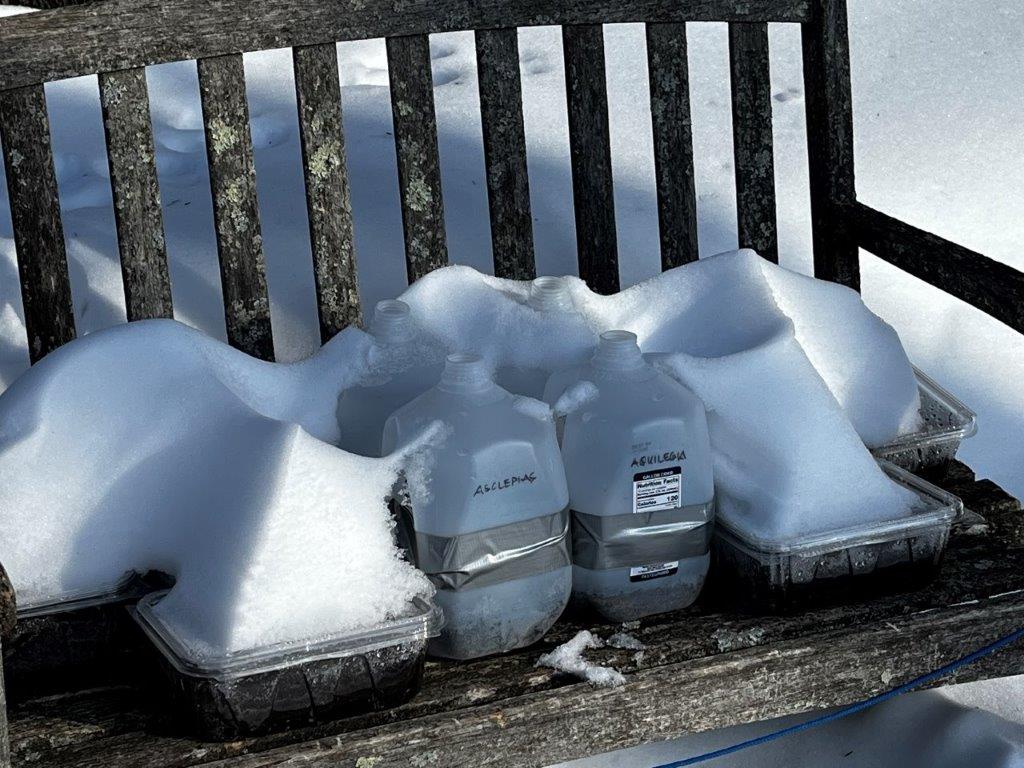
Plastic jugs and salad containers filled with seeds and soil for this spring’s garden. Photo: Lisa Gianelly
To prepare a plastic salad container, poke holes in both the top and bottom before adding soil and seeds. Before closing the lid, label the container inside and out.
The jugs and salad boxes then sit undisturbed in a partly sunny spot in the garden for the winter months, experiencing the same weather conditions that they would if they had been sown directly in the garden.
Winter sowing is possible even at the end of February or early March, depending on the seeds chosen. Generally, cold stratification occurs at temperatures of 40 degrees and lower. With a slow start to spring, seeds sown outdoors in late winter will have the benefit of chilly weather into April. According to Prairie Moon Nursery, if time for stratification is constrained, 30 days of cold weather may be sufficient for many seeds to germinate.
In a pinch, the refrigerator can mimic winter weather. Seeds layered between damp paper towels and placed in a plastic bag in the refrigerator for the number of days necessary for cold stratification will be ready for planting once they begin to germinate.
When spring brings warmer temperatures and seedlings begin to emerge in the containers, take the lids off the salad boxes and open the plastic jugs during the day and close them at dusk to protect the seedlings from chilly nights. Move seedlings that need sun to a brighter location and woodland seedlings to a shadier area. Water the seedlings gently when needed to prevent the soil from drying out.
Leave the seedlings in their containers until they develop three or more sets of true leaves and are a few inches tall. (True leaves are the leaves that appear after the initial two small leaves known as cotyledons, or seed leaves, which sprout soon after germination.) Transplant them into pots or directly into the ground. Where possible, transplant the seedlings individually. However, if I’ve heavily sown a container (this tends to happen when the seeds are really tiny) and the seedlings are growing very close together, I remove the entire block of soil from the container and gently separate it into sections before transplanting.
Unlike annuals grown from seed that flower quickly, most native perennials grow slowly, developing roots and foliage in their first year and flowering in their second. Winter-sown perennials require patience on the part of the gardener, but they also offer a simple and inexpensive way of filling or expanding garden beds over time with little effort.
Lisa Gianelly and Marian Prokop, who alternate columns, are Newton residents and certified master gardeners. They welcome your suggestions for column ideas and news to share of gardening-related events throughout the city. They can be reached at beacongardeners@gmail.com.
Share This Story On:
DONATE TO SUPPORT LOCAL NEWS
Your tax-deductible gift to the Newton Beacon keeps our community connected and its residents informed.
Get story alerts twice a week:
Related Posts










Upcoming Events