
cent_prodisc_l_covermodel-v2 (1)
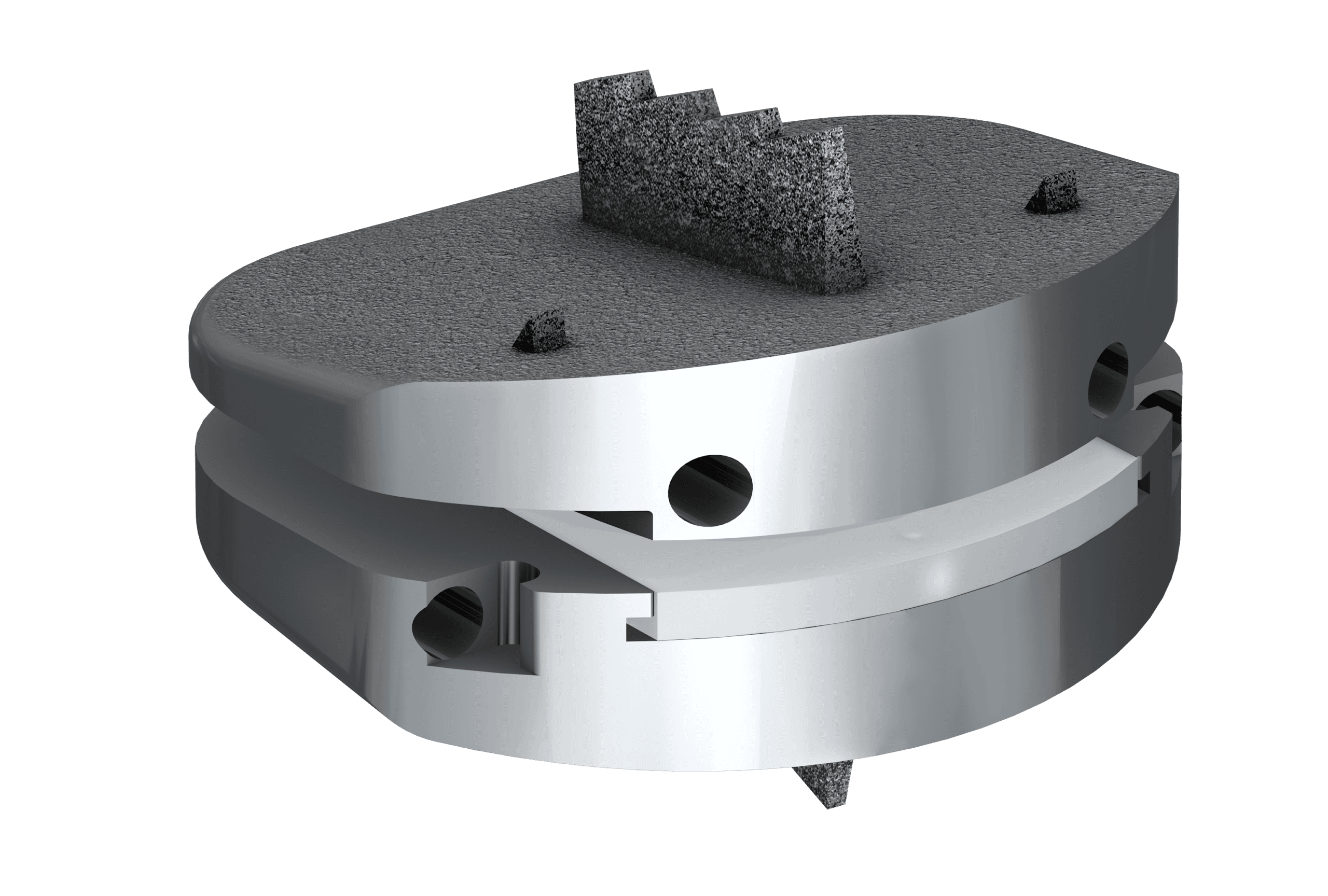
Rendering of a Centinel Spine artificial disc used for motion-preserving spinal surgery. (Courtesy of Centinel Spine)
A Newton surgeon is expanding access to a type of spine surgery that allows patients with chronic lower back pain to remain mobile and return to the activities they enjoy sooner.
Jessica Aidlen, chief of spine surgery at the Newton-Wellesley Spine Center, currently uses artificial discs created by Centinel Spine to offer a motion-preserving alternative to traditional spinal fusion. Instead of restricting movement, the discs allow motion that mimics a healthy spine.
Motion-preserving spinal disc replacement has been FDA-approved since the mid 2000s, but Aidlen said availability depends on individual hospitals and surgeons deciding to offer the procedure.
Aidlen described herself as a surgeon who cares a lot about motion preservation, but noted that other types of surgery, such as spinal fusion, may still be the best option for some patients depending on their health history. A younger patient with a spine injury but good bone health would be a candidate for motion-preserving surgery, whereas a patient with advanced spinal degeneration may see better results from a spinal fusion.
“Over my career, I’ve really evolved into a minimally invasive spine surgeon,” she said. “I did a lot of training and taught myself these techniques, and went to surgeon trainings on minimally invasive surgery, including minimally invasive fusion and motion preservation, so I could offer this technology to my patients.”
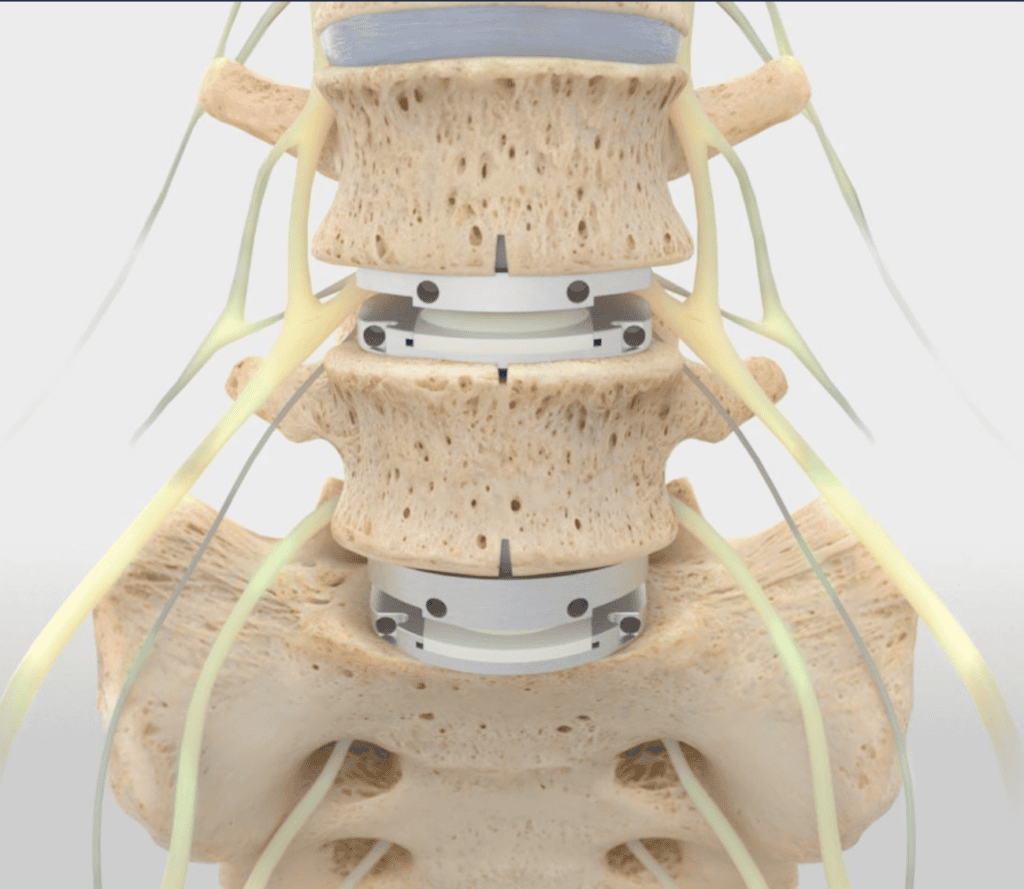
Rendering of a spine with artificial discs. (Courtesy of Centinel Spine).
Aidlen said that patients should exhaust their options of non-surgical treatments before considering either type of spinal surgery. She estimates that she’s performed hundreds of motion-preserving disc replacements so far in her career.
“One of the benefits I think of motion preservation early on after surgery is that patients really get back to their normal lives and their mobility quite quickly,” she said. “[But] if someone has a multiple-level fusion, they will certainly feel restricted motion and stiffness, and may have difficulty sometimes with day-to-day things like putting on their socks and shoes.”
Aidlen said insurance companies can sometimes be the biggest barrier to patients accessing the procedure. Despite Boston being a hub for medical innovation, she said that hospitals and surgeons in New England can also be surprisingly “old school” at times.
“I think a lot of times people, institutions, surgeons, systems in general kind of get stuck in the ‘this is the way we’ve always done it,’” she said. “The ability to offer this technique to patients is unique to surgeons who are open to the technology, believe in it and are trained on it.”
Share This Story On:

Give to the Beacon by Dec. 31 and double your donation.
BEACON SPONSORS


Get story alerts twice a week:
Related Posts








Upcoming Events