
Massachusetts_State_House_16 (1)
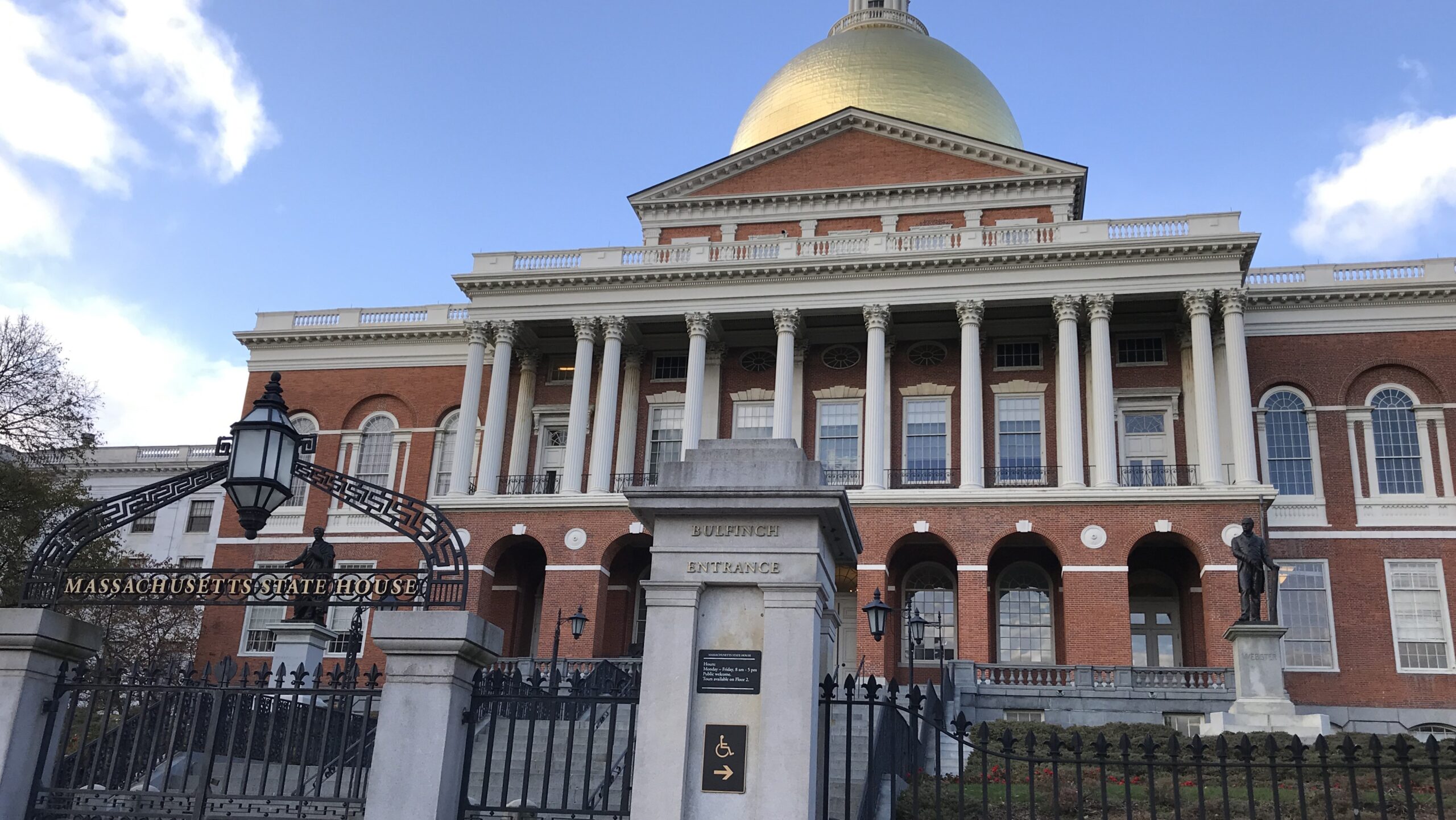
Massachusetts State House. Public domain photo
The responses grew louder each time Dorchester resident Antonio Ennis started a new chant in the small meeting room inside Church on the Hill. “What do we want?” Ennis called out, rousing the crowd.
“Rent control!” dozens of Massachusetts residents roared back.
“When do we want it?” Ennis prompted.
“Now!” the crowd shouted back.
“And if we don’t get it?” Ennis questioned.
“Shut it down!” their voices boomed, echoing off the walls.
The gathering, held just across the street from the Statehouse, brought together supporters of a proposed ballot initiative to limit annual rent increases to 5% or the rate of inflation, whichever is lower. The campaign group Keep Massachusetts Home said they collected more than 124,000 signatures from voters statewide, moving the initiative closer to appearing on the 2026 statewide ballot.
If approved by voters, the measure would reverse Massachusetts’ decades-long ban on rent control, which has been in place since 1994. Supporters say the proposal would protect tenants from displacement amid rising housing costs, while opponents worry it could worsen the state’s housing shortage by discouraging new construction and investment.
Ennis became involved with the campaign through one of its coalition partners, City Life/Vida Urbana, a nonprofit organization committed to building working-class power, according to its mission statement.
After the economy crashed in 2009, Ennis said he fell into foreclosure on his home. He found City Life, which helped him fight the foreclosure and ultimately regain the property. Ennis said he hopes the rent control measure will help stabilize communities and mitigate rent increases that some residents cannot absorb on top of other living expenses.
“It’s the only shot right now at allowing people to not have to choose between a rent increase and their medical bills, the food in their refrigerators, the clothes on their backs, their health care and children,” said Ennis.
While proponents of the ballot initiative argue that rent control is needed as an urgent tool to prevent displacement, some housing groups in Newton are unsure whether the measure would best address problems facing renters in Massachusetts.
Luke Mann-O’Halloran, a member of the Newton for Everyone’s steering committee, said the organization works to promote housing for Newton residents of all backgrounds, levels of income, abilities, ages and ethnic backgrounds.
While Newton for Everyone has not taken a stance on this measure, Mann-O’Halloran said rent control in general aligns with the group’s interest in ensuring renter security.
“If you own your home, you typically have a 30-year fixed-rate mortgage. I know exactly how much I will have to pay for my house every month for the next 25 years,” said Mann-O’Halloran.
He said renters do not always have the same security as homeowners, which he said is unfair because “everyone needs a place to sleep at night.”
While renters facing displacement due to steep rent increases are a significant issue, Mann-O’Halloran said Newton for Everyone is more focused on addressing the statewide housing shortage.
“I think of rent control as more of a management thing as opposed to fixing the shortage,” said Mann-O’Halloran.
Mann-O’Halloran said it is important to get the details of a rent control policy right because it could discourage the construction of new market-rate housing. While affordable and subsidized housing is important, he said, it relies on public or nonprofit funding, whereas market-rate housing does not and can help lower rents overall.
Newton has a higher rate of home ownership than the rest of the commonwealth, and most of its housing stock consists of single-family homes, which are typically owned, said Mann-O’Halloran.
“But that doesn’t mean renters aren’t as important a part of our community as everybody else,” said Mann-O’Halloran.
Mann-O’Halloran said Newton for Everyone encourages construction of new housing close to public transportation and village centers, where residents can access amenities by walking or a short bike ride.
While housing advocates like Newton for Everyone emphasize renter security and long-term affordability, real estate industry groups worry the proposal could have statewide consequences for housing development.
Tamara Small, CEO of NAIOP Massachusetts, stated in an interview that the measure would be one of the most restrictive forms of rent control in the United States and there is confusion about what is actually being proposed.
“Some reporters have said, ‘Oh, it’s capped at 5%,’ but that’s not the case,” said Small. “It’s the annual increase in the consumer price index or 5%—whichever is lower.”
Small said the CPI has exceeded 5% only twice in the past 20 years and has averaged about 2.5%, meaning annual rent increases would usually be capped at roughly that level. She also raised concerns about the rent cap being implemented based on the market prices from January of 2026, even though voters will not vote on the measure until later that year.
Small said that rent caps can make it harder for landlords to fund repairs and upgrades, leading to a decline in housing quality. She emphasized that the proposal includes few exceptions and would apply to most rental properties, including multifamily buildings, owner-occupied properties and short-term rentals like Airbnbs.
“This is not an opt-in proposal. This would take effect in all 351 communities in Massachusetts, whether or not they want it,” said Small.
Small pointed to Gov. Maura Healey’s statement about how Massachusetts needs 222,000 units of housing to be produced in the next 10 years to address the housing shortage. However, Small said that the housing crisis will get worse due to lack of investor interest if rent control is implemented.
“We get calls from investors all over the world who say, if rent control is in place, we will not invest there,” said Small. “Without investment, housing is not produced.”
Despite concerns from various groups, Keep Massachusetts Home celebrated their submission of over 124,000 signatures in support of the ballot initiative to the Secretary of the Commonwealth’s Office.
These signatures must still be certified before the measure can officially appear on the 2026 statewide ballot.
“As responsible landlords, we want long-term tenants. We want to build and stabilize our communities,” said Ennis. “And we need rent control—yesterday. Every day that we wait, a family is being displaced.”
Share This Story On:

DONATE TO SUPPORT LOCAL NEWS
Your tax-deductible gift to the Newton Beacon keeps our community connected and its residents informed.
Get story alerts twice a week:
Related Posts







Upcoming Events