VOTE NOV 4
Voter Resources
Election Day:
Tuesday, Nov. 4.
Polls: 7 am to 8 pm
Early voting at Newton City Hall:
Oct 25: 11am to 5pm
Oct 26: 11am to 5pm
Oct 27: 8:30am to 8pm
Oct 28: 8:30am to 5pm
Oct 29: 8:30am to 5pm
– Check Your Status
– Register To Vote
– Find Your Ward, Precinct and District
– Find Your Voting Location
– More on Elections: Secretary of State
Election Events
LWV Parking Ban Ballot Question Meeting
Oct. 7, 7 to 8:45 pm
Newton Free Library
330 Homer Street
Newton Municipal Election
Nov. 4

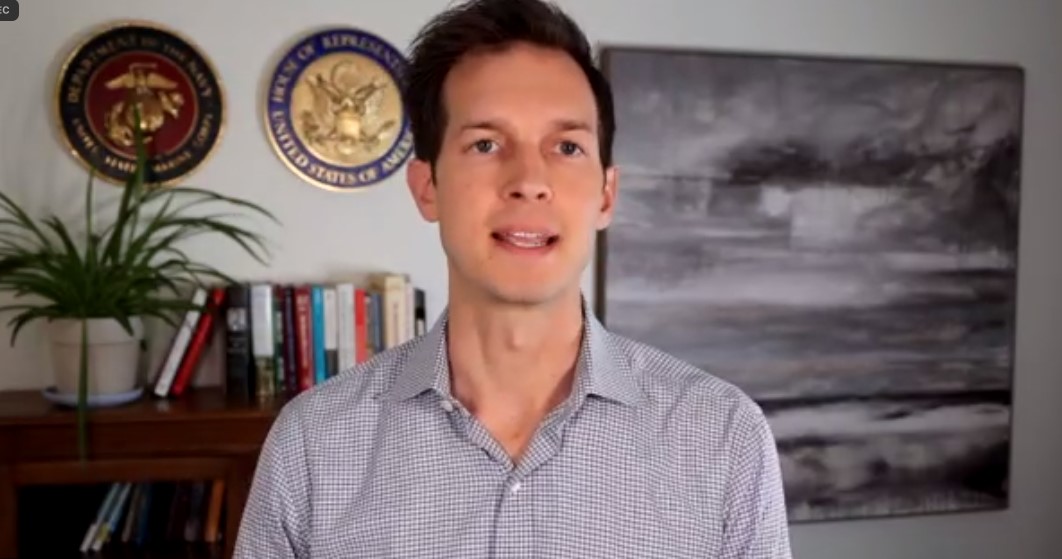
Jason Bhardwaj is a candidate for the Newton school committee in Ward 3. Learn more about his views from his campaign website, the Beacon’s profile, and his responses to the Beacon’s candidate survey:
Would you support a Proposition 2 1/2 operating override to fund schools and other city expenses?
Yes. First, in general, I believe an override to fund schools should not be pursued until other options are reasonably exhausted. And, the rationale for doing so must meet a high bar.
However, there are 2 large issues upcoming that school budgets must address, 1) “catching-up” on recurring expenses funded this year with one-time funds and draw-downs, and 2) an upcoming gap in an ed. stabilization fund.
Add to those a meaningful opportunity led by Dr. Nolin we don’t want to miss – an investment in targeted interventions (“MTSS”) for improved finances and better educational outcomes in the long-run.
Based on my conversations with current city leaders, there may only a couple opportunities to grow the revenue base with that magnitude in the operative timeframe: a) pension fund-related modification or overlay, and b) an override. I think it’s possible that the best path is to pursue both of these – which might make them both individually more tractable.
Did you support the NTA going on strike last year?
No. The strike was difficult for everyone – educators, parents, and, most of all, for kids. Having talked with many stakeholders, I believe there are lessons for all, and it is my sincere belief that all wish to avoid such a dynamic in the future.
From a school committee perspective, I believe the most important near-term step is to build on efforts to ensure teacher voices are heard. For example, I was encouraged to participate in the NPS strategic planning effort with many educators across the district, including several union leaders.
In past years, there have been rotating regular School Committee office hours in school buildings at convenient times for educators. This was raised at the SC summer retreat (by Alicia Piedalue) and is an initiative I am very supportive of.
Unfortunately, we live in a world of limited resource. So, I also believe we must continue to invest in sharing clear information, with a positive tone, on real budget limits, trade-offs, and relevant benchmarks.
Would you keep the district’s multilevel classroom learning?
No.I believe providing equitable learning opportunity for all is critically important. In my view, it is fair criticism that past tracked classes may not have always met this standard. However, I believe strongly that new approaches must be trialed and studied, and, if adopted, carefully rolled out. I do not believe this was done for multi-level classes.
For Math, the first subject under review, there is clear survey data from educators, students, parents, that multi-level is not working. Test data also show this clearly. 10th grade MCAS data shows that the very groups multi-level was designed to help were most hurt, with widening gaps. Reviewing an “accidental experiment” (some “College-Prep” students taught at one level only) showed un-grouped students performed better on the same tests.
For other subjects, we should proceed carefully with educator input. Some suggest hierarchical subjects (STEM, languages) are most challenging, but I have also heard concerns from humanities teachers.
Would you support the district joining School Choice, which would permit parents to send their children to public school in communities other than that in which they reside?
No. Dr. Nolin’s team looked at a wide range of opportunities to improve finances, which is admirable. She has experience implementing School Choice in a prior district in a way that she felt added value while avoiding pitfalls.
I agree with many who suggest the pitfall risk for Newton is greater (especially, a greater likelihood of receiving a need-intensive population with higher costs). However, I also agree with proponents who might say those are educated guesses, and a small pilot could confirm how valuable the initiative would be.
However, talking with Newton residents, I believe public perception of this initiative is very negative. Also, the added revenue for the optimal student (i.e., converting a teacher’s child into a reimbursed student through the lottery with no added cost) is only ~$2,500. For new students, at ~$5,000/student, net savings primarily accrue at the elementary-school level due to smaller scale.
So, I think it’s better to focus on other, larger opportunities.
Would you support keeping the schools’ DEI initiatives even if it may mean losing millions of dollars in federal funding?
Yes. Joining a more diverse and welcoming community was an important part of how my family decided to move to Newton (in addition to the reputation of its schools!).
The events around our nation this year are truly concerning. As much as I wish we could say that we in Newton are “too small to attract attention”, we have seen other districts near large cities (e.g., Northern Virginia towns near DC; Eugene OR near Portland) bundled into larger actions.
I am proud we live in a state where our leaders came out early to provide aircover for school districts. Perhaps this will help – perhaps the opposite – and it’s probably hard to know for sure.
In that context, I think the only appropriate course is to hold firm to our principles, and to ensure we continue to signal our commitment to welcoming and supporting all within our community. (And, perhaps, if there are pragmatic ways to minimize our national footprint within those goals, that would be worth exploring.)
Are you prepared to close one or more of the city’s elementary schools if data supports doing so?
Yes. Strong support for Newton’s neighborhood schools is a consistent theme in my conversations, including long-time residents impacted by past closures. I identify with that – we really began developing connections in our neighborhood when my eldest started at NPS.
So, I believe the bar for whether “data supports” change in the school footprint is very high.
When addressing facility needs at Ward and Underwood, I believe we should start, alongside city council, with “problem-solving” across 3 key issues: (a) capital, (b) ongoing cost, and (c) educational impact. For example, if we find solutions to a. (debt exclusion override) and b. (modest added cost for 2 schools vs. 1), then we should forecast conditions (e.g., enrollment, demographics) where the current footprint might be maintained without c. negative educational impacts (e.g., challenges from 1 class per grade).
IF a very high bar were met, then an equally high bar should be set for community discussion, input, and notification.
What one big idea or initiative would you champion, once elected?
Strong support for Newton’s neighborhood schools is a consistent theme in my conversations, including long-time residents impacted by past closures. I identify with that – we really began developing connections in our neighborhood when my eldest started at NPS.
So, I believe the bar for whether “data supports” change in the school footprint is very high.
When addressing facility needs at Ward and Underwood, I believe we should start, alongside city council, with “problem-solving” across 3 key issues: (a) capital, (b) ongoing cost, and (c) educational impact. For example, if we find solutions to a. (debt exclusion override) and b. (modest added cost for 2 schools vs. 1), then we should forecast conditions (e.g., enrollment, demographics) where the current footprint might be maintained without c. negative educational impacts (e.g., challenges from 1 class per grade).
IF a very high bar were met, then an equally high bar should be set for community discussion, input, and notification