
AnnBerwick
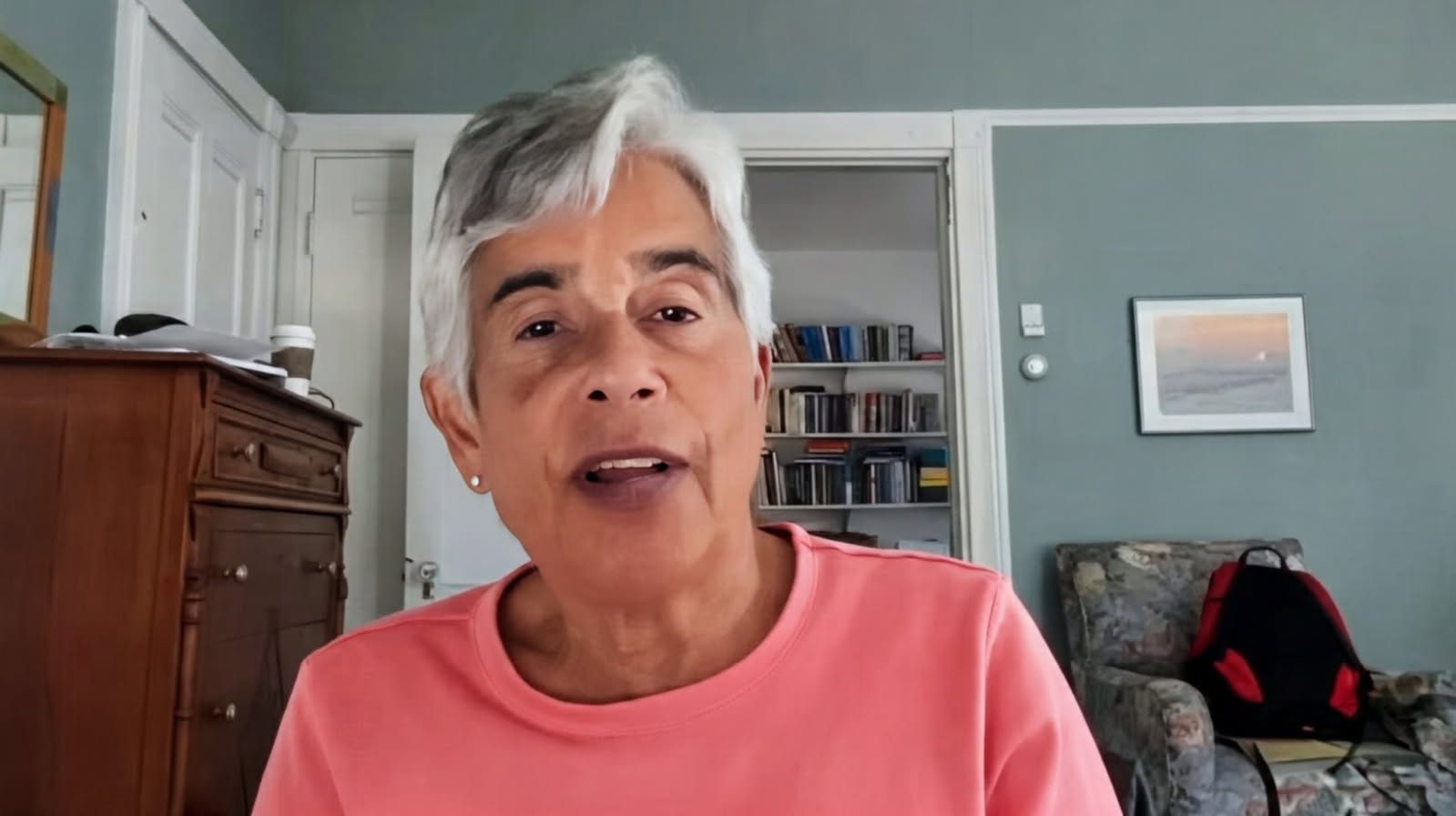
Ann Berwick, Newton sustainability co-chair, speaks in 2022 about her career in law and environmental sustainability. Screenshot, Blue Dot Living YouTube channel
The Laredo administration recently announced to city councilors in a memo that the city’s climate and sustainability office would be integrated into the DPW and leadership would be reorganized.
In that memo, Mayor Marc Laredo wrote that Sustainability Co-Chair Ann Berwick would be “transitioning” out of the department. But Berwick wants to make it clear it wasn’t her choice.
“I was abruptly fired,” Berwick said. “I did not retire.”
They gave no reason, she added, and there was no discussion about where the city was headed with its sustainability climate change action plans.
“They just told me I was gone,” she said.
Berwick’s ouster comes as a shock to people who have worked on climate and sustainability efforts in Newton over the past several years.
“She’s a star,” former City Councilor Deb Crossley said. “But more than just giving her a label, she not only has the credentials and the experience, at the local level and at the state level, she also really understands the complexity of getting from an idea to an action, and how you have to bring so many different kinds of folks along to do that.”
The sustainability leadership change is just one part of a reimagining of that office, as the city shifts its sustainability focus from policy formation to boots on the ground in the form of DPW work.
Evolution from energy engineers
Newton has been a leader in municipal environmental sustainability and climate change mitigation for decades, and it started in public buildings in the 1970s, with the creation of an “energy engineer” position at City Hall, a position held by David Tannozzini.
“He retired shortly after I came to the city, and I took on those responsibilities for many years,” Newton Chief Operations Officer Josh Morse, who served as the city’s public buildings commissioner for about 20 years, said. “The theory back then was not only to advance our sustainability initiatives, but really lead by example, which is why it started in the public buildings department, and that continued for many many years.”
The city eventually hired Bill Ferguson to be an energy project manager, and Ferguson was later appointed co-chair of a new sustainability office along with Berwick under Mayor Setti Warren. And Morse was promoted to the public buildings chief role he left in January to take over as COO.
Now, Mayor Marc Laredo is reorganizing the sustainability office and moving it into the DPW.“Newton has absolutely been a leader in the sustainability and climate resiliency world for a very long time, and it will continue to be a leader in that area for forever,” Morse assured.
If the sustainability office wasn’t broken, why fix it?
The change has to do with an evolution of priority, from blueprint to brick, as the city implements actions to adapt to climate change and not just plan for it to arrive.
“The reorganization ultimately was really focused on the fact that Ann and the team did amazing work in developing things like our climate action plan, the sustainability guidelines, which are actually in the process of being adopted right now,” Morse said.
Why the DPW?
The reorganization takes climate and sustainability out of the mayor’s office, while Laredo has created new positions on his team–an arts and culture director and a community services chief–displaying a shift in priorities in his office.
Meanwhile, the city has revamped its climate plan with things like a memo of understanding with National Grid and Eversource regarding fossil fuel goals and updated its sustainability goals for everyday, real-world action when it comes to infrastructure, which is why the DPW is the office’s new home.
“We now find ourselves as a community, and certainly here in City Hall, where we are, we feel we’re evolving from a policy development phase to a deliverable phase, where we are starting to take pieces of those plans and act on them,” Morse said.
The city has limited funds, though. With budgeting in mind, the administration determined that Berwick’s role would be better served as a full-time position focused on implementation and not policy development and that the sustainability team should be moved to a department that handles a lot of work and gets a lot of funding already: The DPW.
“It’s one of our, if not our largest, department in the city, and it has a lot of support, whether it be administratively for procurement purposes and contracts, all the way to boots on the ground and people in the field that can help out, whether it’s putting up sandwich boards, raising public awareness of opportunities, or projects-actual physical projects that the city is doing-and everything in between,” Morse explained.
How is sustainability going to be staffed? Morse added that Berwick was able to mentor employees who are staying on, so the reorganization can have an all-star roster from the start.
Caroline Weiss, for example, is being promoted to the sustainability director role within the DPW. Juanita Trabert is moving to the DPW in an expanded role. And with Darius Zgripcea Bailey, who oversees the city’s Building Energy Reductions and Disclosures Ordinance, the administration is looking at ways to fine-tune that job as well.
In fact, Morse said. having the sustainability office in the DPW gives the city more opportunity to let the office continue to evolve.
“Whether it’s stormwater resiliency, preventing flooding, increased rain events or our phosphorus reduction programs, there’s so much infrastructure that people don’t realize under that lies underneath our roadways, and the synergy between sustainability and DPW over the years has grown to a point where it they are entwined,” Morse said.
What about the schools?
Superintendent Anna Nolin announced earlier this year that, in order to meet the appropriation amount the mayor was giving to the schools, the district would be cutting its sustainability director role.
That role isn’t coming back, and Morse said it doesn’t need to because the DPW–which handles infrastructure for the schools already–will cover that, too.
“We have several positions here at City Hall that have worked with Newton Public Schools on sustainability efforts for a very long time, myself included, and I continue to do that to this day,” Morse said. “So you’ve got folks like Juanita Trabert and Sam Nyman and myself, Caroline Weiss, and many others who you may or may not think of, like Jennifer Steele in Conservation Commission, or Jonathan Yeo and Eric Hires over in Stormwater Utilities. We have our whole public buildings team, which is the direct support for Newton Public Schools for all of their facilities.”
NPS has a lot of sustainability projects still in the pipeline, Morse noted, and the team at the DPW is equipped to see it all through.
“We have a lot of ongoing work with Newton Public Schools on the sustainability initiative front,” he said. “We went through every single individual item and every goal and objective of Newton Public Schools with respect to sustainability and climate resiliency and decarbonization. And we’re ready to meet the moment on every single item.”
Thinking ahead
Adaptation is key, Morse emphasized, as climate change and sustainability bring new challenges every year.
“I would say this should be true with any community in this country,” he said. “When you’re talking about something like climate change and resiliency and sustainability, If you’re not evolving, you’re in trouble. This is an area that you have to constantly reassess and evolve.”
Now, heightened focus will be given to things like solid waste and recycling.
“I think we need to take a hard look at curbside organics pickup and how we might expand that and explore those opportunities as a community, because not only does that help reduce the waste stream, which is good for the environment, but it reduces tipping fees, which is good for our bottom line,” Morse said.
And the city will continue getting the city off of fossil fuels by expanding its solar program and making it easier for our residents and businesses to transition to solar energy or electrify their entire properties.
“We want to focus on decarbonization efforts, so our transition to heat pump technology, our ground source heat pumps,” Morse continued. “We want to explore network geothermal, as we’re already doing. We want to continue to work with Eversource and National Grid through the MOU to see if there are ways to get streets or neighborhoods off of natural gas and oil.”
That last one, he stressed, would be optional and the city is not looking to take gas away from residents.
Berwick isn’t done with her climate and sustainability career, either. She’s hoping to land a similar role somewhere, though it won’t be in Newton.
“I was committed to the work of the sustainability team, and really hope that this reorganization is successful because the team has been doing really good and important work,” Berwick said.
Berwick has a hefty resume to being to the table. She was chief of the Environmental Protection Division in the Massachusetts attorney general’s office and then served in Gov. Deval Patrick’s administration as undersecretary of the Massachusetts Department of Energy Resources.
And she was on the Newton School Committee for six years, serving as chair twice.
“It was an absolute pleasure and a delight to work with her, because she was a roll-up-your-sleeves, get-the-work-done kind of person, and she just did what needed to be done and reached to everybody that needed to be involved, which I particularly appreciated,” Crossley said.
Can the city implement its massive climate action plan with this new sustainability structure? Time (and money) will tell.
Share This Story On:

DONATE TO SUPPORT LOCAL NEWS
Your tax-deductible gift to the Newton Beacon keeps our community connected and its residents informed.
Get story alerts twice a week:
Related Posts







Upcoming Events