
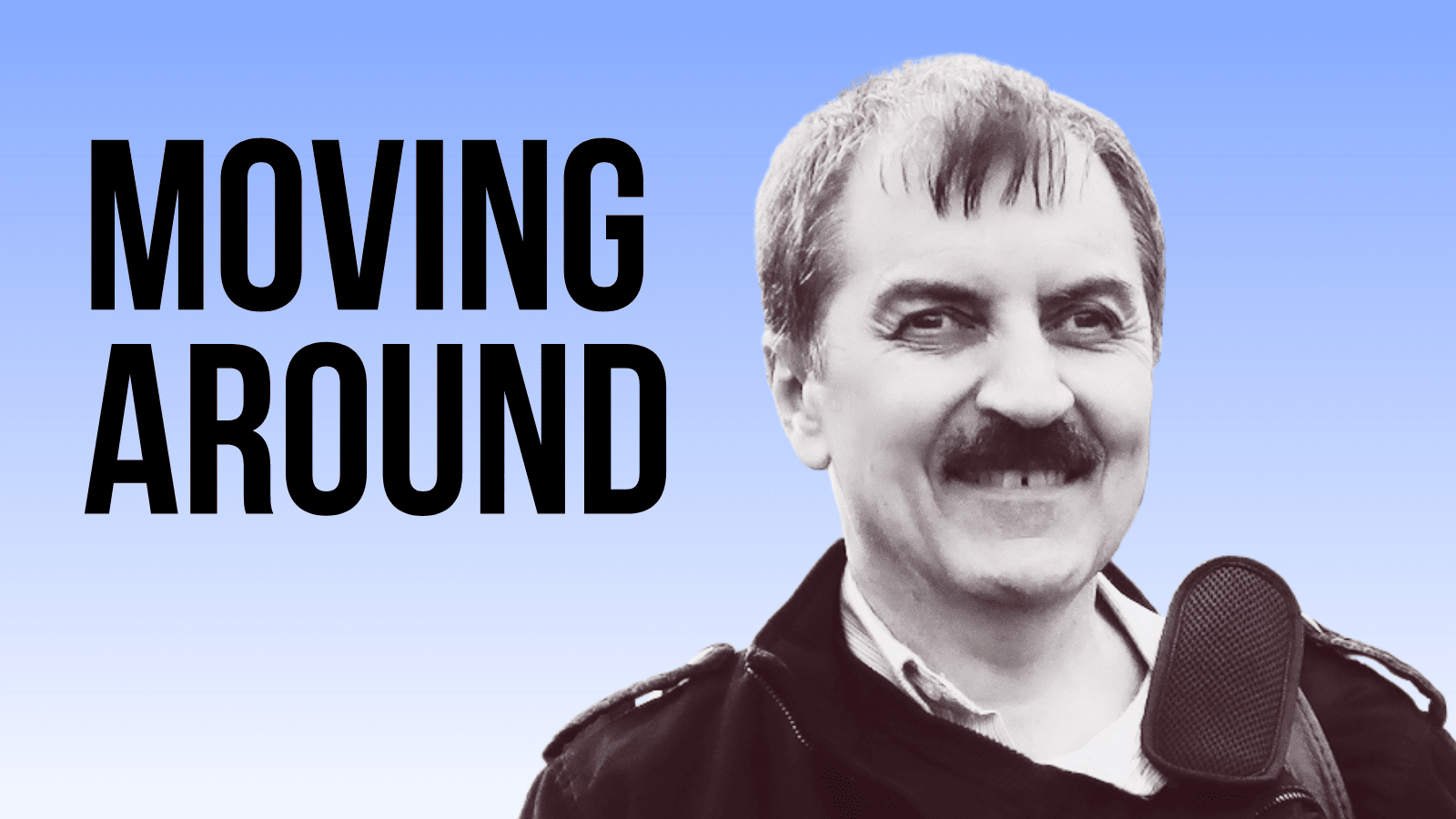
MOVING AROUND
Extending the Riverside “D” Green line along the unused rail corridor between Newton Highlands, Newton Upper Falls, and Needham would allow for direct rail access to the Longwood Medical Area and downtown Boston.
The new rail line would stimulate significant economic development in the corridor, creating a vibrant new mixed-use and mixed-income district.

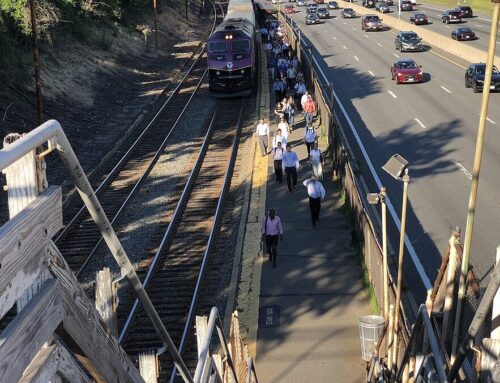
New Green Line Needham Branch.
Newton was shaped by railroad expansion. Many of the qualities people appreciate about the city’s villages are a consequence of rail service that came in the 1800s, fueling transit-oriented development of mixed-use village centers consisting of commercial nodes surrounded by compact residential neighborhoods.
The Boston to Worcester railroad was the first rail line in Newton. Opened in 1835, it led to the growth of Newton Corner, Newtonville, West Newton and Auburndale.
Otis Pettee lived in Newton Upper Falls from 1817 to his death in 1853. He founded Pettee Machine Works, which manufactured cotton machinery. He established the post office in Upper Falls and owned a large amount of property, including the Elliot Manufacturing Company.
Frustrated by the inaction of government officials, he took it upon himself to bring the Charles River Railroad to Newton Upper Falls. In 1852, the first section of track was opened from Brookline to Newton Upper Falls. Over the next decade, the line was extended to Needham, Dover, and eventually Woonsocket, Rhode Island. Town centers in Brookline Village, Newton Center, Newton Highlands and Needham Center flourished. The line was used to bring landfill to Boston’s Back Bay, contributing to one of the greatest urban experiments of the 19th century.
How can this history inform the future of Newton?
Currently, the Needham Street corridor has been identified as an area of significant change and economic growth. The old Charles River Railroad corridor runs alongside it. Passenger service ended in the 1930s, but freight service continued until around 2002 to 2005. Although the rails are gone, the 80-foot wide corridor is still there. Over the past 10 years, a portion of that rail corridor has been utilized as the Upper Falls Greenway, a pedestrian and bicycle path. With relatively little effort, rail service could be brought back between Newton Highlands and Needham.
Restoring light rail transit between Newton and Needham would be a cost-effective investment of state and federal transportation funds. Anticipated residential and commercial densities and intensity of land use in the corridor support light rail. According to the MBTA’s Program for Mass Transportation, published in 2010, ridership on the new line was projected to be significant: more than 8,000 trips per day. When compared with the 3,000 trips per day on the Riverside line west of Newton Highlands, the benefits to transit ridership are clear.

These ridership projections were made without including the growth that will continue in the corridor. The new Northland development project will have more than 800 housing units and close to 100,000 square feet of commercial real estate. It is a great example of transit-oriented development, except for one thing: It lacks an efficient, high-capacity transit line that can bring people to and from the entire Boston region.
Bounded by congested roads such as Route 9, Route 128 and Needham Street, residents and businesses in Northland will certainly benefit by having easy, pedestrian-friendly access to a new rail extension with high-frequency, reliable service that connects to downtown Boston, the Longwood Medical Area and other sites throughout the region.
The cost-benefit analysis is favorable to implement the new transit extension. Extending the Green line for two miles between Newton Highlands and Needham Center can be done at relatively low cost for the large amount of ridership and other benefits it will bring. The rail extension would be among the most cost-effective projects that the MBTA and the Massachusetts Department of Transportation have done in recent years.
By implementing measures such as tax-increment and district improvement financing, allocation of a portion of new tax revenues from economic growth may be used to sustain and pay for it. With intelligent planning, there is good reason to believe this Green Line extension could run fare free, further benefiting riders who use it.
The new line is also likely to stimulate future development in the Needham Street corridor, giving it a more pedestrian-friendly and transit orientation. And the new development won’t solely rely on automobile access, parking supply and further roadway expansion.
This kind of future development can be supported by allowing density bonuses and reduced parking requirements. The Needham Street corridor can be transformed from an auto-oriented strip to a new mid-21st century Newton village that will be vibrant and walkable.
Because of these potential advantages, Newton should advocate for a feasibility analysis for light rail expansion along Needham Street. This study should evaluate the anticipated project costs for design and construction, and provide an estimate of the anticipated ridership upon completion. It should also examine engineering and construction issues associated with the build-out of the corridor. Such a study could likely be completed at a modest cost.

A bike lane runs alongside an active rail line.
A planning process for the Green Line extension represents an opportunity to preserve the Newton Upper Falls Greenway. As it currently stands, the MBTA may revert this corridor to transit use as needed. But a robust planning process that involves the Upper Falls community can work to keep an adequate portion of the right-of-way such that the Greenway can be maintained adjacent to the restored rail service extension.
New bridges across the Charles River and Route 95 into Needham will expand and enhance the overall utility of the Greenway for pedestrians and bicyclists for years to come.
The future of transit in Newton is a bright one. By melding new growth and development with historically contextual transit planning, we can once again create the kinds of urban environments that are defining features of living and working in Newton.
Dr. Srdjan S. Nedeljkovic, a resident of Newton Highlands, serves on the Newton Transportation Advisory Group.
Share This Story On:
DONATE TO SUPPORT LOCAL NEWS
Your tax-deductible gift to the Newton Beacon keeps our community connected and its residents informed.
Get story alerts twice a week:
Related Posts


Upcoming Events