
ECONOMIC DEVELOPMENT
The big triangular chunk of land in the heart of Newton Centre has been a parking lot for so long that it’s hard to remember it didn’t start life that way.
Until the 1960s, it was the Mason School. But when Mason merged with Rice and relocated a few blocks over, the area became a parking lot. This history explains why it feels out of character as a focal point of a village center and why it remains unique to Newton Centre.
Parking lots can be remarkably useful: a car is a waste if there is no place to park it. But they’re also ugly and difficult to equate directly to economic activity. Is a single car bringing in four people to a restaurant or just one?
So when former Mayor Ruthanne Fuller proposed a pilot, using federal ARPA funds to turn a small number of parking spaces into a gathering place called the Newton Centre Plaza, it seemed like a no-brainer. Why not give people a place to sit, gather, talk, play and perform?
The plaza is a simple space. Set up next to Beacon Street and close to several restaurants, it features seating, tables, string lighting, summer shade and games. It’s designed to say, “Come and hang out here.”
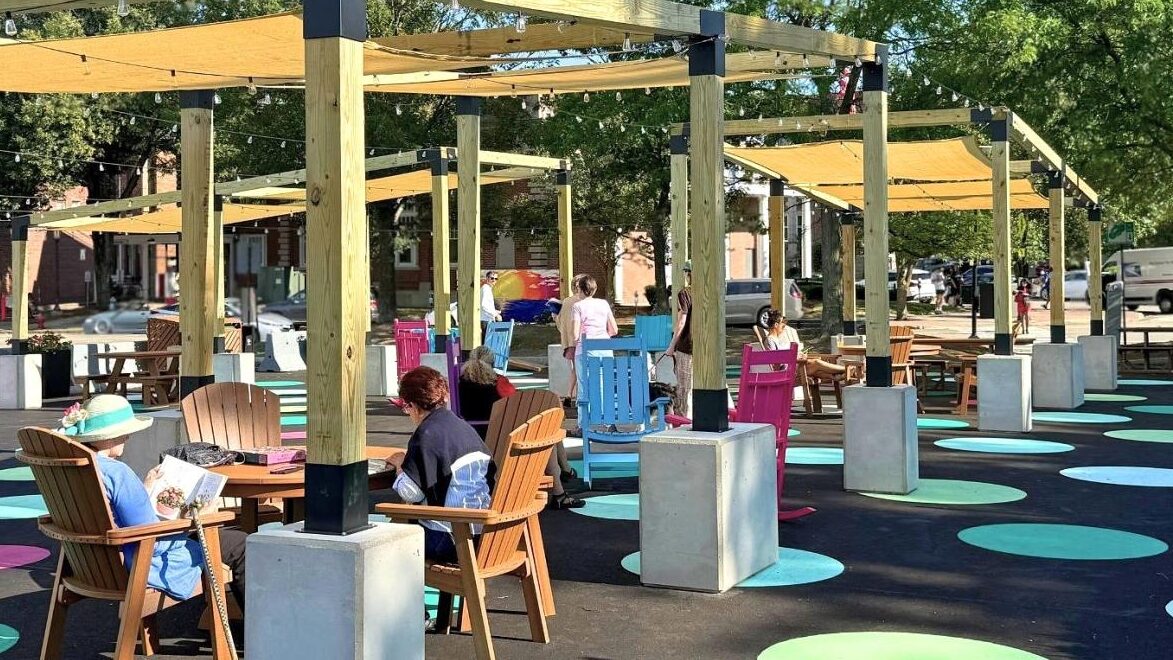
Newton Centre Plaza. Courtesy photo by City of Newton
We’ve already seen this idea succeed. Bram Way in Newtonville is a hub of activity at all hours in all types of weather. Teens, the elderly, parents with small kids, business and city officials all congregate in a public space like this.
Local restaurants appreciate increased foot traffic, and these types of spaces contribute to the vitality of an area. Of course, Bram Way emerged from controversy with plenty of people opposing the nearby development and predicting it would be an empty wasteland, but the city gave it time to succeed.
The Traffic Council recently voted to extend the Newton Centre pilot project through 2026 to collect more data on what is working. The city can learn from this pilot and possibly replicate it in other villages.
But the Newton Centre pilot has its skeptics. City Councilor Tarik Lucas and former City Councilor Alan Lobovits filed an appeal of the extension to the City Council. They point to several reasons, including the desire of a few local businesses to restore parking, and the need for the new mayor, Marc Laredo, to have a say in the plaza’s immediate future.
The City Council should reject the appeal, uphold the Traffic Council’s decision, and keep the plaza through 2026. We should give it time to succeed.
Like the Newtonville rollout, the Newton Centre Plaza rollout was controversial from the start. Residents complained about the loss of parking, and the city didn’t communicate effectively with local businesses. The space also lacked a dedicated organizer to ensure regular programming.
But the logic behind the plaza is sound, and adjustments to the programming and physical appearance can be resolved with a little time and focus.
Also, while losing parking is always tough to swallow, an analysis of parking meter data shows that Newton Centre maintained the same parking revenue even without those parking spaces. Only when the lot was entirely closed for reconstruction did revenue dip. In other words, the same number of cars parked nearby, they just parked in other vacant meters. The planning department also conducted regular parking counts and found that the Centre lot was never fully occupied.
The space is also showing early signs of success. A city survey received overwhelmingly positive impact, and it attracted people into Newton Centre, with 57 percent of them getting there in a method other than driving. Visitors came from 41 different zip codes, and nearly all of them ordered food from a nearby restaurant, many for the first time. There was also positive feedback from many of the Newton Centre restaurants and other small retailers.
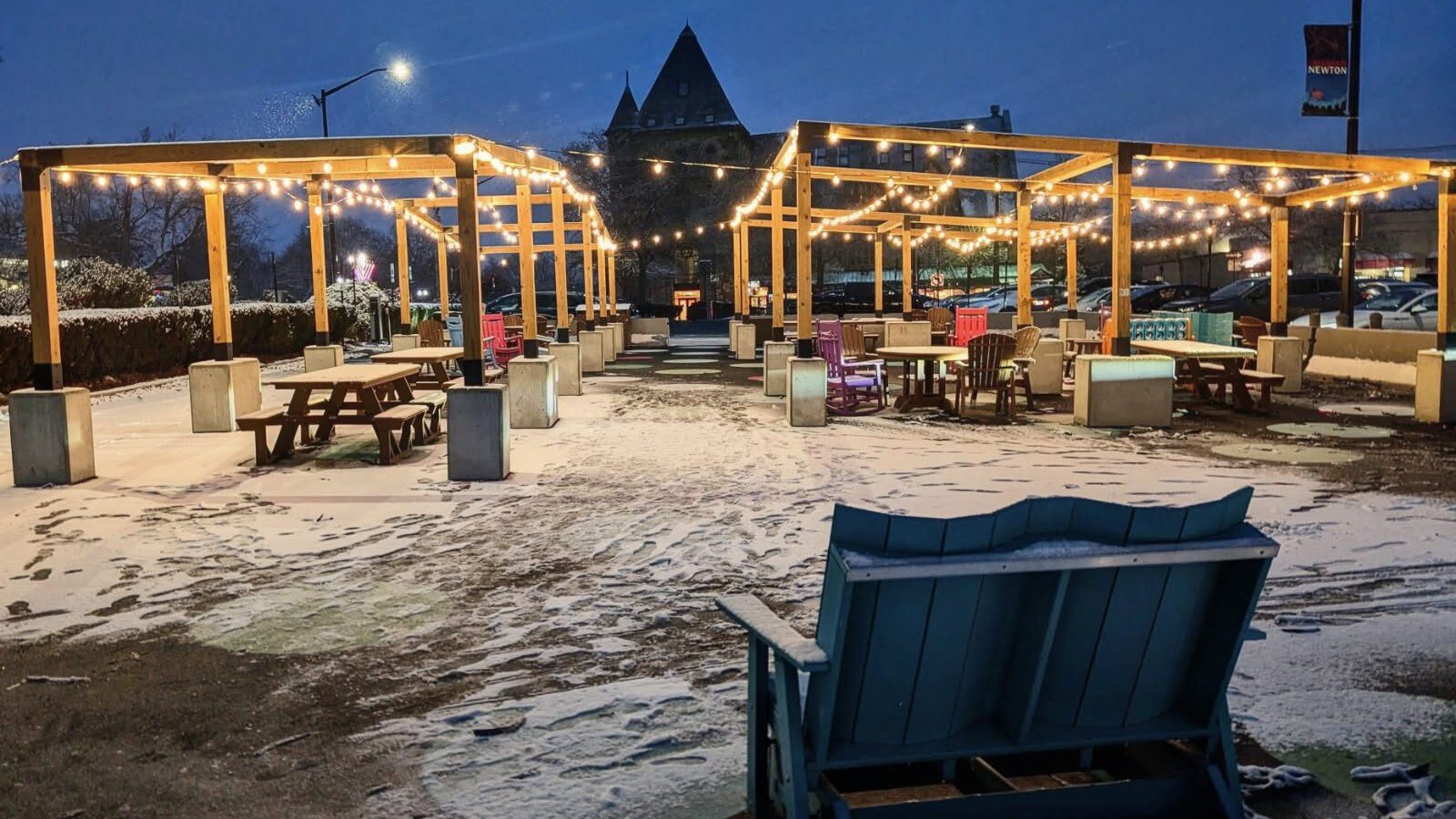
Newton Centre Plaza on a cold night in December 2025. Photo by Bryan McGonigle
This isn’t just about the plaza. Underlying the debate is a question of who we are as a city. Newton is already earning a reputation as vetocracy, and that’s causing problems in attracting business. We must enable our city employees and officials to use the information and education they have to take the actions that will move us forward and keep up with the times. We should give them the support they need to succeed and the freedom to fail.
In many places, our villages still look much as they did a century ago, with some still bearing physical reminders of the businesses they once housed. But the car changed how we use these walkable spaces. Large supermarkets replaced small grocers, just as indoor malls replaced local department stores. Later, big box retailers like Home Depot wiped out our local hardware stores, and then Amazon came for our bookstores and smaller retailers.
Our localities are changing again. According to the latest numbers, nearly a third of Newton residents work from home, and our office vacancy rates are at nearly 15 percent, up from about 7 percent in 2019. This shift offers a great opportunity to activate our village centers through placemaking initiatives, like Bram Way and the Newton Centre Plaza, to help our local restaurants, retailers and other businesses.
All it will take is a little time and patience.
Chuck Tanowitz is a Newton resident who has been involved in local economic development for more than a decade. He can be reached at chucktanowitz@gmail.com.
Share This Story On:
DONATE TO SUPPORT LOCAL NEWS
Your tax-deductible gift to the Newton Beacon keeps our community connected and its residents informed.
Get story alerts
twice a week:
Related Posts


Upcoming Events