
Haffner1
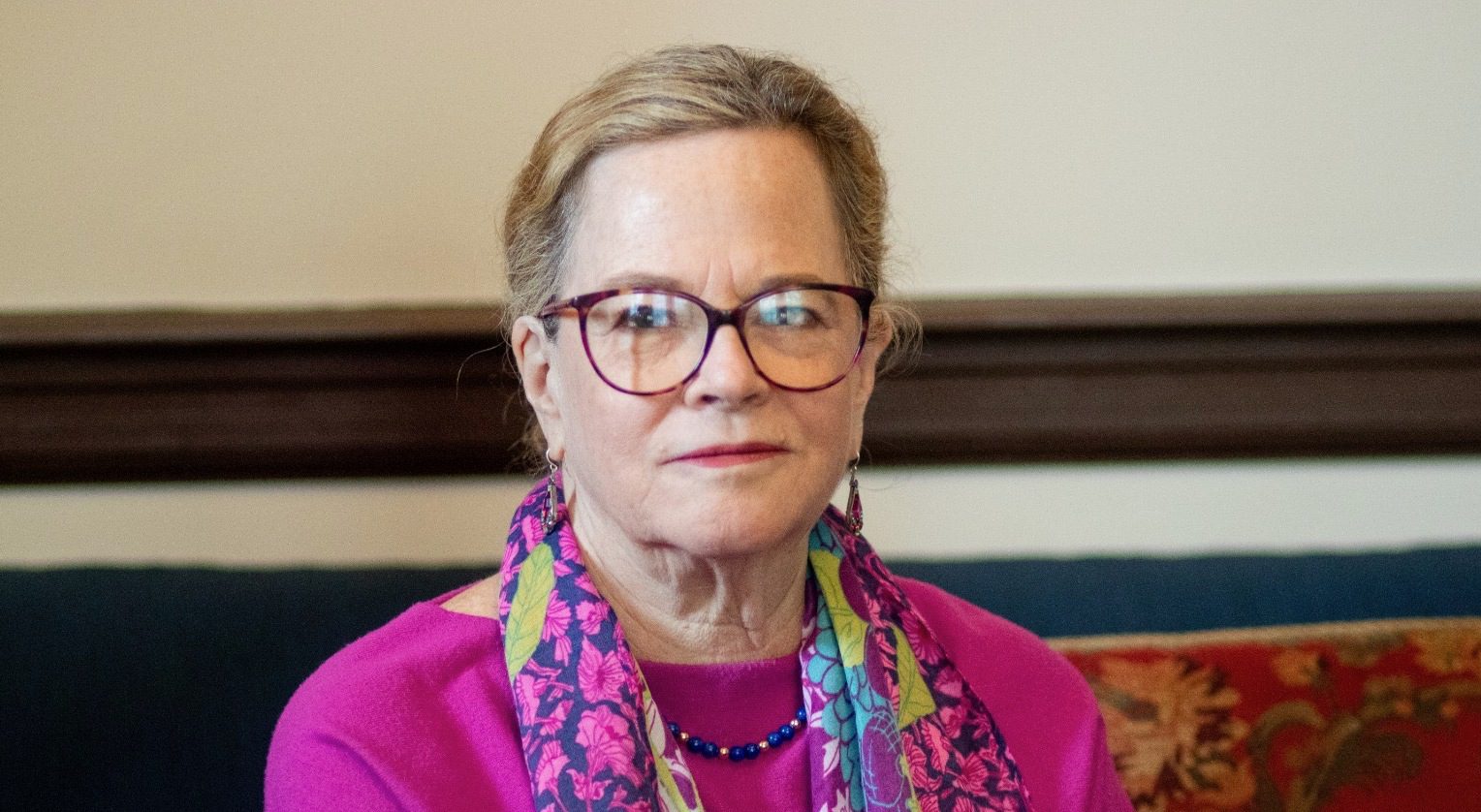
Haffner felt a call to ministry after experiencing the impact of the HIV epidemic firsthand, attending funerals weekly. (Jenny Krasic / Heights Staff)
From advising the federal government during the AIDS epidemic to leading a major national sex education organization, Rev. Debra Haffner has been at the forefront of sexual education progress. Now, Haffner leads the First Unitarian Universalist Society in Newton (FUUSN) as a senior co-minister, interlacing faith and sexuality.
“I feel like I’ve had a very blessed career to be on the edge of this social justice movement, to both affirm our sexuality and understand that it is part of the gift of creation that we are given,” Haffner said. “But the fact is, we are born as sexual beings. We die as sexual beings. And for too many people, their religion is hurt.”
Answering a Call to Sexuality Education
Haffner first felt a calling to sexuality education as a college student when she got involved in self gynecological help and taught other women how to take charge of their bodies.
“I powerfully experienced what it felt like to give people information about their bodies,” Haffner said.
This exposure to sexuality, however, was not the first for Haffner. Coming from a secular Jewish household, Haffner said she feels her parents made a concerted effort to be open and honest about sexual subjects.
“When I was five or six, I discovered my mother’s birth control pills,” Haffner said. “This would have been in the early ’60s, and when birth control pills were pretty brand new. And I asked her what they were, and she told me that it was something she took so that she wouldn’t need to have any more babies, but she could continue to have sex.”
When Haffner was 12, her parents took her and her sister to Fire Island, an island in New York known for its LGBTQ+ communities, “to see gay people.” Haffner would later dedicate most of her career to paving the way to equal rights for LGBTQ+ people.
From Public Health to National Advocacy
After college, Haffner began work at the Population Institute, a D.C.-based nonprofit that promotes access to sexual and reproductive health services. She subsequently earned a master’s in public health, a degree that was the closest to one in sexuality in the late ’70s.
With this degree, she began working for the Public Health Service under former U.S. President Jimmy Carter and ran an adolescent health initiative. But after Ronald Reagan was elected president, Haffner had to leave the service amid significant budget cuts and federal downsizing.
“Ronald Reagan got elected,” Haffner said. “I had to leave—not quite as dramatic as what we’re going through now—but it was still a very difficult time.”
Leading Through the AIDS Crisis
When the HIV epidemic emerged, Haffner was the director of community services for the Planned Parenthood of Metropolitan Washington, D.C., and she began a national AIDS and adolescence program.
“I was really focusing on teenagers at that point,” Haffner said.
It was around this time that a position on the Sexuality Information and Education Council of the United States (SIECUS) opened up, and Haffner was hired to be their third chief executive officer at just 33 years old.
“I don’t quite know what they were thinking,” Haffner said.
Rev. Carolyn Patierno, Haffner’s friend and colleague at SIECUS for eight years, said that Haffner revitalized SIECUS.
“Although the agency had been around for decades at that point, it was at a very low point when she took the reins,” Patierno said. “So she had her work cut out for her, and she was brick by brick rebuilding that organization. And I was in awe of her.”
During Haffner’s 12-year tenure on SIECUS, the organization shifted toward aggressive advocacy for comprehensive sexuality education.
“She, on behalf of the agency, applied for this grant at a time where it was really doubtful and really ballsy to think that we would have gotten that money because this is a pretty progressive agency, and the culture of D.C., our federal government at the time, was anything but progressive,” Patierno said. “And the agency got the money.”
A Turning Point: Haffner’s Call to Ministry
Haffner experienced the impact of the HIV epidemic firsthand, attending funerals weekly. It was at this time that Haffner first felt a draw toward a path of ministry.
“I was going to funerals almost every week for people we knew,” Haffner said. “And during that time, I personally experienced a call to ministry.”
But Haffner felt she had too much to do before she could deviate from her sexologist path.
After a sabbatical in 1996, Haffner allowed herself to explore ministry and later became a research fellow at the Yale Divinity School. It was there that she was able to dispel her misconceptions about Christianity.
“I believed what many people believed, which is that [Christian] scripture only has two messages about sexuality: Don’t, and if you’re going to, do it for procreation—nothing could be farther from the truth.”
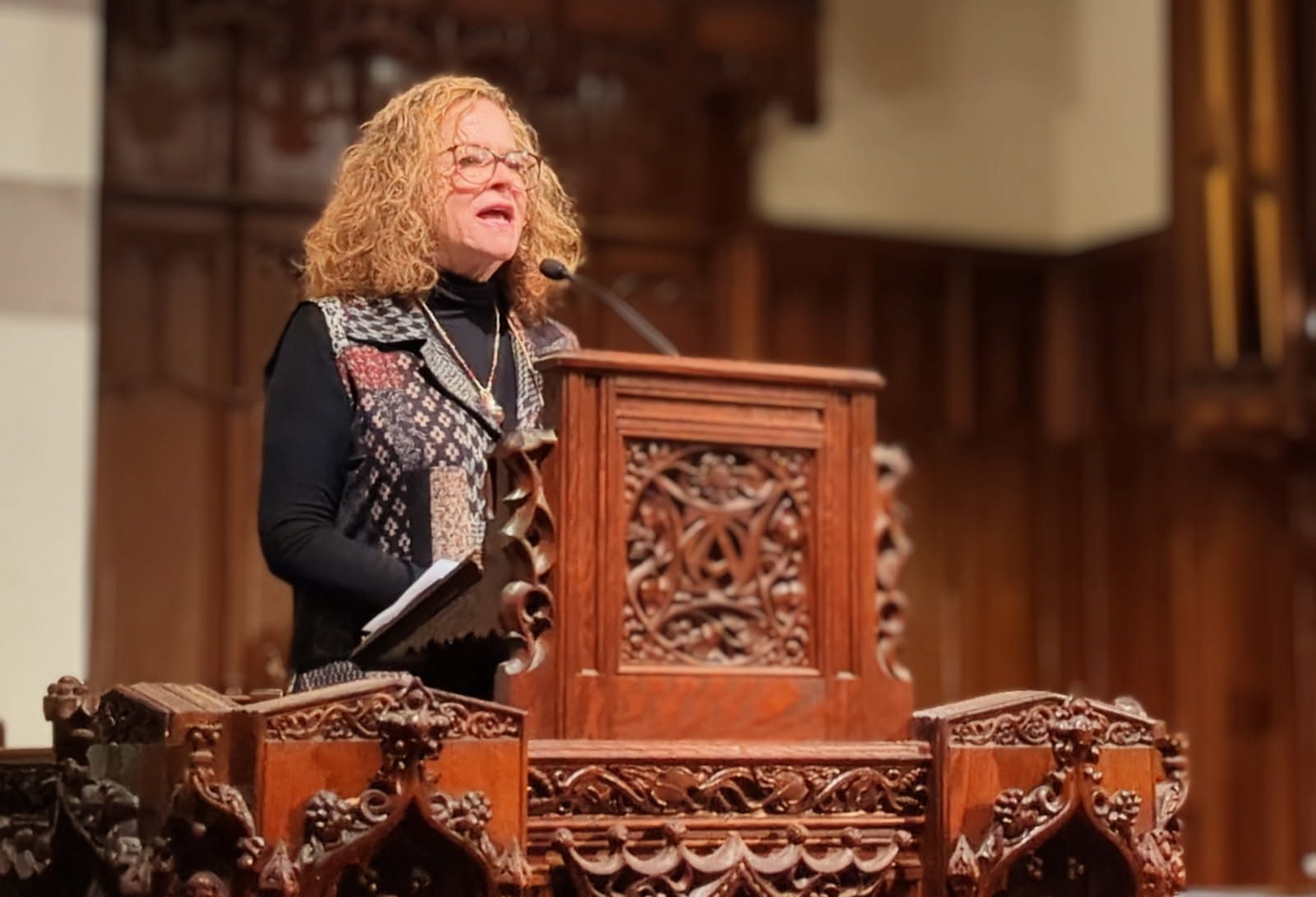
Rev. Dr. Debra Haffner of First Universalist Unitarian Society in Newton speaks at the start of the Harmony Foundation’s 58th Martin Luther King Jr. Community Celebration on Jan. 19, 2026. Photo by Bryan McGonigle
Rethinking Faith and Sexuality
After Haffner wrote an article about the nuance in sexuality and scripture, she received an influx of positive feedback.
“It got hundreds of responses, which was unheard of,” Haffner said.
This article was the impetus for Haffner’s sexology ministry work. In 1999, Haffner brought a group of theologians together to write the Religious Declaration on Sexual Morality, Justice, and Healing, a statement that garnered 850 signatures from bishops and heads of seminaries.
“At that time in 2000 was the clergy sexual abuse crisis in the Catholic Church and a crisis in the mainstream denominations about what to do about queer people, and so to have this 600-word statement affirmed sexuality as part of God’s gift,” Haffner said.
In order to hold onto this feeling, Haffner formed the Religious Institute, Inc., a progressive multi-faith organization with a network of around 10,000 religious leaders.
“My call, at that time, as I understood it, was really to bring my sexuality background to the religious world,” Haffner said.
A New Position in Newton
After retiring from the Religious Institute in 2016, Haffner has served as a minister in multiple Unitarian Universalist congregations.
Haffner said that after she fell in love with her husband and FUUSN Senior Co-Minister Rev. Joel Miller, they decided they wanted to pursue a joint ministry position, landing at FUUSN. Miller and Haffner are one of 30 Unitarian Universalist co-ministers, according to Haffner.
“I’m just pretty quiet, and Debra is out there and more verbal,” Miller said about working with Haffner. “Yeah, and it’s a good combination.”
It is observable how comfortable Haffner is in her new position, Patierno said.
“I see she is more relaxed than she’s ever been,” Patierno said. “She’s more at ease meeting with people. It’s really lovely to witness ways that she has changed.”
Confronting a Rise in Political Backlash
With her life’s work at risk of being completely eradicated by the Trump administration, she explained that its actions feel especially personal.
“Sexual rights are being attacked, both in the United States and around the world right now in a way that one could not have imagined,” Haffner said. “So I was 18 when Roe v. Wade became the law of the land. I had worked as a young person and had helped and had advocated for access to both birth control and abortion services, and we never could have imagined that that right would be taken away from us.”
With the seven children Haffner and Miller share and their children’s partners, they have three transgender family members, so she said she is particularly appalled by the attacks on transgender rights.
“The attacks on transgender people are almost indescribable—they are indescribably horrific,” Haffner said.
Haffner is not only a pillar in the Newton community as a minister but also as an advocate for causes she holds close. She often partners with Newton Indivisible, a local grassroots activist organization, to coordinate protests around the area.
“I am that woman who’s carrying the sign at these protests that says, ‘I can’t believe I’m still protesting this,’” Haffner said.
The Next Chapter and a Consistent Goal
Haffner is currently working on her eighth book about finding love late in life. She has previously authored two award-winning books and a blog.
“I’m working on a book right now on sexuality and seniors, and the fact that people in their 60s are having more sex than people in their 20s,” Haffner said.
Throughout Haffner’s diverse and unorthodox career, one thing has remained constant.
“The goal of both of my careers has been to help people love each other better,” Haffner said. “How we treat each other is the way we show we understand God on earth.”
****
This story is from The Heights, an independent, nonprofit newspaper run by Boston College students with which the Newton Beacon has a partnership.
Share This Story On:
DONATE TO SUPPORT LOCAL NEWS
Your tax-deductible gift to the Newton Beacon keeps our community connected and its residents informed.
Get story alerts twice a week:
Related Posts








Upcoming Events