
ParkingBan
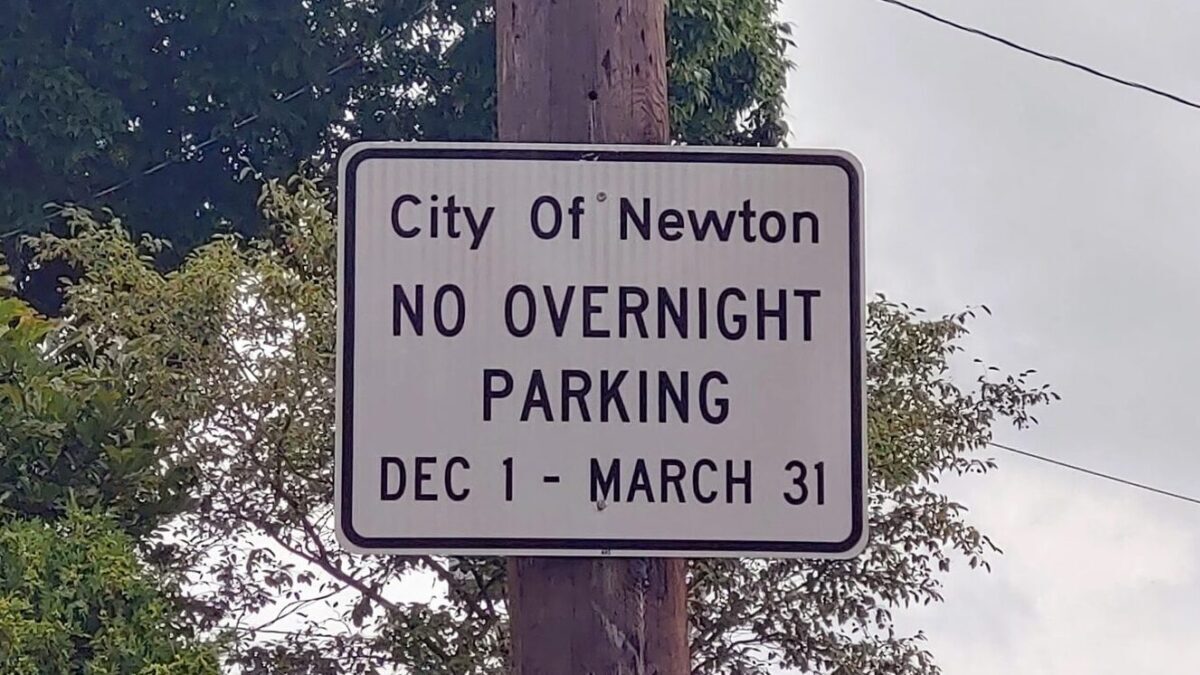
There's an effort underway to repeal Newton's winter parking ban. Courtesy photo
As Newtonians prepare to decide on whether to keep the city’s winter parking ban or scrap it and let people park overnight all year long, city councilors are planning an alternative pathway for the parking problem.
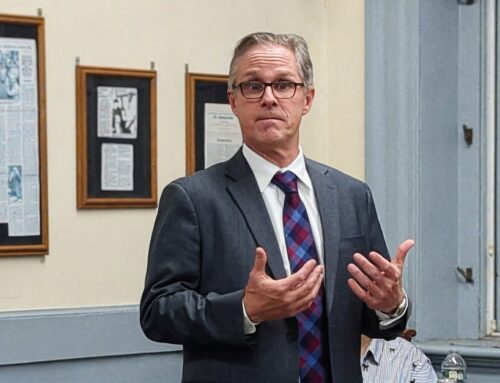
Councilors John Oliver and Pam Wright sat down on Tuesday to talk not only about why they want to keep the ban in place but also what they want to see come from the City Council in terms of parking policy overhaul over the next several months.
“We’ve got to come to some consensus and pass something,” Oliver said. “So we want to keep the ban in place until we figure that out. And then we’ll take the cue to go figure out a better solution here that works for everybody, or as many people as we can across the city.”
Parking problems
Newton’s overnight parking ban has been in place since the mid-20th century. It started as an all-year overnight parking ban and evolved to only include the winter months.
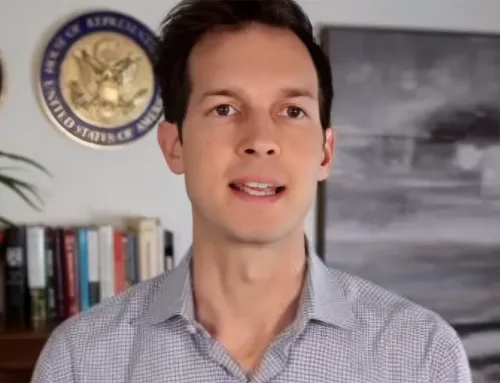
tatNow, two young men— Jeremy Freudberg and Peter Klapes—are running a campaign to repeal the ban and let people park on Newton’s streets all night.
That idea has some people excited and others worried, including councilors Oliver and Wright.
“The people who started the ban didn’t have enough parking for their household, and that’s how it started,” Wright said.
“I think that what people are skipping over, or not aware of, is the fact that this parking ban, like many other topics in the city, has become part of the backdrop around which other decisions are being made in Newton,” Oliver said.
Oliver and Wright are urging voters to keep the ban in place while proposing that the City Council work on a new comprehensive parking policy for the city that keeps the ban in place in some areas and removes it in others.
Parking pilot proposal
A patchwork parking policy—with an overnight ban in some parts of Newton and no ban in others—would address parking restrictions with a scalpel approach instead of a chainsaw approach—allowing the city to lift it where it makes sense.
“People who live near the colleges really don’t want this ban lifted at all, because students let their cars sit for two weeks and use it once,” she noted.
Meanwhile, other neighborhoods are better situated to handle overnight parking.
Any parking policy overhaul from City Council would start with a pilot, using parts of the city as test subjects for different parking policy ideas. The city could lift the ban entirely in these pilot areas, or put in place alternate side parking restrictions.
There could be a permit system in which every home gets an overnight parking permit, and further allowances are made for overnight home health workers.
“What we’re looking for is an actual solution to the problem that we have,” Oliver said. “Let’s not create new ones. So let’s be a little bit more thoughtful here.”
The new parking policy could include visitor passes that are good for a week, with differentials given to home health workers, Wright added. And having parking on odd or even sides of the streets alternating each day makes people move their cars and makes enforcement easier.
“Whoever’s going to enforce it, they can just look down the street, and it’ll be really easy,” Wright said. “Now, they might not be checking for [handicapped parking] stickers all the time and maybe occasionally they’ll go through and look for stickers, but you can just drive down the streets and easily pick out all the cars that are not parking properly.”
The Phosphor Factor
The federal government has put limits on the amount of phosphor that can be released into the nation’s waterways, including the Charles River.
“If we don’t manage the amount of phosphor that runs off of our streets and we dump into the Charles River, fines start to accumulate,” Oliver said. “And I’ve seen estimates that range into the millions of dollars a year. We’re talking numbers like $50,000 plus dollars a day.”
The Environmental Protection Agency issues fines for phosphor pollution, and the biggest source of phosphor pollution is fallen leaves. When leaves fall into sewer drains or pile up and leak nutrients into the ground, phosphor makes its way to the river.
“We’re at a very big disadvantage,” Wright said. “And a lot of those stormwater systems, like the Cheesecake Brook, go into the Charles.”
If the overnight parking ban is repealed, Oliver and Wright said, the City Council may have to reverse the repeal (keep the ban) in areas where it makes sense from a debris management perspective.
In the voters’ hands
For those advocating for a repeal of the ban, these ideas are too little, too late.
“This is simply a matter of democracy,” Freudberg said. “Historically, the City Council has been unsympathetic to this issue, which prompted the need for a petition and eventual ballot question. Councilor Wright and Councilor Oliver, who have served since 2019 and 2021 respectively, could’ve made this proposal years ago, but now the matter is solely in the hands of the voters, due to their inaction and that of their colleagues.”
Freudberg added that he and Klapes agree with Oliver and Wright about the need to keep phosphorous levels down but said a four-month overnight parking ban isn’t going to solve that problem. He also said the councilors’ patchwork parking policy proposal could pan out in the end, in place of a repealed citywide ban.
Newton’s election will be Nov. 4.
Share This Story On:
DOUBLE YOUR DONATION:
Through a matching fund created by your neighbors and foundations, your gift to the Newton Beacon by Dec. 31 will be doubled until we reach $100,000 -- tripled for new donors!
Get story alerts
twice a week:
Related Posts




Upcoming Events