

Garden City
When fall arrives, I do very little in the garden. The perennials remain standing until spring, their seed heads feeding the birds in fall and winter. Likewise, I leave the native ornamental grasses uncut to offer seeds to birds and shelter to wildlife.
The real time-saver, however, is leaving fall leaves in the garden beds rather than raking and bagging them.
October is National Leave the Leaves Month, organized by the National Wildlife Federation to encourage gardening practices that help wildlife. Like many others, I grew up in the autumn tradition of tidying the yard by raking up all the leaves. Unknown to me back then was that a vital ecosystem exists within the fallen leaves which is damaged by our fall yard cleanup routines.
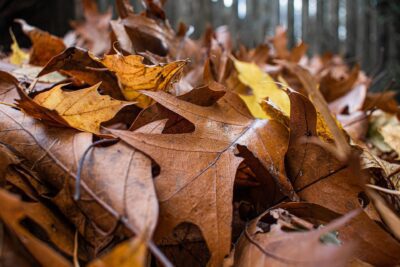
Leaves left in the garden benefit soil and plants. Image from Adam Nir on Pixabay
Thanks to a growing movement to educate homeowners about the importance of letting leaves remain in their yards, I leave the leaves in my garden beds to ensure the survival of wildlife until spring.
Fallen leaves provide warmth and protection in winter for moths, butterflies, bees and other pollinators (in the form of eggs, caterpillars, chrysalises or adults) as well as forage and shelter for birds, toads, box turtles and reptiles.
For example, both queen bumble bees and garden toads hibernate below the soil surface, insulated by a blanket of autumn leaves. The luna moth incorporates a leaf into its cocoon and drops to the ground in fall, to be camouflaged by the accumulating leaf layer, while the swallowtail butterfly chrysalis looks like dried leaves.
Our customary practice of removing the leaves from our yards wipes out the life existing in the leaf layer, deprives birds of caterpillars needed in spring to feed their young, and threatens the survival of wildlife hibernating under the leaves.
Leaves left on garden beds benefit soil and plants by retaining moisture in the soil, suppressing weeds, insulating perennials and shrubs during winter, and releasing nutrients into the soil as they decompose. They replace the need for (and expense of) store-bought bagged mulch or mulch delivered and spread by a landscaper.
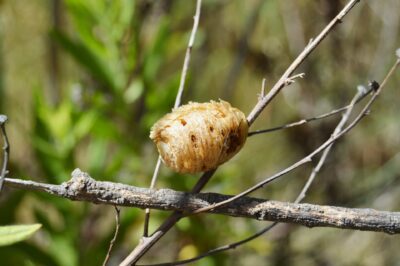
A lunar moth cocoon looks like a dried leaf. Image by Angeleses from Pixabay.
Notwithstanding the benefits of leaving the leaves, it can seem difficult to manage on the smaller lots common in Newton; many of us have too little space for extra leaves. While gardeners with expansive properties or woodland edges can more easily save all their leaves, those with more compact yards can still protect wildlife by keeping as many leaves as they can and disposing of or composting the rest.
A recent University of Maryland study concluded that seasonal leaf removal resulted in a 45 percent decrease in moths and butterflies and up to a 67 percent decrease in spiders, and lessened the diversity of moths and butterflies by approximately 40 percent. We can help reduce this kind of loss by allowing a leaf layer habitat to flourish in sections of our yards each fall, while removing leaves from other areas.
At our home, I clear the leaves from our driveway and other paved areas in our yard, and I rake leaves that land on the grass into our garden beds. A disproportionate number of leaves fall in our small yard from our own trees, our neighbors’ trees, and the street trees. I remove some of the leaves from the garden beds when they pile up more than four or five inches high and add them to a compost pile.
While composting removes the leaves’ benefit to wildlife, it preserves the benefit to the soil. Each fall, a thick layer of leaves builds up in the streets alongside our house. I rake and bag these leaves and set them out for the yard-waste truck, since I lack the space for them in our yard.
We’ve all been conditioned to expect a certain tidiness in fall and winter gardens, and some may be concerned that leaving the leaves will make a yard look uncared-for and messy. In our yard, however, the leaves are largely hidden in our garden beds under shrubs and uncut perennials. Rain and snow hold the leaves down so that they don’t blow around our yard, into the street, or onto our neighbors’ yards. A “Certified Wildlife Habitat” sign from the National Wildlife Federation in our front yard helps telegraph the effort we’re making.
Information abounds online about how to handle leaves in a more ecologically sensitive way, and some of that information recommends shredding leaves and adding them to garden beds as mulch.
Shredding leaves, however, destroys any life within the leaves and has the same effect as composting or removing them, and shredded leaves don’t provide the same wildlife benefit as whole leaves. But because shredded leaves are an excellent mulch, I use an electric leaf vacuum to shred leaves from the previous season in late summer to use as mulch before the current year’s leaves fall. I have a ready supply because leaves don’t decompose as quickly as some sources suggest.
Leaves need moisture to decompose; after a dry summer with little rain, many of the previous year’s leaves will persist in garden beds until the new leaves are falling.
Lisa Gianelly and Marian Prokop, who alternate columns, are Newton residents and certified master gardeners. They welcome your suggestions for column ideas and news to share of gardening-related events throughout the city. They can be reached at beacongardeners@gmail.com.
Share This Story On:
DONATE TO SUPPORT LOCAL NEWS
Your tax-deductible gift to the Newton Beacon keeps our community connected and its residents informed.
Get story alerts twice a week:
Related Posts









Upcoming Events