
Laredopic
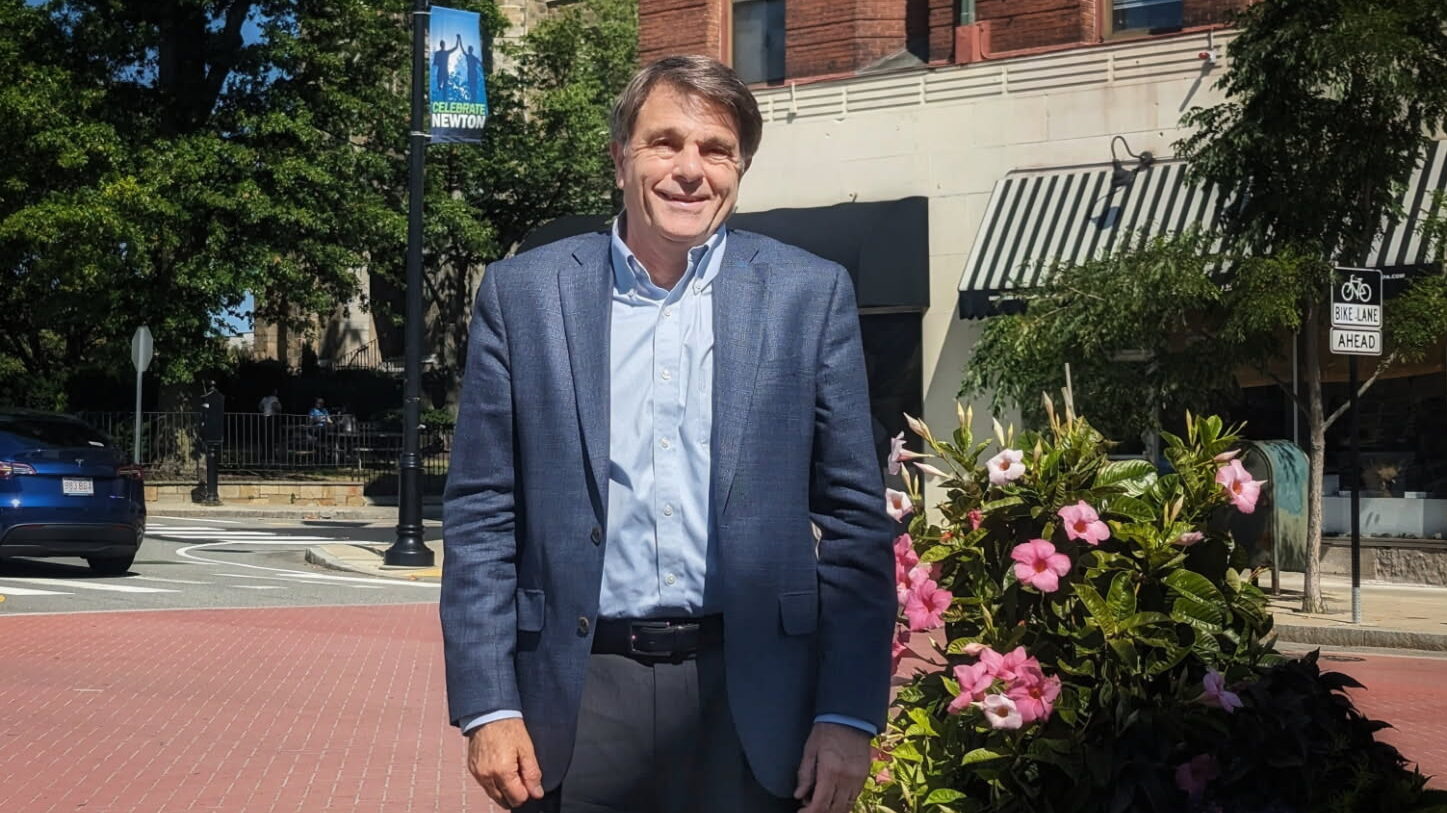
Marc Laredo, City Council president and candidate for mayor. Photo by Bryan McGonigle
“We’re going to build a much greater center of community,” City Council President Marc Laredo said, seated by a window at Caffè Nero in Newtonville, just a couple of streets over from where he grew up.
A lot has changed in that part of Newtonville, and in Newton overall, since he rode there as a kid. Caffe Nero is relatively new, for staters. So is the toy store next to it, and outdoor seating area full of people soaking in the September sun that day.
“I hope to have a separate Arts and Culture Department,” he said. “I want that to stand alone, because I think that’s vital to bringing the community together. And in my experience, if you bring people together over those kinds of activities, it makes it much easier when you have political differences over a particular issue. It makes it much easier for people to talk to and listen to one another. And I also think that’s pretty important.”
That’s just one idea that Laredo, who’s running for mayor, wants to bring to City Hall in January.
And he’s anchoring his campaign, not with a lengthy policy to-do list or a detailed blueprint, but with a vibe: a call for cooperation and conversation and a cultural transformation within Newton’s city government.
“I need to set the tone from the top down that we are going to have respectful dialogue, and City Hall is not going to be in the business of telling people, ‘you should do this,'” he said. “I never liked that attitude. I think it breeds a lot of mistrust and anger, and I don’t want to see that in our city.”
Who is Marc Laredo?
If the name “Laredo” sounds Latin, it’s because it is. His father’s family traces its lineage back to Spain before moving to Morocco in the 15th century. His great-grandfather immigrated to Germany in the 1870s.
So, the family name has lasted since the Middle Ages.
Laredo’s father’s family—Jewish and living under the rise of Nazism—left Germany in the 1930s after his grandfather spent time in a concentration camp.
Laredo’s mother was born in Czechoslovakia, and her family spent time in Terezin (the Theresienstadt Ghetto) when Nazis were in power and fled after the Soviets brought communism there.
Like many families that survived the hell of fascist Europe, the Laredo family sought hope and a new home in America. The Laredos lived in New York City and then Brookline and when Marc Laredo was 2 years on old, they moved to Newton. And they stayed.
Laredo grew up in a small house on Bellevue Street, off Newtonville Avenue.
“Newtonville was my home turf when I was kid,” he mused, gazing out toward the corner. “I’d take my bike here, and it’s a great area.”
Laredo attended Cabot Elementary and Bigelow Middle School and graduated from Newton North, where he was a captain on the cross-country team, ran track and wrote for the school newspaper.
Laredo earned his undergraduate degree at Cornell, at a tough time in his life—his father passed away from cancer when he was in his sophomore year—and later attended the University of Pennsylvania Law School.
He met his wife, Roberta, in law school, and the two moved back to Newton to raise their family (three kids, all adults now).
Laredo served as an assistant attorney general in the Criminal Bureau of the Massachusetts Attorney General’s Office handling appellate cases. He’s served as editor-in-chief of the Massachusetts Law Review and co-founded the law firm Laredo, Smith & Kane LLP.
He served on the Newton School Committee for eight years during the 2000s—the city sets an eight-year term limit on School Committee seats—and then decided to run for the Board of Aldermen (now called City Council) in 2011.
He won, and he’s served as one of the Ward 7 at-large councilors for the seven terms since. He’s currently finishing his second stint as council president.
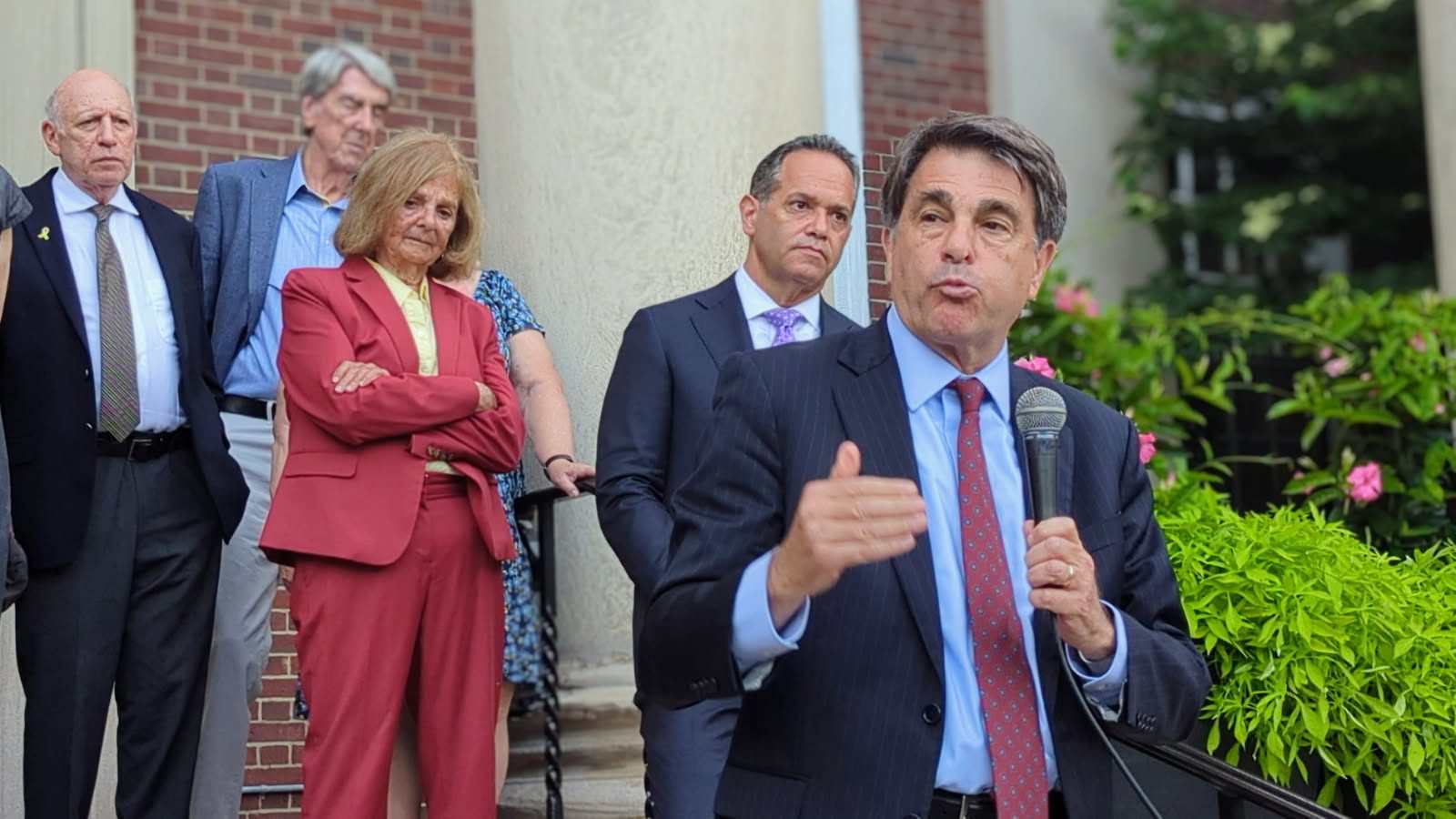
City Council President Marc Laredo speaks to Nonantum residents outside City Hall to address a controversy over the removal of Italian flag-colored lines from Adams Street. Photo by Bryan McGonigle
A city of change
Laredo has watched the city change over the past several decades, and he considers its diversity to be one of its biggest strengths.
“We are getting somewhat less diverse socioeconomically—There’s no two ways about it, that’s happened—but in many ways, we’re more diverse now along racial, ethnic lines,” he said. “I was in a bank last night with mostly folks who are of Indian descent, and they were telling me that the Asian population and Asians, broad category, is close to 25 percent in the city now, and that doesn’t surprise me at all. There’s very large concentrations of Indian, either immigrants or first-generation, lots of Chinese, Taiwanese and mainland China, and Korea. It’s really remarkable. That’s probably the biggest demographic change in the city I’ve seen over the years.”
When thinking about his big accomplishments on the City Council, Laredo points to his time as chair of the Land Use Committee overseeing the contentious Austin Street and Trio developments approval.
“I think everyone involved in that process felt that I ran a very fair, even-handed process that moved us along, took into account what people had to say and made it a better project than we started with in both instances,” he said. “I voted for both, but regardless of whether people agreed or disagreed with my vote, they felt they were heard and included, and I never heard of criticism that I was unfair.”
Laredo, was elected president of the Council after several councilors were voted out—councilors who had supported the controversial village center high-density rezoning effort in 2023—in favor of candidates who opposed high-density zoning and supported Laredo’s leadership.
“When I took a council that was, I think, pretty divided, we had some turnover, I made sure that I appointed committee chairs that were not just my ‘allies,’” he said. “In fact, if you look at the seven chairs of the committees, we have five who didn’t vote for me to be the president initially, and that was fine with me, because I think part of leading the Council effectively is bringing people together. I’m very pleased with the tone and tenor of our conversations this term.”
In fact, Laredo almost doesn’t want to leave the Council.
“If I wasn’t running for mayor, I still probably would run again,” Laredo said, adding that a mix of old and new voices can bring needed balance to local government. “City Council could have probably five, six new people next year, which is pretty good turnover. But folks who have been on a long time get underrated a lot,” he said. “You don’t want the same people doing the job for 20 years, but if you have two, three or four people who’ve been there for 10 or 15 years, they can say, ‘Hey, we did this five years ago or seven years ago and it didn’t work. Here’s how we might want to do it differently.’”
But Laredo set his sights on the corner office, and he started raising money for a mayoral run in spring 2024, when most of the nation was focused on the presidential election. By the time Mayor Ruthanne Fuller announced she wasn’t running for a third term, Laredo had amassed a notable war chest of cash to run against her.
If elected, Laredo said he wants to have “a cross-section of views” in his administration, a bit like Abraham Lincoln did as president, which inspired the book, “Team of Rivals.”
“And ‘Team of Rivals’ is one of my all-time favorite books,” he noted. “I’ve read it several times, and I’ll never compare myself to Lincoln or even close, but the concept that Doris Kearns Goodwin described as bringing people together who are rivals, and they actually, for the most part, then really got along. And so I think that the leadership is setting a tone.”
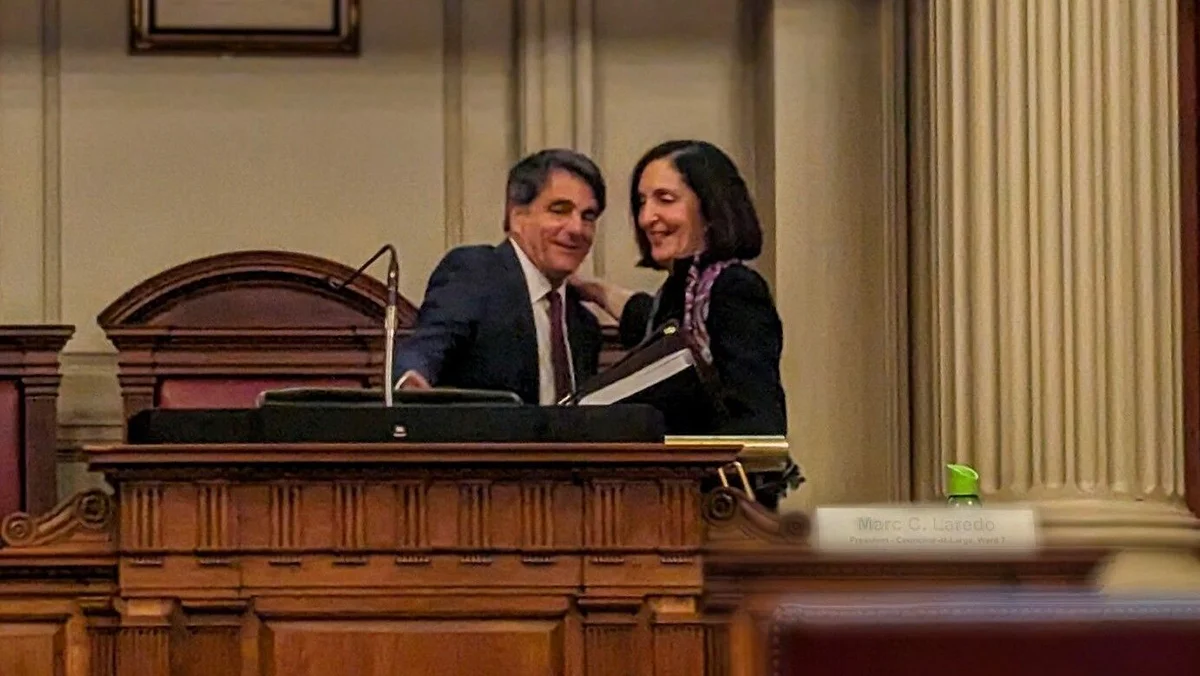
Newton City Council President Marc Laredo greets Mayor Ruthanne Fuller as she gets ready to present her 2025 budget proposal on April 16, 2024. Photo by Bryan McGonigle
The override question
The tone for the next couple of years may be important, considering how messy things could get fiscally.
President Donald Trump’s administration has targeted communities with DEI initiatives and sanctuary city status, and Newton has both. Newton could lose millions of dollars in federal funding at a time when Massachusetts is also losing federal funding and unemployment is creeping upwards.
Locally, the city has been hit with inflation, dramatic spikes in health care costs and other economic hurdles that make budgeting even more difficult.
So, will Newton need a Proposition 2 ½ override in the next couple of years?
Laredo says yes, but he’s careful to distinguish which kind.
“There are two types of overrides, and it’s important to distinguish between the two,” he said. “We almost certainly are going to need a debt exclusion override for, I think, at least a couple projects. The one that comes most to mind is a police station, which is in horrendous condition, and it’s going to be a very expensive, but, you know, it’s vital to public safety. I don’t think we have much of a choice.”
An operating override, on the other hand, is more complex. For that, Laredo said, the money has to be going toward things that would improve the city—he cites new school curriculum and sidewalks as examples.
And even then, it’s all about timing.
“If you’re in the middle of a recession, if there’s huge cuts in federal funds, if there are job layoffs at all our major hospitals or universities, if interest rates are really high, if you’re sitting on a large pile of free cash, you can’t go to the voters and say, ‘Give me more money,’” Laredo said.
The third piece of an override campaign has to do with something less tangible: trust in the mayor.
“I’ve never met a government person who can’t figure out ways to spend more,” he said. “That’s just the nature. And there are lots of things that government can always do with more money, and I think most of them would be excellent. But you have a finite amount of money, and you’ve got to be cognizant of the fact that somebody with a fixed income in this city is already struggling to stay here.”
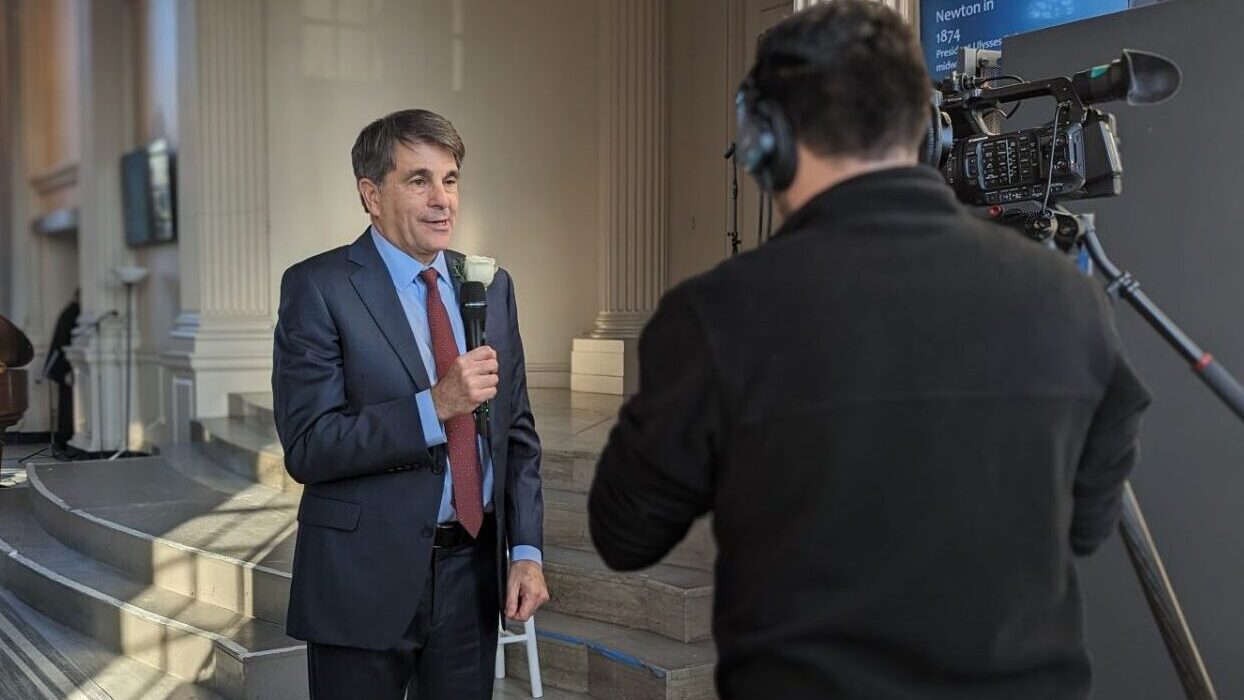
City Council President Marc Laredo gets ready for an interview with NewTV. Photo by Bryan McGonigle
The school budget struggle
In 2024, there was a teachers’ strike after a 16-month contract battle. In 2025, there was another school budget crisis. And the frustration is shared by administration, teachers, families and even people with no kids whose taxes pay for the schools.
Mayor Fuller has said the schools will need a Proposition 2 ½ override, given the rise in costs and the needs of the district.
While Laredo isn’t committing to asking for an override for the schools, he is promising one thing: He won’t try to renegotiate the teacher contract that was signed after the strike.
“That’s not bargaining in good faith,” he said. “I suppose if there was some extraordinary catastrophe—I never say never—but no. What you do is you go out and negotiate the next contract and try to have negotiations that are constructive and collaborative, recognizing that communities have their job to do with representing their membership, and the School Committee and the mayor have their job to do in representing, essentially, management.”
To develop or not to develop
The strongest voices against high-density zoning for the village centers also voted to make Laredo president of the Council. But Laredo said his record—he voted for the Austin Street, Trio, Northland and Riverside developments—is clear.
“People know where I stand, but at the same time, just because something has the word development in front of it doesn’t mean that it’s necessarily good,” he said. “And I think each project needs to be evaluated on its merits.”
Laredo said he’d like to fix some of the “cumbersome” permitting delays (which he said are caused by city departments, not City Council committees).
“Time is money in the private sector, and I’ve worked in the private sector for close to 40 years,” he said. “At the same time, every single project, particularly large ones the city needs to be looking at carefully, with us saying, ‘Is this going to benefit the city? What are the downsides? How can we make it better?’.”
He emphasized the need to hear from residents, especially neighbors of any proposed developments.
“I also believe very strongly that you do need to listen to the folks who live next door. That doesn’t mean they get veto power. They don’t, but I think it’s easy for me, living on a dead-end street, to say, ‘Sure, four miles away, build whatever you want, it’s not going to affect me.’ And so, I think we need to be cognizant of that.”
What about affordability? One major factor in the housing crisis is the lack of housing for seniors who want to downsize from their large homes, as well as a lack of housing priced for young people and working-class families.
And Laredo mentioned the Opus project, a new senior housing facility built at the Jewish Community Center of Greater Boston, as one new option for seniors in middle-class households.
“That’s a great opportunity for our seniors to stay in the community, and in doing so, you free up some housing stock,” he said. “So that’s something I think has a lot of promise.
The tax levy limits imposed by Proposition 2 ½ don’t apply to new growth. So new housing developments can add more money to the city’s coffers. So can new businesses. And Laredo wants to focus on attracting new businesses to Newton by eliminating some of the red tape involved with setting up shop in the city.
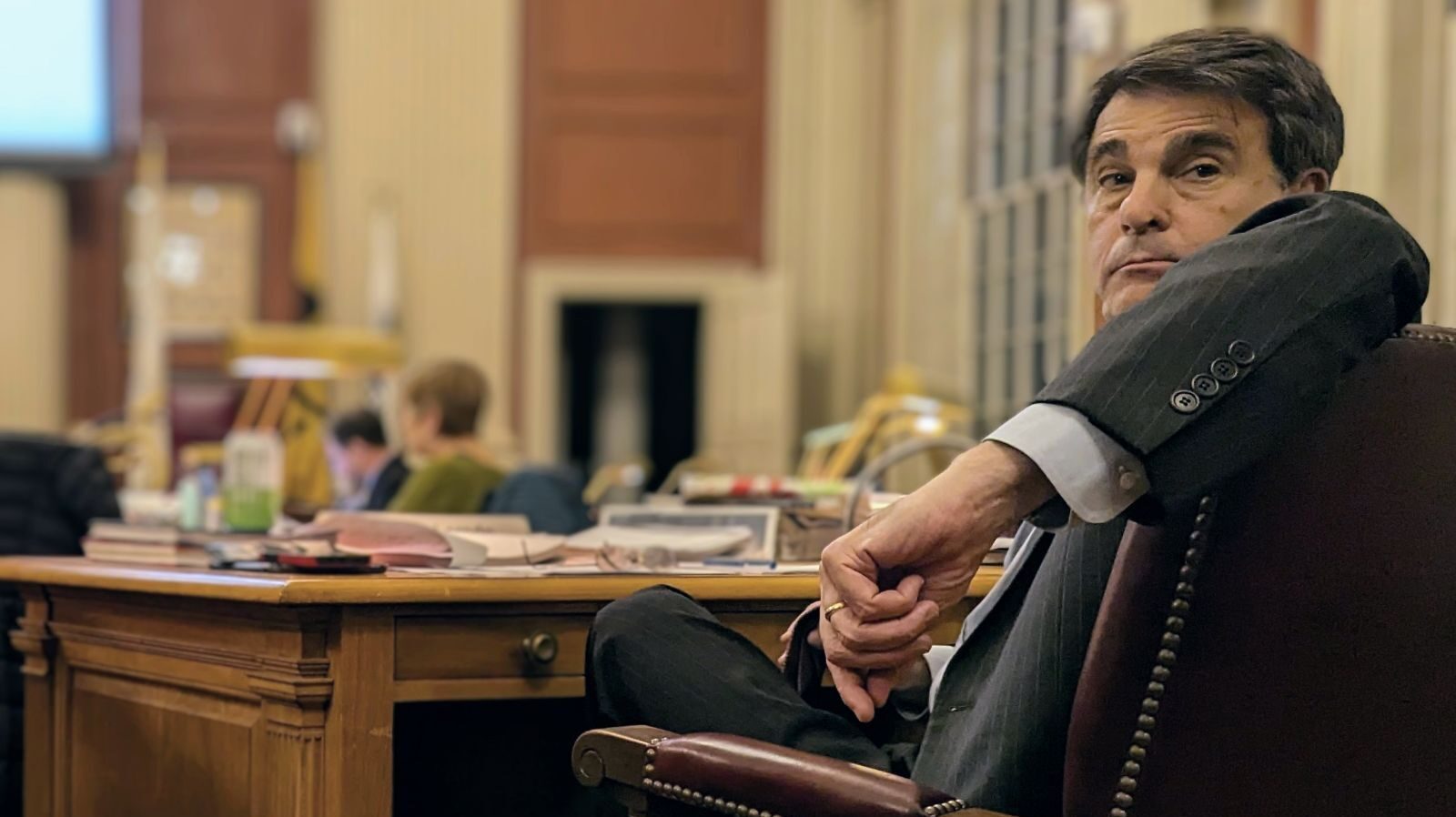
Newton City Councilor Marc Laredo prepares to vote on the Village Center Overlay District proposal on Dec. 4, after a slew of amendments scaled the plan down. Photo by Bryan McGonigle
Clearing the fog
Last year, the League of Women Voters released a report showing a lack of public trust in Newton’s government and recommended the city work on transparency, and Laredo said he wants to make that a big focus of his administration.
He plans to look at having the city website updated, and he’s looking into ways to incorporate artificial intelligence.
“It’s really interesting, how we might start using AI internally,” he said. “I think it’s in its infancy, but there are certainly things that we could use AI for to make delivery of government services more effective.”
And he wants more communication within City Hall.
“I want people to talk to one another within different and from different departments and collaborate and work together rather than work in silos,” he said. “My leadership team is really going to foster that culture.”
Newton’s election will be Nov. 4.
Share This Story On:
DONATE TO SUPPORT LOCAL NEWS
Your tax-deductible gift to the Newton Beacon keeps our community connected and its residents informed.
Get story alerts twice a week:
Related Posts

Upcoming Events