
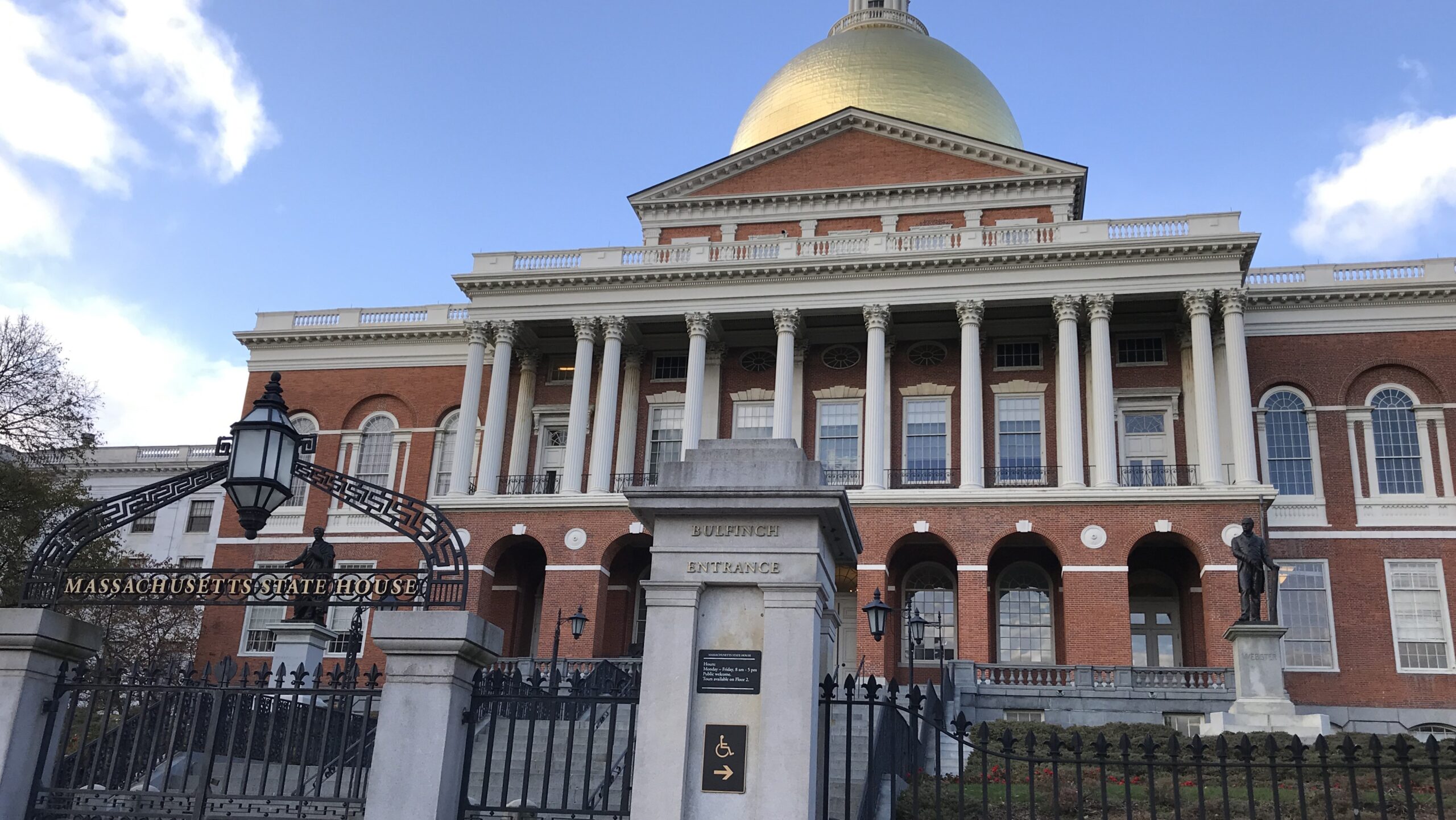
Massachusetts_State_House_16 (1)
Massachusetts State House. Public domain photo
As the political stalemate over implementation of a voter-approved ballot question to audit the Legislature continues, Massachusetts Auditor Diana DiZoglio is calling on Attorney General Andrea Campbell to go to court over alleged missing documents needed to implement the controversial law.
DiZoglio argued that the attorney general’s office originally deemed the audit constitutional when it appeared on the ballot in the November 2024 election, but Campbell later retracted that position based on her relationships with “top lawmakers.”
Campbell approved the question based on separate constitutional requirements related to initiative petitions. But in making that decision in 2023, Campbell issued a lengthy legal opinion that the auditor did not have the authority to audit another branch of government.
“I’m happy, once again, to meet everybody in court and give them everything they need to be able to do their job,” said DiZoglio. “But the gaslighting and scapegoating by these people of the general public needs to stop.”
The ballot measure, also known as Question 1, passed with 72% statewide approval and 65% support among Newton voters. It gave the auditor the authority to audit the Legislature. Campbell issued statements declaring that the auditor’s office has not provided enough documentation to move forward with implementation.
“They’re going to drag this out into eternity in the hopes that you all forget that you voted for this, and they are grossly underestimating the people of Massachusetts,” said DiZoglio.
Newton Democratic Reps. Amy Sangiolo and Greg Schwartz both said they support transparency but they also value a clear separation of powers.
Schwartz said he supported the new joint committee rules that were approved in the spring for the House and Senate.
“Newton voters are especially engaged in the political process, so I believe the improvements in committee transparency created in the new rules are going to help my constituents,” said Schwartz.
Historically, the Legislature has been audited by an outside, independent firm, which can later be reviewed by the state auditor for accuracy, said Schwartz. He emphasized that “the separation of powers doctrine protects the independence of the three branches of government from encroachment by one another.”
Sangiolo said she interpreted the 2024 results on Question 1 as a clear indication that Massachusetts residents want more transparency and accountability from the Legislature.
“I believe the House has been responding appropriately to Question 1, revising its rules to open the legislative process and also giving the auditor the authority to hire an outside firm to conduct a financial audit of the House,” said Sangiolo.
Sangiolo added that she would like to know what specific information Newton voters are looking for outside what is covered in the joint committee rules.
“I support a financial and professional audit, not a political one,” she said. After the ballot measure passed in November 2024, House Speaker Ron Mariano and Senate President Karen Spilka rejected DiZoglio’s audit, calling it “unconstitutional” and “unnecessary.”
If the audit is implemented, Lawrence Friedman, a professor at New England School of Law, said in an interview that he worries it will “run the risk of interfering with and potentially undermining the Legislature’s proper functioning under the state Constitution.”
Friedman said John Adams and other framers of the Massachusetts Constitution separated the three branches of government “to ensure that each department respects the constitutional responsibilities of the others.”
Act on Mass, a nonprofit organization dedicated to transparency, accountability and citizen empowerment in the Legislature, supports DiZoglio’s efforts to implement the audit.
“We have an uncommonly nontransparent Legislature that has been really effective at consolidating power and shredding some of the checks and balances that were in place,” Scotia Hille, executive director of Act on Mass, said in an interview.
On whether the audit is constitutional, Hille said the only body that can rule is the Supreme Judicial Court.
“I think if they [Mariano and Spilka] are so confident that it is unconstitutional, I would love to see the question go to court, and the auditor has been trying to get court access,” Hille said.
With the support of organizations like Act on Mass, DiZoglio has continued her push for increased transparency.
“The people of Massachusetts are fighting back,” DiZoglio said.
*****
This story is part of a partnership between the Newton Beacon and the Boston University Department of Journalism.
Share This Story On:
DONATE TO SUPPORT LOCAL NEWS
Your tax-deductible gift to the Newton Beacon keeps our community connected and its residents informed.
Get story alerts
twice a week:
Related Posts





Upcoming Events