
TASTE OF NEWTON
Move over, Shirley Temple.
One of the nation’s first popular non-alcoholic drinks has gone the way of big bands and other trends from the 1930s.
Bartenders now make mocktails from lemon grass, blood orange juice, and other exotic ingredients—without booze. These drinks have special appeal for those observing Dry January, but Newton restaurants sell them year-round.
The Shirley Temple blend of soda and grenadine topped with a maraschino cherry was named in honor of the child actress, and sipped by generations of children. Today’s mocktails are aimed at an adult clientele. Local restaurants with specialty cocktail menus offer the largest selection, but these drinks can also be found at other restaurants, such as the Italian-focused Olivia’s Bistro in Nonantum. A few pubs offer non-alcoholic beers (such as Guinness 0 and commercial mocktails sold in cans.
Dry January, when consumers make a monthlong pledge to abstain from alcohol, helped the category of mocktails grow. According to the opinion research site CivicScience, 14 percent of those who successfully completed Dry January in 2024 said they chose mocktails as a replacement for liquor. But once January ended, people kept ordering mocktails.
Newton restaurants are happy to oblige.
“A couple of years ago, we didn’t feature non-alcoholic drinks on our menu. We just had one or two non-alcoholic beers,” said Baramor bar manager Cormac Rohda. “Now we have six different kinds of non-alcoholic cocktails along with non-alcoholic beers. We keep the selection of non-alcoholic offerings year-round.”
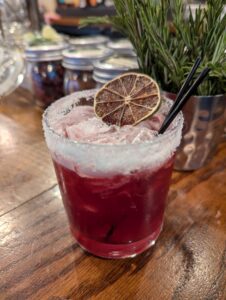
Baramor’s Blackberry Margarita. Photo: Clara Silverstein
Mocktails are more than glorified sodas. “They are not an afterthought. They are made intentionally rather than modifying an existing cocktail,” said Aaron Bautista, bar manager at Sycamore. The Newton Centre restaurant recently offered four selections, including a “FOMO” made of lychee, lemon, honey and ginger presented as a martini.
At Baramor, the most popular mocktail, the blackberry margarita, plays on a standard margarita by adding blackberry juice to a typical mix of ingredients (though in this case it’s a non-alcoholic tequila). The drink comes in a glass with a salted rim and a dehydrated lime wheel for garnish.
Rohda mixes up several other mocktails with non-alcoholic spirits. The menu changes seasonally, though a standard like the Phony Negroni stays year-round. His challenge, he said, is to “balance” the flavors of sweet, bitter and citrus.
“Non-alcoholic tequila and gin don’t taste as bitter as a spirit but when they are mixed into a mocktail you can barely taste the difference,” he said.
Buttonwood general manager Summer Murphy and her bar manager, Emily Rose, are developing new mocktails for the menu. After tasting non-alcoholic spirits and being disappointed, they decided to build the drinks from ingredients that they can make from scratch. The popular Copy Cat starts with ginger and spice-infused lemonade and adds freshly-squeezed grapefruit, lemon and lime juices.
“It’s a different kind of challenge for a bartender to create something like this and [Rose] took it head on,” Murphy said. Another drink, the Orange You Glad, balances freshly-squeezed orange juice, lemon, honey, soda and botanicals.
The price of mocktails – typically $13 to $15, almost as much as a cocktail—reflects the customization. “[A mocktail] is made just like a bar drink. It gets garnished like a drink. A lot of time and care goes into it,” said Murphy.
The term Dry January originated in the United Kingdom and became a campaign in 2013. It’s now trademarked by Alcohol Change UK. Those who participate pledge to abstain from alcohol for the month to improve their health and awareness of their drinking habits. Anyone can find resources and ways to participate at Alcohol Change UK or Dry January USA.
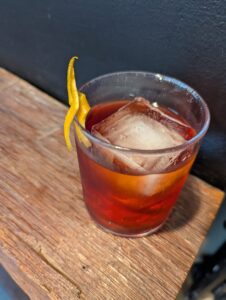
Baramor’s Phony Negroni mocktail. Photo: Clara Silverstein
In 2025, 22 percent of U.S. adults ages 21 and over reported participating in Dry January, according to the Morning Consult market research company. Of those who participated, 69 percent said they did so for health reasons.
Some companies have begun making mocktails sold in individual bottles or cans. But you won’t find a bottled Shirley Temple. In 1988, the actress successfully sued a company that wanted to bring a pre-made drink using her name to the market.
At restaurants in Newton, mocktails and cocktails are often served at the same table. That might make it easier for someone to abstain without calling a lot of attention to it, Rohda said.
“If you’re self-conscious about not drinking, ordering a mocktail is an easy way to not stand out,” he said. “If anyone sees you, it looks like you’re having a regular cocktail.”
Clara Silverstein is a cookbook author with extensive knowledge of Newton history. She can be reached at clara@clarasilverstein.com.
Share This Story On:
DONATE TO SUPPORT LOCAL NEWS
Your tax-deductible gift to the Newton Beacon keeps our community connected and its residents informed.
Get story alerts
twice a week:
Related Posts


Upcoming Events