
raisedbed
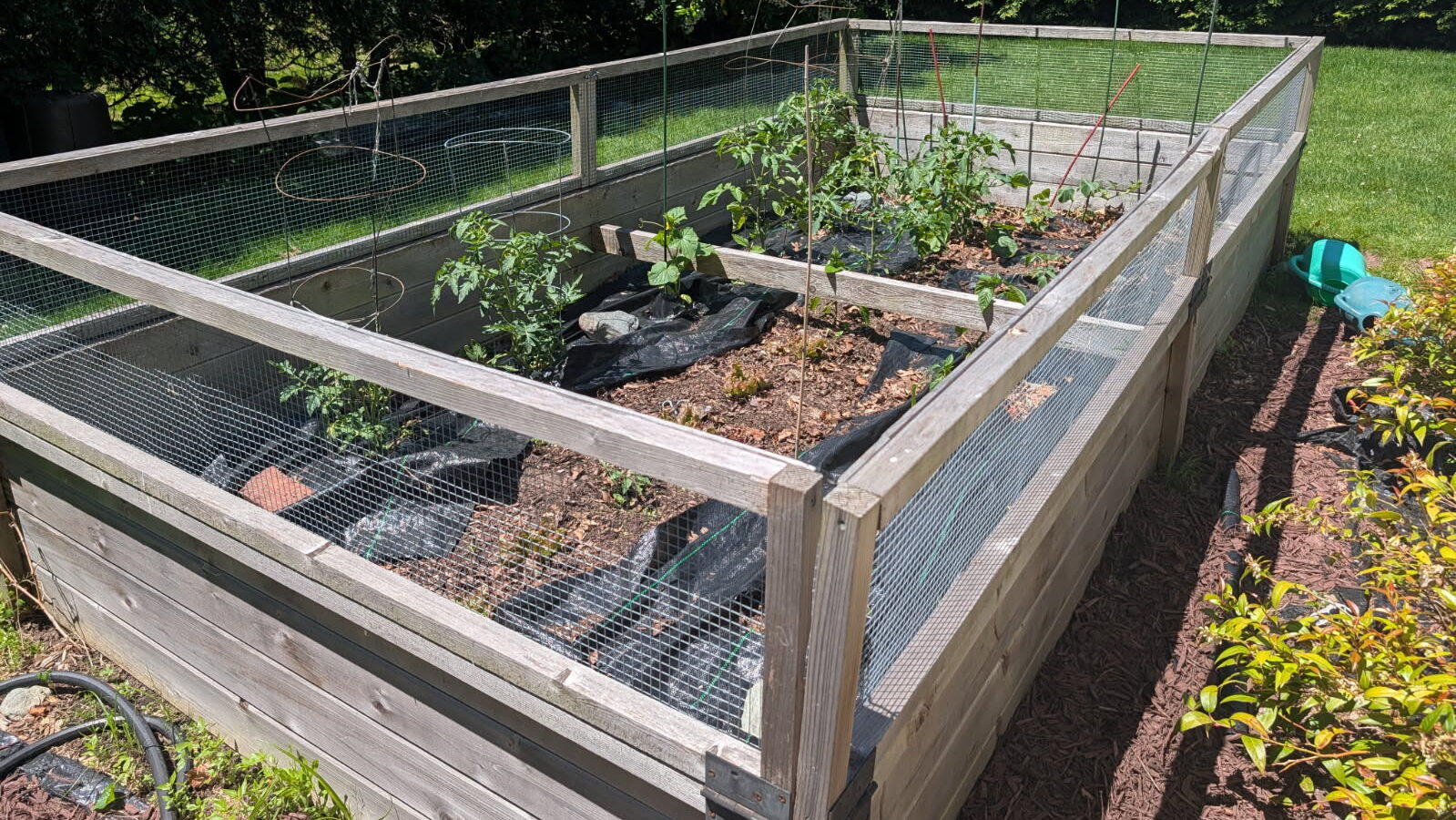
Raised flower beds, like this one in Newton Corner, fall under structural restrictions within the city's zoning ordinance. Photo by Bryan MCGonigle
Currently, Newton’s zoning ordinance doesn’t allow a property owner to include raised flower beds in the setback—meaning they can’t be within the minimum distance required from the property line to the structure.
“Structure” tends to refer to a house, a shed or another kind of building. But currently, the city’s ordinance does not allow for raised garden beds to be within the setback, making them basically count as a structure like a house or a shed.
That means if a homeowner has a garden bed, the distance from that flower bed to the property line must be equal to the setback requirement or bigger. So, smaller yards can’t have them. And in Newton, many of the yards are small.
“It really comes down to the definition of a structure, which includes raised beds,” Nora Colello of the Newton Planning Department said to the Zoning and Planning Committee at their most recent meeting.
Colella was there to push for a change to the city’s ordinance that would allow raised garden beds to be put within a building’s setback requirement, essentially letting the raised beds be closer to a property line.
“Setbacks generally exist to maintain light, air and privacy between buildings, ensure fire safety and emergency access, and protect streetscapes and utilities,” Colello said.
The Planning Department is recommending the city amend its ordinance and give raised beds their own category. Raised beds would still have to be at least five feet from the sidewalk or the end of the property, whichever is closer (sometimes property lines go over sidewalks).
“Depending on the committee discussion, these options could be mixed and matched,” Colello continued. “For example, the portion about sidewalks could be removed while keeping the five-foot setback distance.”
Committee member Susan Albright, who supports allowing raised beds within the setback, wasn’t pleased that the meeting packet (the documents given to city councilors before a meeting that are also posted online) didn’t include the various options for amendments that Colello mentioned.
“It would have been nice to have all those proposed changes in the packet so I could have had a moment to think about them in advance and prepare myself, as we often like to have stuff in advance in this committee,” she said.
Councilor Lisle Baker, chair of the committee, said he made a judgment call to exclude those materials because those alternative options were not being considered by the committee yet.
“I wanted to make sure that we had an opportunity to discuss them first,” Baker said. “But I was persuaded by Miss Colello that it would be useful to hear from the public before rather than after and have it bifurcated. So that’s the reason.”
Newton Upper Falls Area Council member Maxine Bridger pointed out the many other allowances homeowners have for their space within their setbacks.
“And now I see from the description that even raised garden beds can’t go to the property line, but somebody can park a truck against the property line, can pave the front setback, park a car in the front setback, and that’s okay,” Bridger said. “But a raised garden bed in the Garden City is not okay. Makes no sense to me.”
Her husband, Mark Bridger, said they have lived in their house for more than 50 years and have always had gardens. As they’ve gotten older, they’ve switched to raised beds that don’t require as much kneeling, lifting or bending over. He acknowledges that his raised beds may technically be against the city’s current ordinance.
“I’m concerned about this kind of homeowners association mentality,” he said.
Katherine Howard of the Newton Conservators also spoke in favor of loosening raised bed restrictions and urged the city to go even further. For example, one of the proposed changes would allow raised beds up to two feet high within the setbacks, but Howard called for that allowance to be higher. She suggested four feet in height.
“Gardeners use raised beds, as you know, to create areas of improved soil, to grow healthy vegetables and plants, to allow better access to their garden beds, or to take advantage of sunlight,” she said. “Newton’s residential setbacks are generous and they already allow structures in the setbacks, many different types of structures. Vegetable and flower beds are innocuous compared to the permitted other types of things—retaining walls, walls of arborvitae, that sort of thing.”
Howard suggested possibly adding flower beds to the retaining wall ordinance, which allows retaining walls up to four feet in height by-right.
The rest of the comments during the public hearing were of the same nature, in support of the proposed changes or wanting even more changes to allow more gardens within setback space.
Kathy Pillsbury, declaring herself an avid gardener, questioned the sense of spending so much time on something so many people agreed about.
I think it should have been just a simple change in the definition saying that garden beds are not structures and therefore it didn’t have to be covered under the rule not allowing structures in a side setback. But there’s been so many meetings. You’ve brought in people from the Law Department, the Planning Department’s had to do multiple presentations and write a detailed zoning ordinance about this. And there are just so many other more important things that the Zoning and Planning Committee should be doing.”
One person who’s not a fan of cutting raised bed setback requirements is City Council President John Oliver.
“It does seem to me that even the word ‘setback’ tells you what a setback is for. It’s white space. It’s designed to be the space between structures on two adjacent properties that abut each other,” Oliver said. “I’m all for raised beds. I’m all for gardening. I’m all for producing your own food. Like all of the speakers tonight, I agree with one exception. This is meant to be white space between properties where ideally nothing would be built. I hate the idea of parking in setbacks like the one gentleman was talking about. I think that’s always a non-starter for me. I think that’s a bad idea.”
The committee voted 6 in favor, 0 opposed, and 1 abstention to approve an ordinance change that would require raised beds to be two feet in height or shorter and stand back five feet of space from the property line. Raised beds in the back of a property can be four feet in height and must be five feet from the property line.
You can watch the entire meeting on NewTV’s YouTube channel.
The raised garden beds issue will now go to the full City Council for a vote.
Share This Story On:

DONATE TO SUPPORT LOCAL NEWS
Your tax-deductible gift to the Newton Beacon keeps our community connected and its residents informed.
Get story alerts twice a week:
Related Posts




Upcoming Events