
israelpalestinian
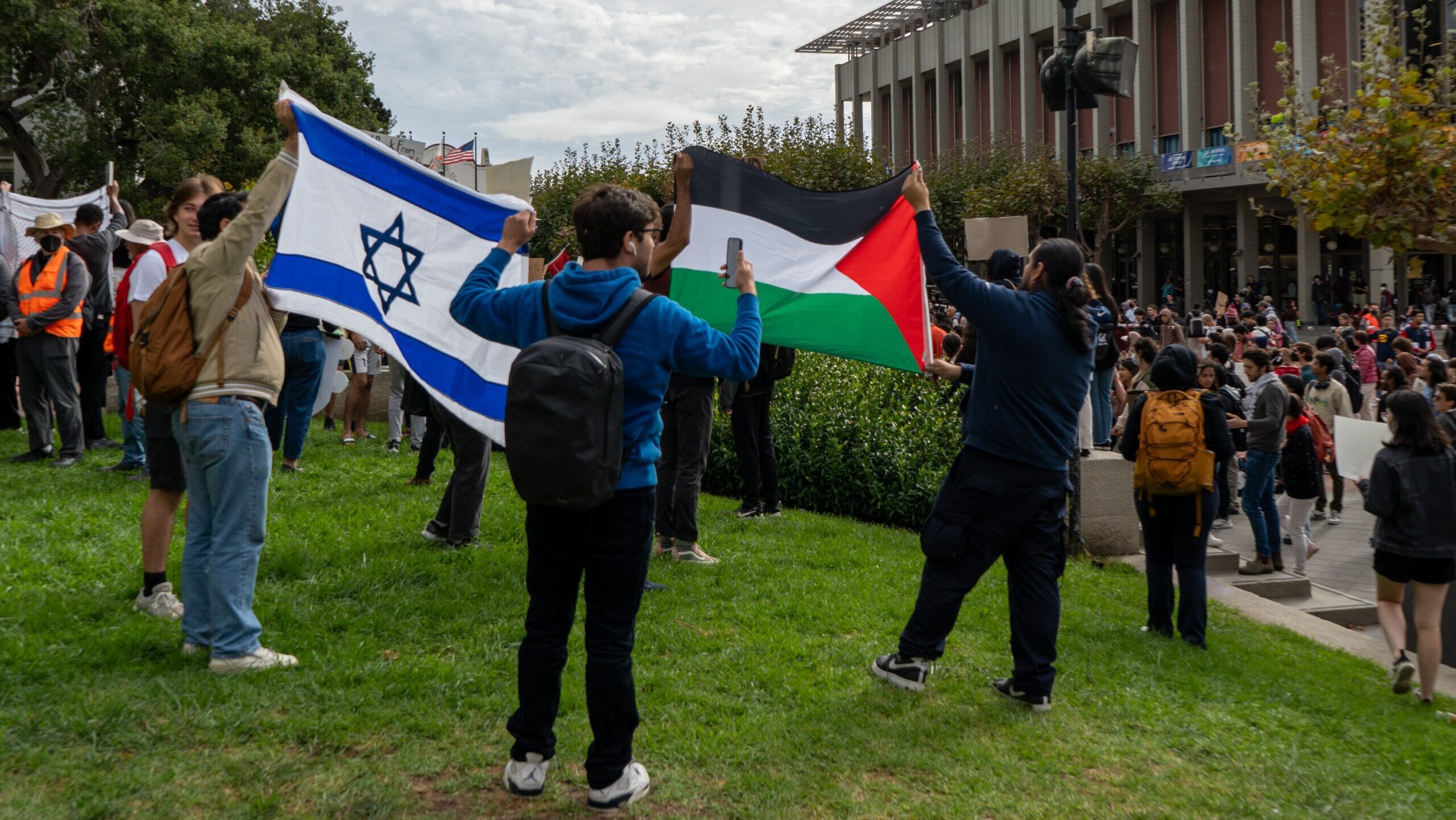
Protesters at Northeastern University call for peace in the Israeli-Palestinian conflict. Public doman image
Some in Newton are questioning whether recommendations to fight antisemitism in schools across Massachusetts protect students or threaten free speech rights.
The Massachusetts Legislature’s Special Commission on Antisemitism, which includes Newton Mayor Ruthanne Fuller, approved recommendations to combat antisemitism in schools across the state on Aug. 8. The panel was established after a rise in antisemitic hate crimes in the commonwealth last year.
Newton Democratic Rep. Greg Schwartz said in an interview that he supports the commission’s recommendations for enhanced educational programming about the history of antisemitism and is confident the Department of Elementary and Secondary Education will provide clear guidance on how to approach the subject thoughtfully and fairly.
Schwartz said most feedback from community members has been favorable, but some are concerned that focusing on antisemitism is unfair to other groups who have suffered discrimination and may lead to limitations on free speech.
“The commission’s makeup is extremely biased to contain only one view of the matter–it doesn’t even represent the full spectrum of opinions within the Jewish community itself,” said Noam Shoresh, an Israeli Jewish resident of Newton for more than 20 years.
Shoresh has two sons who attended Newton North High School and said that neither of them hid the fact they are Jewish or Israeli, and that they have not felt any “animosity” directed towards them because of their background.
Shoresh said he fears the recommendations will only do harm. Growing up in Israel, he wasn’t taught the Palestinian perspective regarding the foundation of Israel in school.
“I don’t want this to be true for my children or anyone else in Newton, but this is precisely where the commission’s recommendations lead,” said Shoresh. “Its agenda from the outset was to protect Israel’s reputation and to wage war against Israel’s critics, and the recommendations do exactly that, at the direct expense of freedom of speech, and at the cost of giving our students the proper access to information and discussions from which they could learn and grow.”
At a Palestinian-solidarity encampment at MIT last spring, Shoresh said that he felt no hostility after he presented himself as an Israeli Jew. He said that people were happy to engage in conversation and answer questions about their views.
“I do not want to imply by this that antisemitic incidents never occur, nor to belittle the experience of students who feel threatened by them,” said Shoresh. “At the same time, when people in the Jewish Israeli community in Newton talk about ‘our children are under attack,’ it does not resonate at all with my own experience.”
However, Nanette Fridman, a Waban resident, said in a Facebook message that she strongly supports the recommendations and is grateful to Gov. Maura Healey for establishing the commission. She said that Newton’s decades-long history of antisemitic incidents and biased curricula in schools have caused Jewish students and families to feel unseen or unsafe.
“Addressing this history honestly and constructively is essential to building a more inclusive future. Newton can and should be a model for doing this right,” Fridman said.
Fridman said a statewide bias reporting system, antisemitism education and training for students and staff, and ensuring access to kosher and halal food in schools are some of the key recommendations outlined in the commission’s guidelines.
“To make them real, they must be funded, monitored and updated regularly,” Fridman said. “Without sustained involvement and oversight, this effort risks becoming an academic exercise rather than a lived reality.”
Fridman suggested that a “biennial review process” should be implemented to evaluate the effectiveness of the recommendations, and update them as needed.
Mosaic: Interfaith Youth Action, a nonprofit organization dedicated to connecting middle and high school youth across different faith identities from across Greater Boston, was cited as an example in one of the commission’s recommendations: “Schools should promote and invest in after-school programs and clubs that encourage cross-identity or cross-communal bonding through shared experiences.”
Mosaic’s co-president Runa Islam said in an interview that she wasn’t sure how the commission became aware of their organization, but believes that this specific recommendation will create more opportunities for young people of all identities and strengthen communities across Massachusetts.
“It is clear that many of us in Newton are feeling deep pain about different aspects of this war, and that is leading to miscommunication and lack of basic human empathy on all sides,” said Islam. “It’s especially painful for me to see neighbors and friends turn on one another–and for the youth of our communities to see that behavior modeled and normalized.”
Mayor Ruthanne Fuller did not reply for comment after multiple attempts of contact.
*****
This story is part of a partnership between the Newton Beacon and the Boston University Department of Journalism.
Share This Story On:
DONATE TO SUPPORT LOCAL NEWS
Your tax-deductible gift to the Newton Beacon keeps our community connected and its residents informed.
Get story alerts twice a week:
Related Posts

Upcoming Events