
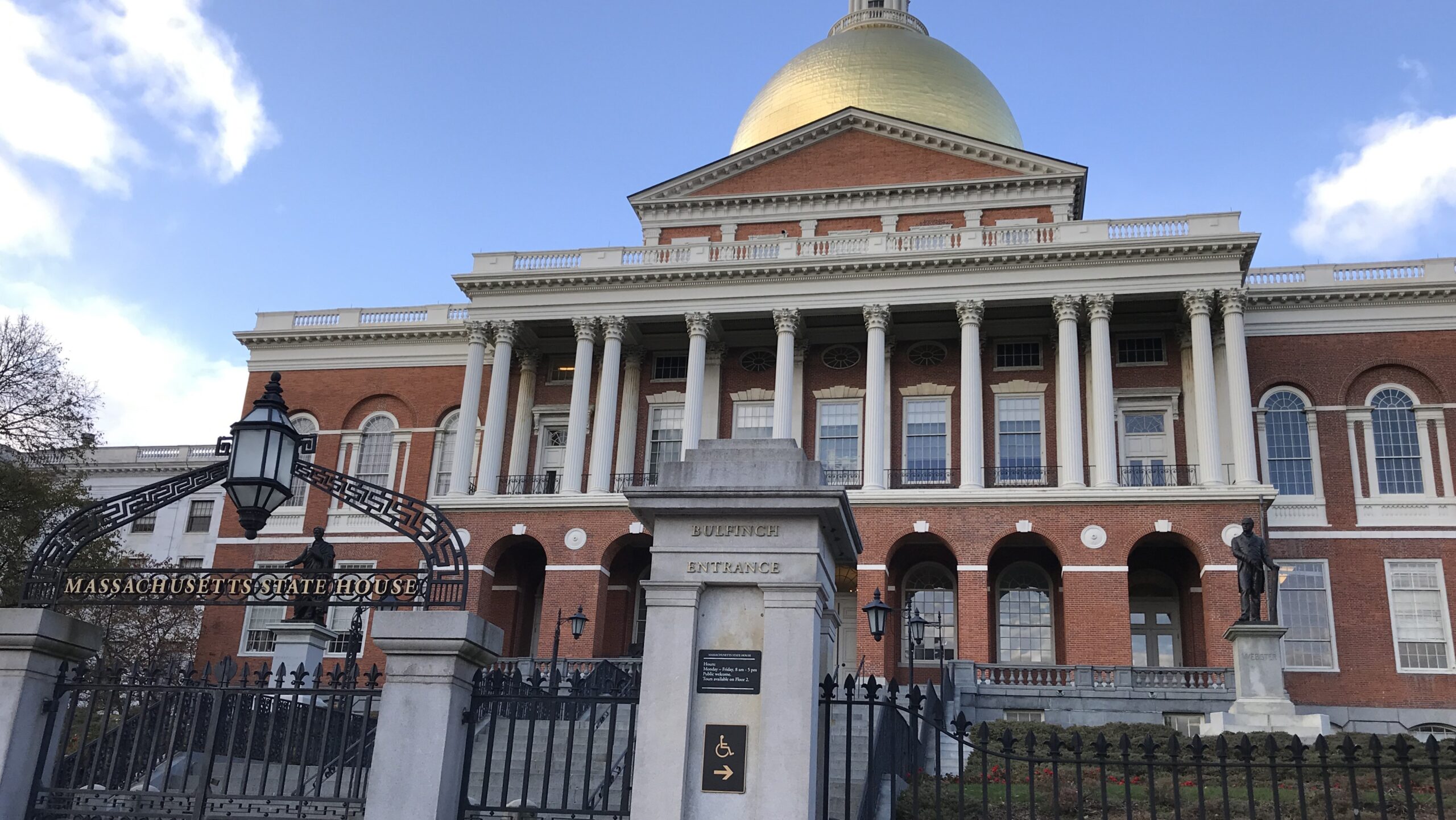
Massachusetts_State_House_16 (1)
Massachusetts State House. Public domain photo
Voters will decide Nov. 3 whether the legislature and governor’s office should be subject to the state’s public record laws.
Question 1 would require the disclosure of documents held by the executive and legislative branch. Massachusetts is the only state where all three branches of government are exempt from public record laws.
Here is what you need to know about Question 1.
1. What is Question 1 asking for?
Question 1 asks Massachusetts voters to decide whether records held by the state legislature and the governor’s office should be subject to the state’s public records law.
Every state has its own version of public records laws, which grant the public the right to request government documents. In Massachusetts, the legislature, judiciary and governor’s office are all exempt from public records laws.
2. How does Massachusetts compare to other states?
Massachusetts has been consistently named as the least transparent state in the U.S.
Evan Horowitz, executive director of the Center for State Policy Analysis, said this statement is not sufficiently backed up, though.
“It’s not like other states have broad public record requests that allow people to get information out of the legislature that the legislature doesn’t want to share,” Horowitz said. “I think one way or another, most state legislatures find ways to protect their records from public view.”
Most other states have some forms of protections and limitations in relation to their public records laws and legislatures.
New Jersey has exempted most legislative records from public records laws. Florida has a constitutional amendment guaranteeing access to records across all branches, but lawmakers have created over 1,000 exemptions.
“State legislatures around the country tend to be relatively averse to transparency, and we are no exception to them,” Horowitz said.
3. How did we get here?
In 2024, 72% of Massachusetts voters supported a ballot question granting the state auditor the authority to audit the House and Senate’s “accounts, programs, activities and functions.”
State Auditor Diana DiZoglio proposed that question a year after she assumed office. In an interview, DiZoglio said voters consistently asked for an audit of the legislature when she was running for her position.
Since the 2024 election, lawmakers have resisted complying with DiZoglio on an audit, claiming it would be an unconstitutional violation of the separation-of-powers principle. If Question 1 passes, lawmakers would have to turn over the documents because they would be reclassified as public records.
“The legislature wants to convince us that it’s just a recommendation when we exercise our constitutional right at the ballot box to create laws,” DiZoglio said.
In February 2026, DiZoglio filed a lawsuit against top legislators to force the legislative branch to comply. The lawsuit is still ongoing.
Asked for her take on the legal disputes, DiZoglio said, “Some of these folks might have a D next to their name, but that D is turning out to be more symbolic of a dictator than it is a Democrat.”
4. How has the legislature responded?
The legislature has been considering a bill aimed at promoting transparency and public access.
“The Legislature is actively working to achieve the same goal as the ballot question,” Speaker of the House Ron Mariano wrote in a statement. The bill “would advance that objective while addressing the constitutional considerations necessary to ensure that the reforms can withstand scrutiny and provide a durable framework for greater transparency,” Mariano said.
This bill would delineate what specific documents the legislature and executive branch would be forced to make available. It proposes narrowing the scope of documents so that the auditor would have access only to information relating to budgets, operations and settlements, which the court describes as “administrative functions.” In all categories, the auditor would be able to go back as far as fiscal year 2021.
The House and Senate versions of the bill are in conference committee negotiations.
DiZoglio is not in favor of the bill. She said she thinks it would “nullify the audit law” and “give all power to the speaker to make decisions about what an audit would look like.”
5. What would a “Yes” vote mean?
A “yes” vote would require the state legislature and governor’s office to make many records public, with the exception of a few exemptions set out in the ballot question.
Information such as vendor contracts, employee settlements, event planning and procurement decisions could become more readily available, which could help DiZoglio audit the legislature.
Exemptions built into the question itself, privacy protections and ongoing efforts such as the legislature’s bill, could narrow the impact of a “yes” vote.
Horowitz said legislative resistance is inevitable, and it was so back in 2024.
“We’re not going to learn anything about lobbying efforts, about how bills came together—that stuff’s untouchable,” Horowitz said.
However, Horowitz said one interesting discovery could be the information and documentation related to settlements, which have been largely protected.
6. What would a “No” vote mean?
A “no” vote would keep the legislature and governor’s offices exempted from public records laws.
A “no” vote would also diminish the support for DiZoglio’s ongoing battle to finish the legislature audit she has been seeking since 2024.
But DiZoglio remains optimistic. “I’m asking folks to please vote yes on one, bring on the sun, because this next question would actually make all the records that I have been seeking access to,” DiZoglio said.
****
This story is part of a partnership between the Newton Beacon and the Boston University Department of Journalism’s Newsroom program.
Share This Story On:

DONATE TO SUPPORT LOCAL NEWS
Your tax-deductible gift to the Newton Beacon keeps our community connected and its residents informed.
Get story alerts twice a week:
Related Posts








Upcoming Events