


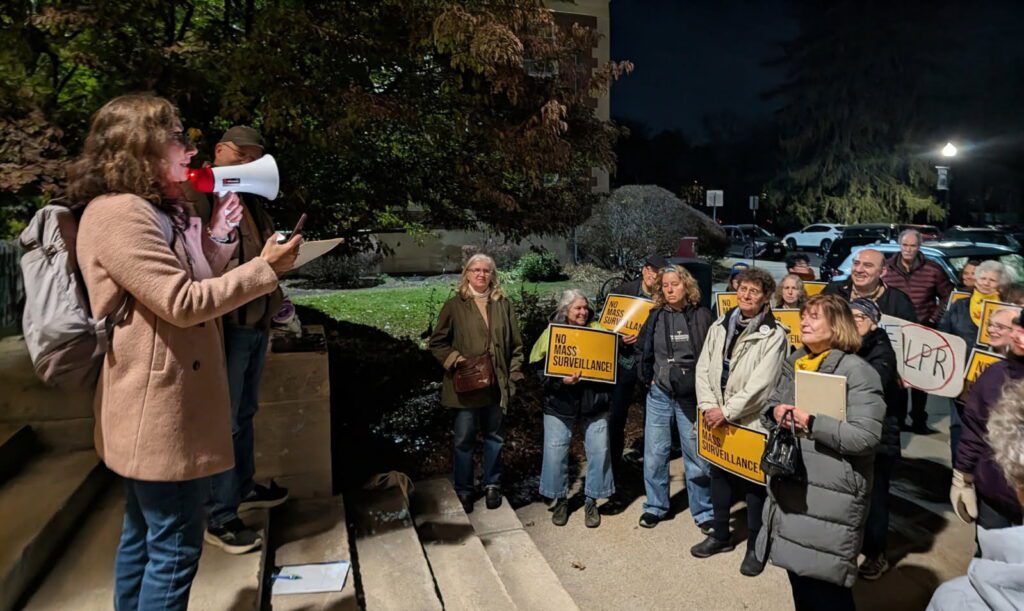
On Wednesday night, a crowd gathered in front of City Hall to protest the potential use of Flock cameras. Their signs read “No Mass-Surveillance.” They chanted slogans about democracy. And they were there to tell the city not to allow Flock cameras into Newton.
“The Fourth Amendment prevents unreasonable searches, a protection enshrined in our U.S. Constitution because the founders understood what it means when the government tracks people’s movements,” Adele Jasperse said. “When one company alone, Flock, scans, on average, every person twice a day and stores that data for every government agency in the country to access, they do this without a warrant, without probable cause, without any suspicion at all. This technology effectively guts our fundamental rights.”
There are no Flock cameras in Newton. But that doesn’t mean there won’t ever be, and that crowd of protesters headed inside the building at 7 p.m. for a discussion about what the city council can and should do about police electronic surveillance in a new era of AI, distrust of institutions and a general loss of privacy.
The Newton Police Department doesn’t use Flock cameras. But if those or other kinds of electronic surveillance are considered for Newton, City Councilor Brittney Hume Charm wants the city council to have a say.
Police Chief Tim Cohoon met with the Public Safety & Transportation Committee to give updates on police initiatives (including body cameras), and Charm docketed a discussion about Flock and other surveillance technologies as public concern escalates around privacy.
Charm emphasized that her request was about a discussion, and no specific ordinance changes have been proposed.
“This is certainly not about inviting surveillance technology into Newton—I want to be very clear about that—and it’s also not currently framed as a ban of a particular technology,” Charm said.
Cohoon served as chief in Braintree for several years and, in that city, his department uses Flock surveillance, Charm noted.
Flock Safety Inc. was founded in 2017, specializing in automated license plate recognition (ALPR), and law enforcement participation took off immediately. Today, more than 6,000 communities across the U.S. use Flock cameras.

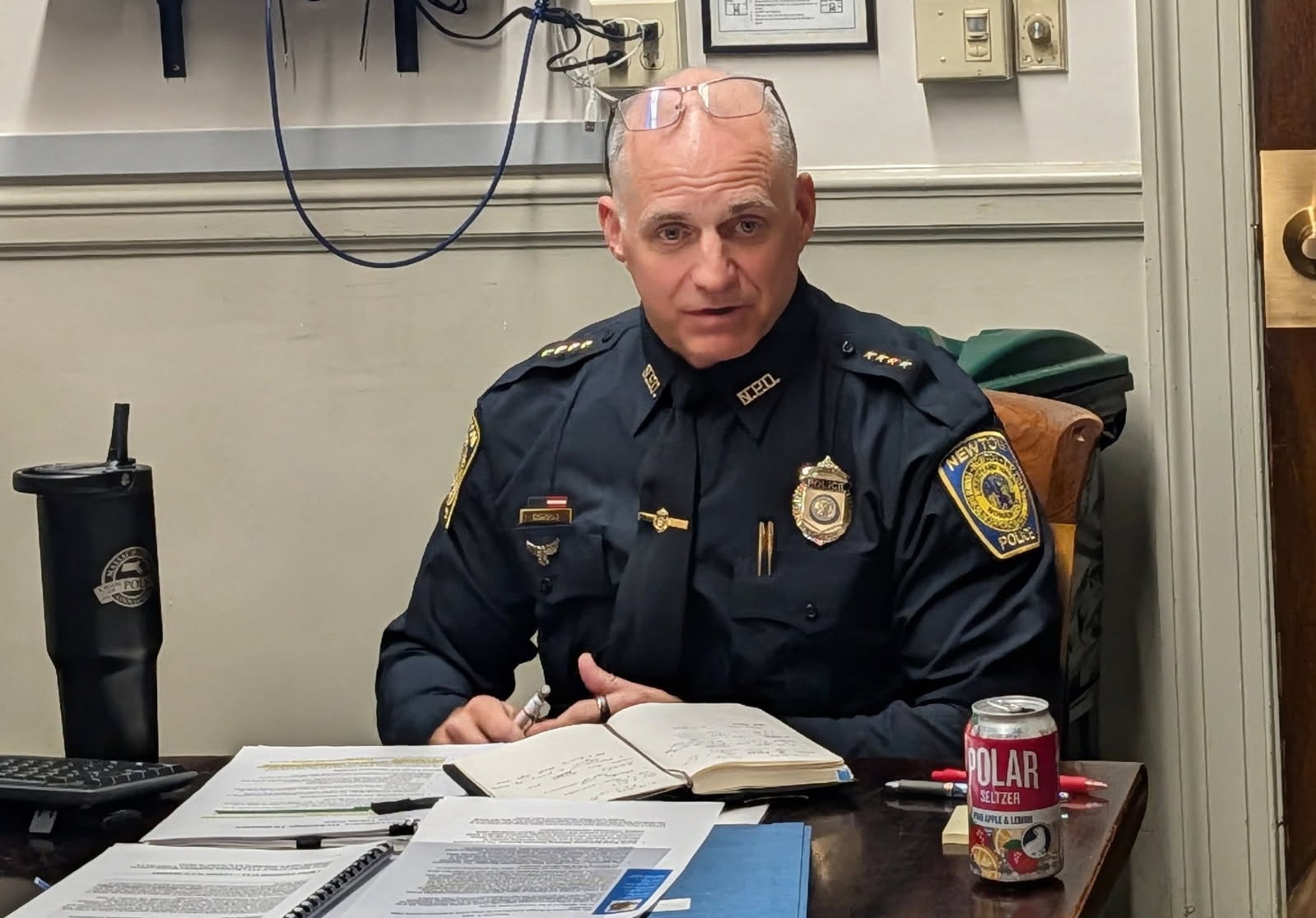
Newton Police Chief Tim Cohoon speaks to the Public Safety & Transportation Committee on Nov. 18, 2026. Photo by Bryan McGonigle
Over the past few years, however, Flock cameras have become controversial as AI has evolved in security and headlines have shown abuses of the technology that fly in the face of safety.
Last year, a police officer in Texas was sentenced to five years in prison after using Flock cameras more than 100 times to search about his ex-girlfriend.
This summer, a Florida sheriff’s deputy was caught doing the same thing.
These are just two examples of a problem that civil liberties proponents say needs to be addressed now. The Institute for Justice—a libertarian-leaning nonprofit focused on constitutional law and privacy—recently launched a database tracking reports of ALPR abuse nationwide.
And since President Donald Trump has initiated Immigration & Customs Enforcement raids in cities across the country over the past 21 months, that agency has used Flock cameras to track down immigrants.
“That is, I think, heightening the tension that exists between the interest in public safety and the interest in privacy and civil liberties that these kinds of surveillance technologies present,” Charm said.
Currently, public safety purchasing requests go through the mayor’s office. Charm’s discussion Wednesday was about whether that should change, given the controversy surrounding electronic surveillance and the fact that the City Council acts as Newton’s legislative branch of government.
Putting that into the form of an ordinance is easier said than done, considering how fast technology evolves these days.
“I will also note that this is not just about Flock. This is not just about ALPRs,” Charm said. “It is about surveillance technology generally, and I am drafting it that way intentionally, because technology is developing quickly and we know that there are many categories that fall into this.”
Cohoon said he has no plans right now to bring Flock technology to Newton. But he echoed calls for balancing safety and privacy and said the potential for ALPR technology to improve police work can’t be ignored. He also cautioned against any ordinance prohibiting the cameras.
“We have to build that trust. We have to earn it. We have to—most importantly—keep it,” Cohoon said. “The automatic license plate readers have been a game-changer for policing. There have been abuses. There have been some things that are unacceptable. To throw the baby out with the bathwater, I think is a step too far.”

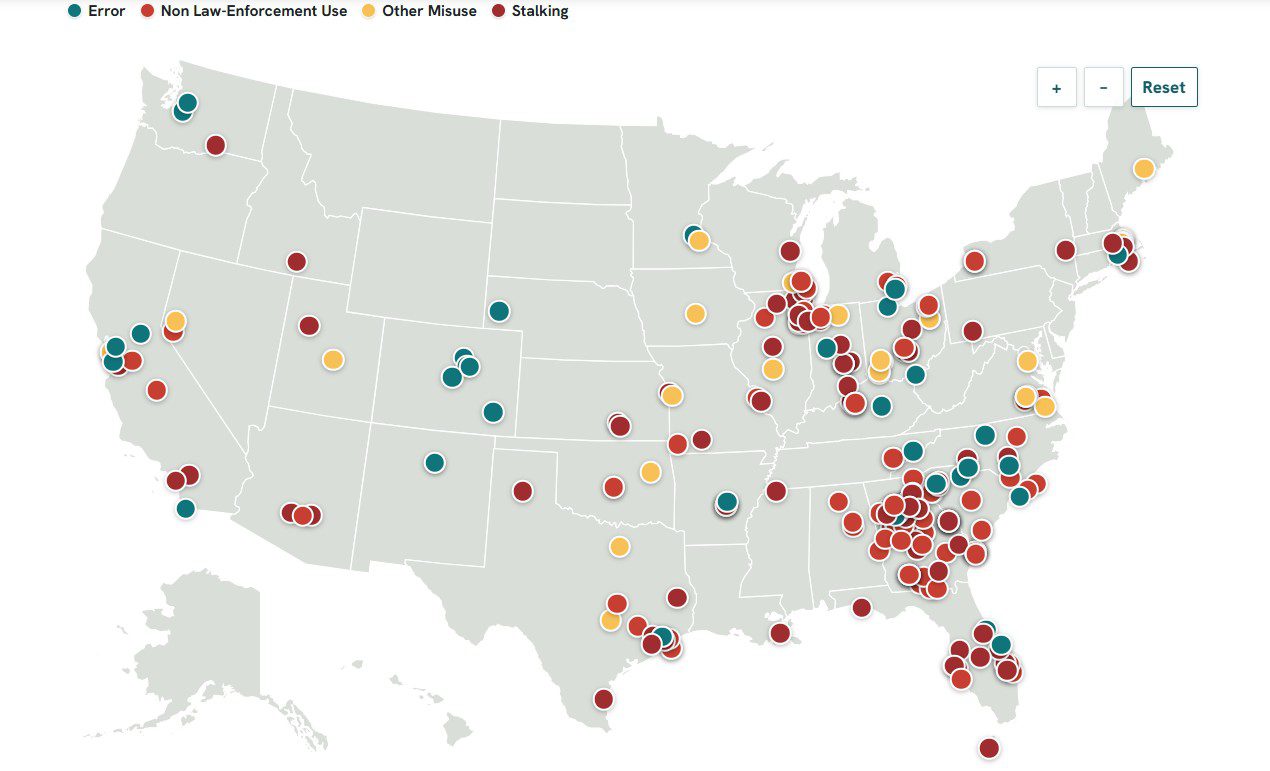
The libertarian nonprofit Institute of Justice has an interactive map showing reported incidents of ALPR abuse by law enforcement personnel. Institute of Justice website
The issue has councilors pondering what they can do—and what they should do anything—about it.
“What do you think in general the role should be for police policies?” Councilor Randy Block asked Charm. “You know, there are other policies besides surveillance.”
Charm said that while she appreciates the chief and the police department prioritizing public safety, the council should be involved in striking a balance with electronic surveillance.
“I think that when it comes to technologies like this, we have to be eyes wide open about the fact that there is also an interest in privacy and civil liberties that is in tension with that interest in public safety because of the capabilities that AI and these new technologies increasingly have, and they are developing fast. And so I think this is different than an HR policy.”
Councilor Brian Golden said he thinks the City Council already does enough work and adding police surveillance to the topics the council has to monitor would be too much.
“I mean, there is a lot that comes before the City Council that I think is atypical of councils generally,” he said, noting the piles of petitions that make their way to the Land Use Committee. “So when I think of potentially taking an administrative decision-making process involving the chief and the mayor and then adding the City Council into that, I want to be really intentional and deliberative about whether or not that is necessary to protect the civil liberties that would concern all of us.”
Councilor Sean Roche, a former prosecutor, said he’d be happy to trim some work from another committee if it means putting focus on ALPR use.
“Unquestionably, it’s a powerful law enforcement tool,” Roche said. “And I know this because I watch a lot of police procedurals, and in the U.K. they’ve got them and they can find the car and they can trace it all over. Very manual process. Really cool. So the concern is how do we balance that with constitutional rights and with privacy rights which are not always 100% overlapping.”
You can watch the entire Public Safety & Transportation Committee meeting.
VIDEO: Anti-Flock protest at Newton City Hall
