


A ballot initiative aimed at bypassing local zoning policies to foster a return of “starter homes” failed to win enough support to pass statewide. Newton was for it, except one of its wards.
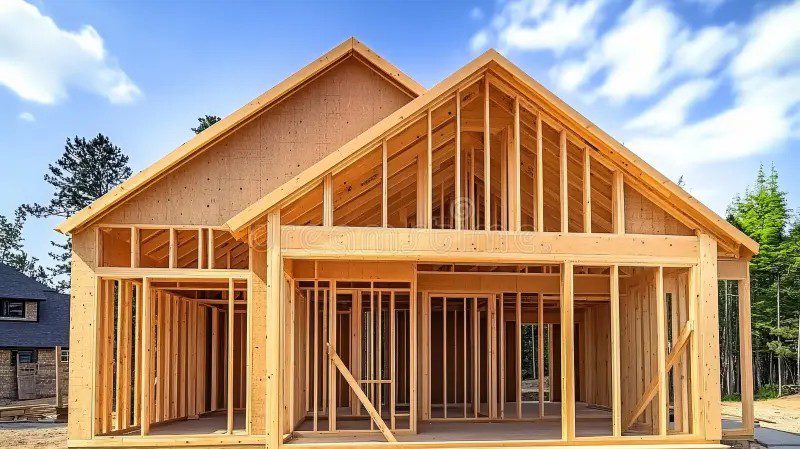
Question 7 would have allowed, statewide by right, single-family homes on residential lots that have 5,000 square feet of land, have more than 50 feet of frontage area on a street or public way, and have access to public sewer and water.
The measure lost statewide by a slim margin of 50.6 percent against to 49.3 percent in favor.
But when Newton was asked to allow more houses on smaller lots, Newton said yes. Of the 35,926 votes cast for Question 7 in Newton, 53 percent (19,055) voted in favor and just 42.8 percent (15,410) voted against it.
The eager
Question 7 got the most support in wards 1 and 2. The first covers parts of Nonantum and Newton Corner. The second largely includes Newtonville and West Newton.
It appears voter support for allowing more small houses on land parcels was strongest in Ward 1, with 57.9 percent of that ward voting for Question 7.
And the precinct with the highest rate of approval came from Ward 1, Precinct 2A, that tiny extra precinct added to the ward that includes the east side of Cabot Street in Newtonville and the Bigelow Middle School neighborhood in Newton Corner. That precinct came through with 63 percent support for Question 7.
Precinct 1 of Ward 1 (which covers the neighborhood around California Street near the Watertown line) had the second highest support for the initiative, with 59.3 percent.
And most of the city’s wards registered support at percentages in the low-to-mid-50s.
The hesitant
But not so fast. That enthusiasm for the “starter homes” ballot initiative in the city’s north side was met with opposition further south.
Ward 8, lying mostly in Oak Hill (along with slivers of Chestnut Hill and Thompsonville) is the only ward in Newton to have collectively voted against Question 7, with 49.7 percent of votes in that ward cast against it and only 45.8 percent cast in favor.
Ward 7 (which is mostly Chestnut Hill) didn’t show much more love either, with 48.4 in favor and 47.6 against. Showing how divided that ward was is the fact that two precincts voted in favor of Question 7 with less than 51 percent, and two voted against it with less than 51 percent.
The renegades
Not all precincts in each ward voted the same, and some went rogue.
While most of Ward 3 fell along the same margins as the citywide vote, support slipped in that ward’s second precinct (southern West Newton and northern Waban), where it got 48.5 percent in favor and 48.1 percent against.
Ward 5, which is in Upper Falls and Waban, collectively supported the measure, but its third ward voted 51.4 percent against it. And support was only 44.6 percent. The difference is made up in blanks.
And while Ward 8 went against the ballot initiative as a whole, its fourth precinct (the southernmost point of the city) came in with almost 52 percent of votes in favor of it.
The bigger picture
And an even bigger question in the wake of Question 7’s fall relates to how much local democracy and housing stock are linked.
“Housing is a democracy issue,” Danielle Allen said at The Newton Beacon’s recent “Democracy if We Can Keep It” event.
What she meant was that if people are shopping around for a new city or town to move to because they pay too much rent, they’re probably not going to vote in a local election.
This is something U.S. Rep. Jake Auchincloss has spoken about at campaign stops and at events like one held recently by Newton for Everyone. And it’s part of the reason Auchincloss pushed for passage of Question 7 and predicted it would pass. It didn’t, but his hometown voted for it. How that motivates his pro-housing path in Congress is another question.
Question 7 was narrowly rejected by Massachusetts voters, so it will not become law. That means local zoning rules regarding single-family homes and lot size requirements will stay untouched by the state, unless the legislature passes a bill of some kind.
But the votes in Newton can inform local officials about where the hunger for more housing is stronger than the desire to maintain local zoning control and lot density limits.
For example, Ward 3 is represented on the city council by Council President John Oliver and councilors Alison Leary and Maria Greenberg. That ward came out in support for Question 7, and with a precinct in that ward showing 63 percent approval for it. What guidance will those councilors take from the Question 7 totals when they’re deciding housing policy?
And similarly, will Ward 8’s opposition to the initiative impact how councilors Stephen Farrell and Jacob Silber and Council Vice President David Kalis make decisions on single-family housing density in the future?
Stay tuned as we head into a new year with new housing proposals and a new crop of local election candidates likely to line up to talk about them.
WBUR has an interactive map you can navigate to see how every community in Massachusetts voted on Question 7.